









Apple’s most recent fall hardware event marked a significant pivot for the technology giant, signaling both a shift in executive leadership and a bold, if controversial, direction for its product ecosystem. John Ternus, stepping into his role as CEO, introduced a product lineup that pushes the boundaries of consumer electronics integration. The centerpiece of the announcement was the iPhone Duo, Apple’s inaugural foldable device, which seeks to redefine the smartphone form factor. However, the hardware that commanded the most immediate scrutiny was the Apple Watch Series 12, which introduces a suite of features under the banner of Audio Intelligence. By embedding advanced artificial intelligence directly into the wrist-worn device, Apple is attempting to transform the watch from a health and notification tracker into an active, constant participant in the user’s auditory environment.
The core of the Apple Watch Series 12 experience is defined by the integration of Apple Intelligence, specifically tailored for the wrist. Ron Huang, Apple’s VP of sensing and connectivity, highlighted that the company views the watch as the optimal device for capturing and processing environmental sounds. This new capability manifests through two primary functions: Live Rewind and Siri Recap. Both features leverage on-device neural processing to transform the watch into a persistent audio listener. The objective, according to Apple, is to ensure that users never miss critical information, whether it pertains to professional meetings, casual social interactions, or fleeting flashes of inspiration. By offloading the complexity of real-time audio transcription and summarization to the watch’s proprietary silicon, Apple aims to provide a seamless user experience that feels less like a tool and more like an assistant.
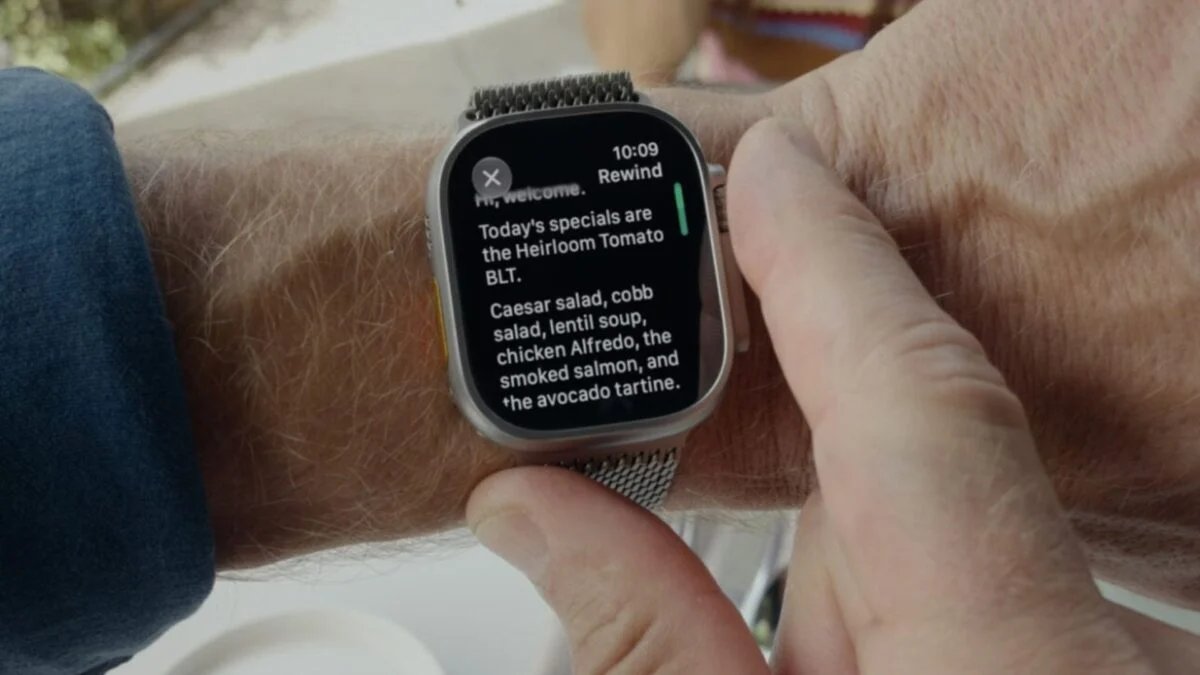
Live Rewind serves as a bridge for those moments when verbal communication is missed or forgotten. By double-pressing the device’s digital crown, the wearer can immediately access a text-based transcript of the preceding 15 seconds of audio. This utility is designed to mitigate the friction of social interactions where asking for clarification might be deemed awkward or inefficient. From a technical standpoint, the device continuously buffers a short window of audio, which is processed by the watch’s local AI models upon the user’s trigger. While the function promises high utility for professional environments—such as capturing a quick technical specification or a rapid-fire series of instructions—it also underscores the technical capability of the watch to always be “listening” at a granular, immediate level, effectively turning the watch into a constant short-term memory buffer for the user.
While Live Rewind addresses immediate needs, Siri Recap operates on a broader timeline. This feature utilizes ambient listening to generate summaries and extract key action items from a user’s daily interactions. Unlike the short-term buffer of Live Rewind, Siri Recap is designed for duration, allowing users to configure the watch to record or monitor conversations periodically or constantly. The AI synthesizes these interactions, filtering through hours of ambient noise to present the user with a structured summary of their day. This effectively moves the Apple Watch into the realm of personal productivity analytics, where one’s own voice and the voices of those they interact with become data points. The goal is to provide a comprehensive record of the user’s engagement with the world, though the persistent nature of this data collection presents significant challenges regarding the social norms of interpersonal communication.
The introduction of Audio Intelligence invites a complex debate concerning privacy and the autonomy of non-users. Apple has stated that raw audio is processed locally and remains inaccessible even to the company itself, with no attribution or speaker identification tied to the recordings. Despite these technical safeguards, the issue of social consent remains unresolved. Just as smart glasses have faced criticism for their potential to covertly record public interactions, the Apple Watch Series 12 now poses a similar risk to public anonymity. Apple has indicated that a chime will sound when Live Rewind is activated, signaling to those nearby that a transcription is occurring. However, the company has remained notably silent regarding whether a similar notification system will accompany the always-on nature of the Siri Recap feature. The reliance on auditory alerts assumes that bystanders are always within earshot or that they are aware of what the sound signifies, which may prove insufficient in high-traffic, noisy public environments.
As Apple prepares to ship these devices, the tension between functional convenience and public privacy will likely intensify. The history of wearable camera and audio technology suggests that users often bypass or ignore privacy indicators, and regulators may find it difficult to keep pace with the rapid advancement of consumer AI. While Apple has long championed privacy as a core tenet of its brand identity, the shift toward persistent audio intelligence marks a departure from traditional passive computing. Whether the public will embrace the utility of these features or push back against the potential for omnipresent recording remains to be seen. What is clear is that the Apple Watch Series 12 is no longer merely a watch; it is a sophisticated audio sensor designed to translate the complexity of human conversation into structured digital data, a development that will reshape how people interact with their devices and, perhaps more significantly, with each other.
Disclaimer: This content is auto-generated for informational purposes only.
Source: Read Original News