




The Evolution of Foldable Hardware Architecture
Samsung has launched an extensive strategic initiative to reaffirm its dominance in the foldable smartphone sector. By highlighting the mechanical advancements of its current hardware generation, the company is positioning itself as the primary architect of the category. This publicity campaign emphasizes a multi-year lead in research and development, specifically targeting the durability of the hinge mechanism and the structural integrity of the flexible display panel.
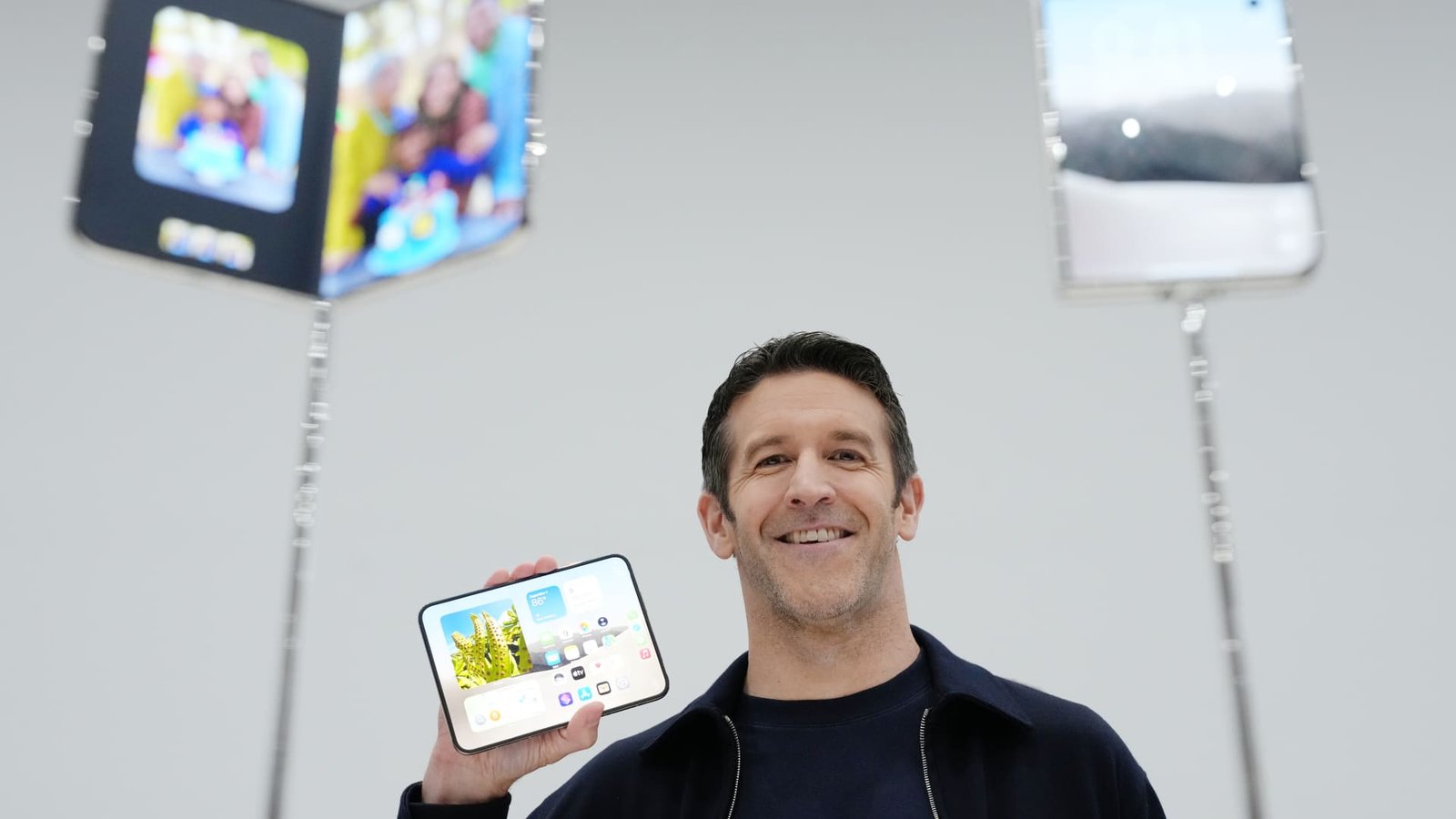
The core of Samsung’s technological advantage lies in the Flex Hinge design. Unlike earlier iterations that relied on simpler gear systems, the current architecture utilizes a dual-rail hinge structure that distributes external mechanical stress more effectively. This allows the device to fold completely flat, eliminating the wedge-shaped gap that characterized first-generation foldable devices. From an engineering perspective, this modification significantly reduces the accumulation of dust and debris within the fold, thereby increasing the functional lifespan of the internal organic light-emitting diode (OLED) layers.
Innovations in Display Materials and Stress Management
A primary hurdle in the production of foldable hardware is the material science required to balance flexibility with surface hardness. Samsung has implemented a proprietary Ultra Thin Glass (UTG) composition that undergoes a specialized tempering process to enhance its resilience against repetitive bending cycles. This material is supported by a dynamic layer system that includes a shock-dispersion layer, a digitizer for stylus input, and a reinforced protector.
The engineering challenge here is to maintain a consistent user experience during the transition from a standard smartphone format to a tablet-like expanded display. By utilizing a “teardrop” folding radius, the internal panel is not creased at a sharp angle but rather curved gently when closed. This geometric configuration prevents the thin-film transistors (TFT) that control individual pixels from fracturing over time. The result is a display that maintains high color accuracy and brightness uniformity, even after tens of thousands of folding operations.
Software Integration and Task Management
Hardware is only one half of the foldable equation; the software ecosystem must adapt to accommodate the unique physical dimensions of these devices. Samsung’s One UI has been engineered to leverage the expansive screen real estate through sophisticated window management. The integration of a taskbar, similar to those found on desktop operating systems, allows users to switch between applications instantaneously.
The software also employs a “Flex Mode” feature, which utilizes the device’s sensors to detect when the phone is held at an angle. In this state, the interface automatically shifts content—such as video playback controls or document editing tools—to the lower half of the screen, while the primary media remains on the top portion. This transition is managed by a software bridge that triggers a layout reconfiguration without requiring the application to restart, ensuring a seamless continuity of workflows.
Market Positioning and Technical Longevity
Samsung’s strategy focuses on the concept of maturity. By having invested in six consecutive generations of foldable technology, the company has accumulated a significant dataset regarding user behavior and hardware failure points. This data has allowed for iterative improvements in heat dissipation, battery partitioning, and antenna placement.
For example, current models feature a dual-battery system separated by the hinge, which balances the weight distribution and prevents overheating by spreading the load across the chassis. By publicizing these technical milestones, Samsung aims to differentiate its products from newer entrants to the market who are still navigating the initial phases of foldable reliability. The company is framing its history not merely as early entry, but as a commitment to building a sustainable and robust ecosystem that satisfies the rigorous demands of professional and creative users.
Practical Use Cases for Enterprise Productivity
The shift toward foldable devices is increasingly targeted at the enterprise sector, where mobile productivity is a priority. The increased screen size allows for native support of multi-window environments, enabling users to run three distinct applications simultaneously. This configuration is particularly beneficial for professionals who require real-time data monitoring, spreadsheet management, and communication platforms to remain active in a single view.
Beyond multitasking, the integration of high-precision input devices like the S Pen transforms the foldable form factor into a mobile studio. The screen’s ability to act as a canvas for technical drawing, document annotation, or digital signature workflows gives the hardware a utility that traditional, smaller-screen smartphones cannot replicate. By highlighting these specific use cases, the manufacturer is reinforcing the idea that foldable devices are not just luxury items, but essential tools for mobile-first work environments.
The Future of Foldable Engineering
Looking ahead, the focus of Samsung’s hardware development is expected to shift toward further reducing the weight and thickness of the devices without compromising structural integrity. Ongoing experiments with composite materials—such as carbon fiber reinforced polymers and titanium alloys—suggest that the next generation of foldable phones will move closer to the physical dimensions of standard handsets.
As the industry moves toward mass adoption, the standard of quality set by these iterative improvements dictates the trajectory of the entire market. Samsung’s current publicity drive serves as a reminder that the foldable category is a product of rigorous mechanical testing and software optimization. By centering the conversation on engineering reliability and architectural advancement, the company continues to establish the benchmarks for what a high-performance foldable smartphone should provide to the consumer.
Disclaimer: This content is auto-generated for informational purposes only.
Source: Read Original News