







Apple’s “Surprise and Shine” fall event, the first under the leadership of CEO John Ternus, marked a significant shift in the company’s hardware strategy. The event underscored a push into foldable form factors, advancements in mobile photography, and a heavy integration of artificial intelligence across its entire ecosystem of wearables and health services.
The Arrival of the iPhone Duo
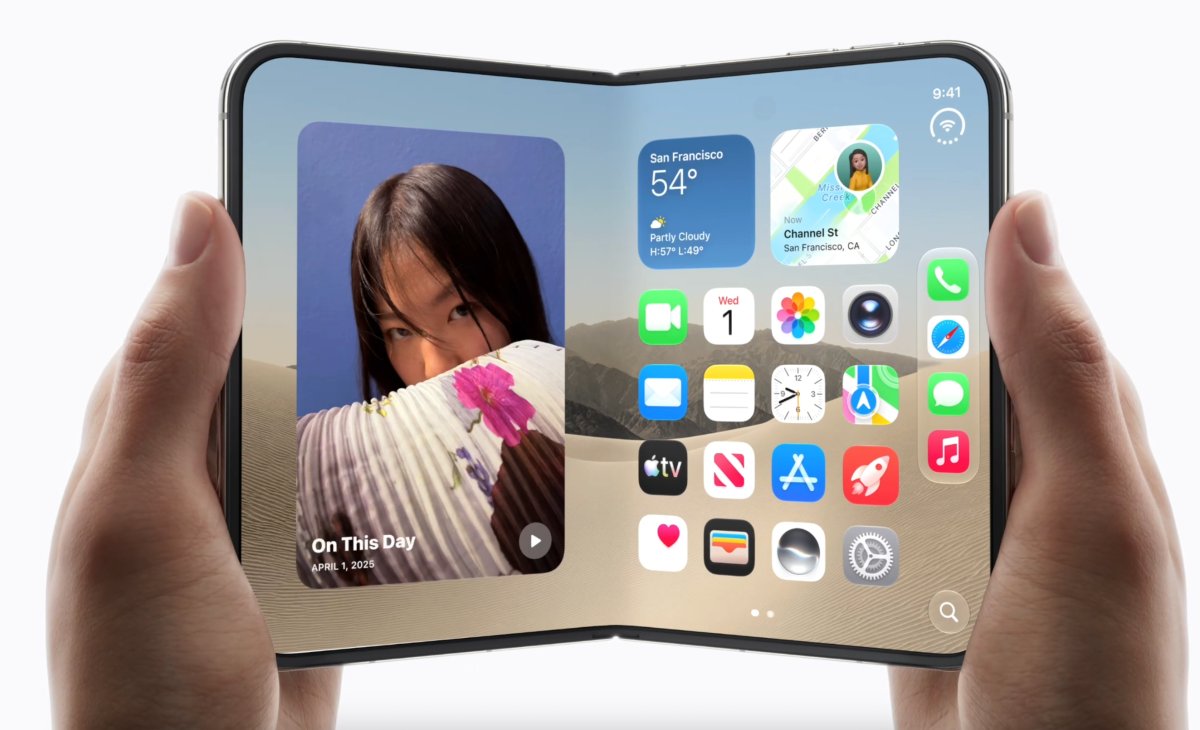
The headline announcement was the debut of the iPhone Duo, Apple’s entry into the foldable smartphone market. Designed to bridge the gap between traditional handsets and the utility of a tablet, the device features a 7.6-inch inner Retina display paired with a 5.4-inch outer screen. The internal display utilizes an under-display camera system, providing an uninterrupted visual area intended to mirror the versatility and screen real estate found on the iPad.
Engineering durability was a focal point for this model. The Duo’s hinge mechanism is constructed from Grade 5 aluminum and incorporates more than 100 internal components to ensure longevity and a seamless folding experience. Beyond the screen, the device boasts a 48-megapixel fusion main camera and a secondary 48-megapixel ultrawide camera with 2x optical zoom. The system supports rear-camera selfies with live previews on the outer display. Battery efficiency remains a priority, with Apple claiming up to 31 hours of video playback on the inner screen and 44 hours when using the outer display. The iPhone Duo will be available starting at $1,999, with preorders opening October 16.
iPhone 18 Pro Camera Advancements
The iPhone 18 Pro and Pro Max represent a refinement of the existing design language, with the primary engineering efforts focused on the camera array. The new hardware utilizes a 48-megapixel sensor equipped with a variable aperture system controlled by six precision-engineered thin blades. This mechanical update is designed to improve light intake in challenging conditions while significantly increasing shutter speeds.
Software enhancements complement the hardware. The camera interface now offers advanced manual controls, including granular adjustments for white balance, shutter speed, and aperture, along with a histogram for exposure monitoring. New “Photographic Styles” allow users to manipulate image texture and grain for a more personalized aesthetic. For video professionals, the devices support 4K recording in Dolby HDR Vision, enabling the application of cinematic effects during post-production. The iPhone 18 Pro starts at $1,199, with the Pro Max beginning at $1,299. Both devices arrive in stores on September 18.
Intelligence in Wearables
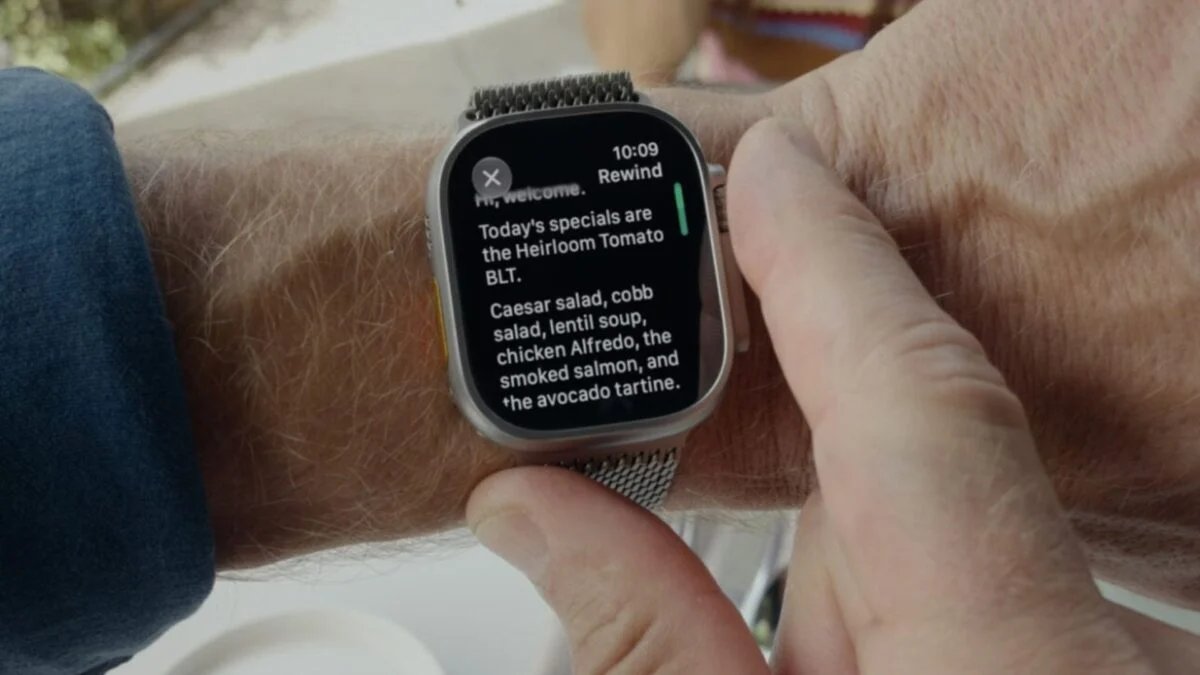
The Apple Watch Series 12 and Apple Watch Ultra 4 introduce a suite of “Audio Intelligence” features. These tools are designed to process spoken information in real time, serving as a productivity aid for the user. The “Live Rewind” function allows the device to capture and display the previous 15 seconds of a conversation as a text snippet, while “Siri Recap” summarizes key takeaways from meetings or discussions.
Accessibility remains a core component of this update. The new “Sound Recognition” feature enables the watch to identify specific environmental triggers—such as sirens, crying infants, or doorbells—and provide alerts to users who are hard of hearing. These models maintain their previous physical form factors but benefit from the integration of new internal processing capabilities. Prices for the Series 12 start at $399, with the Ultra 4 positioned at $499.
AirPods 5 and Audio Refinements
Apple updated its audio lineup with the release of the AirPods 5. These earbuds focus on noise attenuation, with Apple reporting a 50% increase in background noise reduction compared to the previous generation. The design now incorporates stem-based volume controls, a feature previously exclusive to the Pro line.
The Transparency mode has been refined to process ambient sounds and human voices with higher fidelity, resulting in a more natural listening experience. The earbuds provide up to five hours of continuous listening with active noise cancellation enabled, while the charging case extends the total operational time to 22 hours. The standard AirPods 5 are priced at $129, with a wireless charging variant available for $149.
The Redesigned Health App
Rounding out the event, Apple announced a major overhaul of the Health app. Leveraging Apple Intelligence, the app now acts as an analytical engine for user data. The interface introduces an “Insights” tab, which provides curated summaries of health trends and personalized guidance.
A primary addition is the “Readiness” score, which calculates how prepared a user’s body is for activity based on historical metrics. Furthermore, the new “Longevity” tab analyzes data from the Apple Watch and iPhone—including sleep patterns, movement, and cardiac health—to calculate a “Health Age.” These metrics are intended to provide users with a more holistic view of their long-term health trajectory. The revamped app is scheduled to begin its rollout later this year, initially supporting U.S. English.
Disclaimer: This content is auto-generated for informational purposes only.
Source: Read Original News