







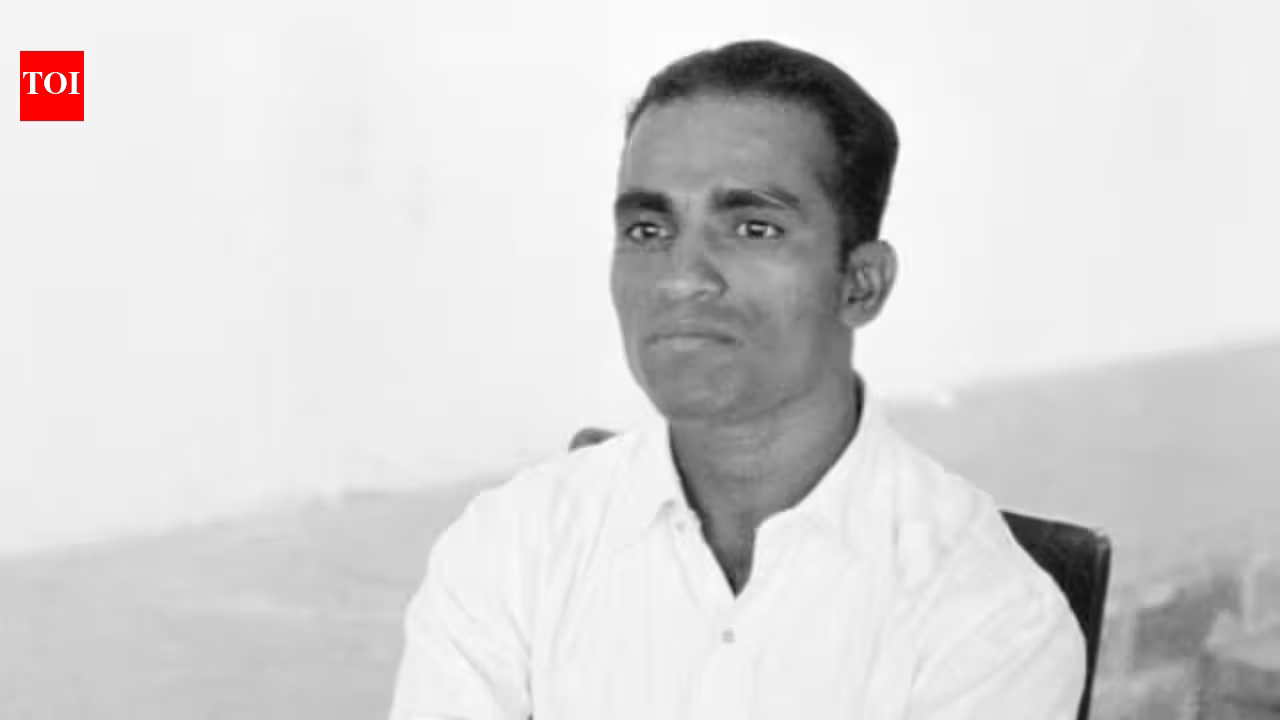
When the Mumbai Cricket Association announced that three distinct lounges at the iconic Wankhede Stadium would be named in honor of Sachin Tendulkar, Ajinkya Rahane, and the late Madhav Mantri, the sports world nodded in immediate recognition of the first two names. However, for a younger generation of cricket enthusiasts, the inclusion of Mantri—a man who played only four Test matches—sparked a wave of curiosity. Who was this stalwart whose name now stands alongside the titans of modern Indian cricket?
The answer is found not in a stat sheet, but in the bedrock of Mumbai’s legendary cricketing culture. Madhav Mantri was a three-time Ranji Trophy-winning captain, a long-serving administrator, and a mentor whose invisible hand helped guide the development of India’s two greatest batting icons: Sunil Gavaskar and Sachin Tendulkar.
The Man Who Taught Gavaskar to Earn His Cap
Mantri’s influence on Indian cricket began within his own family. As the maternal uncle of Sunil Gavaskar, Mantri was a presence in the future legend’s life long before the world knew the name “Gavaskar.”
As a child, Gavaskar was captivated by his uncle’s India cap. It was a symbol of the pinnacle of the sport, and he naturally wanted to possess it. Mantri, however, was a firm believer in the sanctity of merit. He refused to hand it over, famously insisting that Gavaskar must earn his own cap.
The weight of that lesson was profound. When Gavaskar finally debuted for India in the 1971 West Indies tour, he famously refrained from wearing his official cap during the preliminary tour matches. To him, the cap wasn’t a fashion statement or a souvenir; it was a mark of professional integrity that had to be justified on the field. That singular focus on discipline became the hallmark of Gavaskar’s record-breaking career, during which he became the first man to cross 10,000 Test runs.
The Architect of Bombay’s Dominance
While his international statistics—67 runs across four Tests—are modest by modern standards, Mantri’s domestic record is the stuff of legend. He accumulated 2,787 runs for Bombay at a formidable average of 50.67, including a double-century against Maharashtra in the 1948-49 season.
More importantly, Mantri was a quintessential leader. He captained Bombay to three Ranji Trophy titles in the 1950s (1951-52, 1955-56, and 1956-57). These victories were not merely about silver trophies; they established the “Bombay School of Thought”—a culture of extreme professional discipline, tactical astuteness, and an unrelenting refusal to throw one’s wicket away. Even when he was part of the unfortunate Indian squad that collapsed to 0/4 against England’s Fred Trueman and Alec Bedser in 1952, Mantri’s resolve remained untarnished. He carried that resilience into his administrative career, serving as a national selector and treasurer of the BCCI, ensuring that the Mumbai ethos permeated the national setup.
Philosophy Over Numbers
Mantri’s coaching style was famously unsentimental. There is a story of a young Gavaskar returning home beaming with pride after a massive knock in a college match. When he told his uncle he had scored 290, Mantri ignored the total entirely. His immediate, pointed question was, “How did you get out?”
When Gavaskar admitted he had played a loose, lofted shot while his partner was still batting, Mantri’s rebuke was cold and precise: “Do not give your wicket away. Make the bowler earn it.” That philosophy transformed a talented boy into the most reliable opener in the history of the game. It was a lesson in accountability that bridged the gap between raw talent and immortal greatness.
Bridging Generations: From Gavaskar to Tendulkar
The reach of Mantri’s influence spanned nearly four decades. In 1990, the veteran administrator found himself serving as the Indian team manager during the tour of England. It was there that he witnessed the birth of another phenomenon: a 17-year-old Sachin Tendulkar.
At Old Trafford, Tendulkar struck his maiden Test century, becoming India’s youngest centurion at the time. Yet, as Mantri observed, the teenager wasn’t interested in the fanfare of the accomplishment. Just like the younger Gavaskar, Tendulkar was preoccupied with analyzing his own mistakes during the innings.
Mantri later recounted how Tendulkar’s hunger went beyond merely making runs; he specifically requested to face the ferocious pace of Ian Bishop in a warm-up match because he wanted to test himself against the best in the world. For a man who had preached discipline for forty years, witnessing that level of professional obsession in a teenager must have felt like looking at a mirror held up to the very future of the sport.
A Legacy Cemented
The decision by the Mumbai Cricket Association to honor Madhav Mantri at the Wankhede Stadium is a masterclass in recognizing history. It serves as a reminder that the giants of the game do not stand alone; they stand on the shoulders of figures like Mantri, who laboured in the domestic trenches to refine the art of batting.
From the captain who forged a winning culture in the Ranji Trophy to the mentor who instilled the values of integrity in Gavaskar and Tendulkar, Madhav Mantri’s footprint on Indian cricket is immeasurable. By placing his name in the corridors of the Wankhede, the game has ensured that the man who taught legends how to earn their caps will never truly be forgotten.
Disclaimer: This content is auto-generated for informational purposes only.
Source: Read Original News