







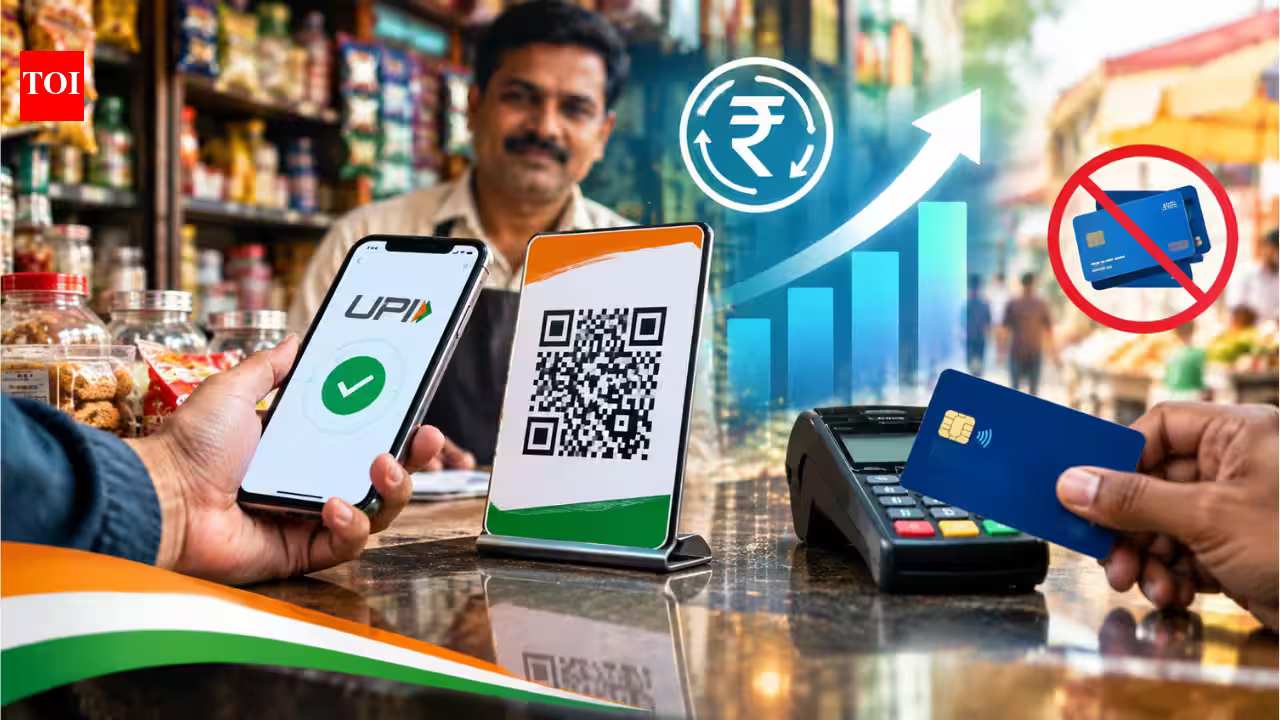
The landscape of Indian retail finance has undergone a seismic shift, fundamentally altering how consumers and merchants interact at the point of sale. The ubiquitous QR code, once a novelty, has become the primary mechanism for financial exchange in India, processing billions of transactions that were previously settled via cash or plastic cards. This transition marks more than just a technological preference; it represents a structural transformation of the Indian payment ecosystem.
The Ascendance of UPI in the Merchant Economy
The Unified Payments Interface (UPI) has transitioned from a peer-to-peer transfer utility to the backbone of Indian commerce. Data from the National Payments Corporation of India (NPCI) illustrates a consistent growth trajectory, with monthly transaction volumes reaching 24.51 billion in August. This surge is not merely a consequence of increased consumer engagement but reflects a deeper integration into the daily habits of the Indian populace.
In the sphere of Person-to-Merchant (P2M) payments, UPI has captured a dominant share. As of the most recent quarterly data, UPI accounts for over 77% of merchant transaction value. This dominance has come at the direct expense of traditional payment instruments. While the overall digital payments market continues to expand in terms of absolute rupee value, the growth rate of UPI significantly outpaces that of traditional card networks, signaling that the “checkout battle” is effectively shifting away from legacy hardware.
The Decline of Traditional Card Utility
Debit cards, which were once the primary digital alternative to cash, have experienced the most significant erosion of utility. With over a billion debit cards in circulation, their presence remains high, yet their functional role at physical store counters is waning. Consumers increasingly favor the speed and convenience of a QR scan over the multi-step process of inserting a card, entering a PIN, and awaiting authorization from a point-of-sale terminal.
Research indicates a direct inverse correlation: as UPI penetration deepens, the utilization of debit cards for retail purchases declines. For many consumers, the debit card is now relegated to a secondary instrument, primarily used for ATM withdrawals rather than commercial transactions. This shift poses a strategic challenge for banks, as the transactional revenue associated with debit card processing faces steady downward pressure.
The Strategic Evolution of Credit Products
While debit cards face obsolescence in retail, credit cards occupy a more nuanced position. Although their share of total merchant payment volume is shrinking, credit card expenditure in absolute terms remains robust. The market reflects a clear division of labor: UPI is the undisputed leader for high-frequency, low-value, everyday transactions, while credit cards maintain their stronghold in e-commerce, high-value discretionary spending, and premium travel categories.
However, the credit card industry faces an uphill battle regarding market penetration. Data from TransUnion CIBIL reveals that credit card ownership remains limited to approximately one in four credit-active Indians. The growth observed in recent years is largely driven by existing cardholders acquiring multiple lines of credit rather than the acquisition of new-to-credit customers. This suggests that the market for credit cards, in its traditional form, may be reaching a point of saturation among the urban, affluent demographic, necessitating a shift in product strategy.
UPI as an Infrastructure for Credit
The most significant development in this sector is the integration of credit products directly into the UPI interface. By allowing RuPay credit cards to be linked to popular UPI apps, the industry has effectively decoupled the payment instrument from the physical card. This move is a strategic attempt to maintain the relevance of credit products within a payment ecosystem that prefers the QR code.
Banks and financial institutions are actively incentivizing this behavior by offering rewards specifically tailored for credit-on-UPI transactions. This integration preserves the value proposition of credit—access to liquidity and rewards—while leveraging the superior distribution network of the UPI interface. Furthermore, the introduction of “Credit Line on UPI” suggests that the industry is moving toward a future where physical plastic becomes entirely redundant, replaced by digital credit facilities authorized through the same interface used for bank transfers.
Financial Literacy and Structural Inclusion
Beyond the mechanics of payment, the widespread adoption of UPI has served as a catalyst for digital financial inclusion. Academic analysis from institutions like the SP Jain Institute of Management & Research highlights that UPI has successfully converted “digitally dark” small-scale merchants into entities with a verifiable financial footprint. This transition provides a data-rich environment for banks to assess creditworthiness, potentially unlocking formal credit access for millions of micro-entrepreneurs who were previously excluded.
By operationalizing bank accounts created under government initiatives like the Jan Dhan Yojana, UPI has bridged the gap between basic account ownership and active financial participation. This infrastructure does not just move money; it creates a record of economic activity that transforms the informal economy into a quantifiable market participant.
The Future of the Payment Hierarchy
The evidence points toward a clear, emerging hierarchy in Indian finance. The physical card, once the symbol of modern payment, is transitioning into a niche tool for specific, high-end, or online segments. The QR code has firmly established itself as the default checkout mechanism for the broader market.
The industry is moving toward a landscape where the interface—the QR scan—remains constant, while the source of funds becomes increasingly flexible. Whether the transaction is funded by a savings account, a credit card network, or an instant digital credit line, the user experience remains unified. This architecture effectively shields the consumer from the underlying complexity of payment processing, ensuring that the QR code remains the primary point of engagement.
In this new reality, the battle is no longer between plastic and digital, but rather between different digital products attempting to capture the consumer’s default payment setting. As UPI continues to absorb new functionalities and integrate diverse credit products, the “scan” has effectively ended the era where the “swipe” dictated the terms of consumer behavior in India. The future of payments in the country will be defined by this ability to aggregate varied financial services into a single, seamless interaction.
Disclaimer: This content is auto-generated for informational purposes only.
Source: Read Original News