







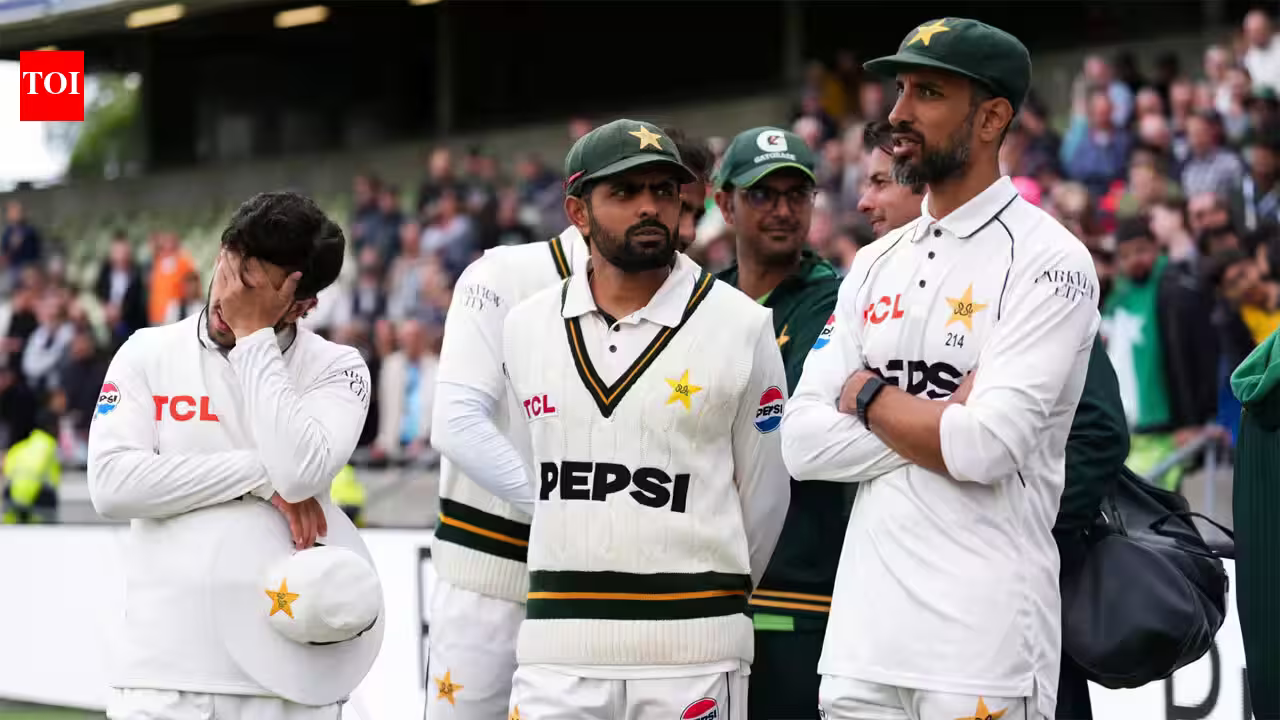
BIRMINGHAM — The dust has barely settled at Edgbaston, but for Pakistan captain Babar Azam, the process of navigating the wreckage of a brutal 3-0 series sweep at the hands of England has already begun. Following an eight-wicket defeat in the final Test on Saturday, the skipper issued a candid call for a fundamental reset, acknowledging that the time for reflection is no longer a luxury, but a necessity.
The comprehensive nature of the defeat in England has exposed deep-seated issues within the squad, ranging from tactical inflexibility to recurring struggles in adapting to the unique demands of English pitches. As the side prepares for the flight home, Babar emphasized that the path to redemption requires an honest evaluation of the current personnel and the selection framework that governed this difficult tour.
“I think we need to sit down and reflect on our mistakes, decide what type of playing eleven, and decide our players,” Babar told reporters after the conclusion of the third Test. “I think they are sitting, and the manager is coming, the selector is coming, and I sit back and then decide our best eleven.”
A Final Resistance in Birmingham
The series, which saw Pakistan crumble under pressure in the opening two encounters—failing to breach the 200-run mark in four consecutive innings—finally saw a flicker of defiance in Birmingham. In their second innings at Edgbaston, Pakistan posted a formidable 449, giving them a fighting chance to salvage pride.
The centerpiece of that resistance was a sensational debut from youngster Razaullah. In a performance that served as the lone bright spot in a dismal series, the newcomer claimed four wickets in England’s first innings before showcasing his explosive batting prowess. His 81-run cameo off just 63 balls, which featured nine towering sixes, briefly shifted the momentum and electrified the crowd. Supported by a dogged 95 from Shan Masood and a classic 76 from Babar himself, Pakistan finally demonstrated the technical aptitude they had lacked earlier in the campaign.
There was a brief moment of genuine belief on the final day when veteran quick Mohammad Abbas struck twice in the opening over of England’s chase. For a fleeting window, the prospect of a sensational heist seemed plausible. However, the class of Joe Root and Jordan Cox ultimately extinguished those hopes. Their unbroken 128-run partnership steered England to the target of 130 with relative ease, leaving Pakistan to contemplate what might have been.
The Complexity of English Conditions
Babar was quick to defend the shifting nature of his team selection throughout the series, which saw several changes implemented following the back-to-back losses that sealed their fate early on. He pointed to the specific difficulties of navigating foreign soil, where the ball moves significantly more than it does on the subcontinental tracks his side is accustomed to.
“Before we come here, we think about different things, and then we decide our team,” the captain explained. “And then unfortunately, we have a couple of changes after losing two matches because when we are coming to England, it is very difficult for the batsmen, and the first two pitches are very difficult.”
Critics have questioned the lack of stability in the batting order, yet Babar’s comments underscore the desperation of the management to find the right formula in conditions that rarely offer mercy to tourists. The struggle to reconcile long-term development with the immediate need for Test results has clearly taken its toll on the group.
The Search for Silver Linings: The Rise of Razaullah
Amid the gloom of the 3-0 whitewash, the emergence of Razaullah has provided a rare, tangible positive for the future of Pakistan cricket. Despite entering the series with limited first-class experience, the youngster exhibited a temperament and skill set that belied his age.
Babar was glowing in his praise for the debutant, suggesting that the team’s future strategy must prioritize the integration of such raw talent. “We enjoyed it. I think everyone is enjoying his innings and bowling, and he is a very good talent and raw. I think he’s good for us. The way he played this match and he’s giving confidence,” the skipper remarked.
By emphasizing the need to give young players exposure to high-pressure environments, Babar is signaling a potential shift in Pakistan’s long-term vision. He acknowledged that the goal is to utilize the talent of the “new boys” while adapting to diverse international conditions—a tall order for a team currently struggling to maintain consistency.
World Test Championship Woes
The statistical reality of the series is stark. The 3-0 defeat has left Pakistan anchored to the bottom of the World Test Championship standings. With a points percentage that has slid from 16.67 to 14.81, exacerbated by an eight-point deduction for slow over-rates, the side faces a long road back to relevance in the global standings.
As the curtain falls on this English tour, the message from the leadership is clear: the status quo is no longer tenable. For Babar Azam, the coming weeks will involve difficult conversations with selectors and team management. Whether these discussions lead to a radical overhaul or a more measured tactical adjustment, the pressure on the Pakistan captain to revitalize his side has never been greater. The series against England may be over, but the challenge of proving Pakistan’s mettle on the global stage has only just begun.
Disclaimer: This content is auto-generated for informational purposes only.
Source: Read Original News