








Shadows have lengthened over the international career of Mohammed Shami, one of India’s most prolific strike bowlers of the last decade. With eighteen months having passed since his last appearance in the India jersey, the conversation surrounding the veteran pacer has shifted from “when will he return” to “is he still in the selectors’ plans?” As the BCCI selection committee, helmed by Ajit Agarkar, continues to pivot toward a younger crop of fast-bowling talent, the 36-year-old’s path back to the national setup looks increasingly precarious.
The discourse reached a boiling point this week, with former Indian opening batter and prominent cricket analyst Aakash Chopra weighing in on the debate. Addressing the narrative that Shami is being unfairly sidelined due to his age, Chopra offered a pointed rebuttal that challenges the popular sentiment currently circulating among fans and pundits.
The “Age” Argument: Why the Comparison Falls Short
One of the most persistent arguments in favor of Shami’s recall is that elite fast bowlers in modern cricket can sustain their careers well into their mid-thirties. Proponents of this view often point to Australian spearhead Mitchell Starc, who continues to spearhead the Baggy Green’s pace battery with velocity and menace.
However, Chopra argues that drawing a parallel between Starc and Shami ignores the fundamental reality of their recent career trajectories.
“There is a stark difference between Mohammed Shami and Mitchell Starc,” Chopra explained in a recent video for CREX. “Starc has remained fit and played continuously, and whenever he has returned to action, he has spearheaded the attack. No question can be raised over his form, fitness, or sharpness. Mohammed Shami, on the other hand, has had significant injuries.”
Chopra’s analysis touches on the “fitness-first” mandate that the Indian team management has prioritized under head coach Gautam Gambhir and the selection committee. For a bowler whose rhythm is predicated on a high-intensity, wrist-dominant release, the recovery from surgery and the subsequent transition back to match fitness have proven to be significant hurdles.
Intensity and Performance: The Post-Surgery Reality
While Shami’s record speaks for itself—a resume highlighted by his spectacular performance in the 2023 ODI World Cup—his recent returns in domestic cricket have raised eyebrows among those tasked with evaluating talent for the highest level.
Shami’s return to the field, culminating in his milestone 100th first-class match during the Duleep Trophy 2026 final, proved that he still possesses the guile that made him a nightmare for batters. Yet, as Chopra noted, the qualitative metrics are different. “When he returned to domestic cricket, there were question marks over his pace and whether he was in full swing. He did take wickets, but that intensity appeared to be lacking,” he said.
At the international level, where the margin between a wicket-taking delivery and a loose ball is razor-thin, selectors are looking for the “full swing” version of Shami. Anything less creates a logical gap between the player’s past reputation and his current on-field output.
Refuting the Ageism Narrative
Perhaps the most compelling part of Chopra’s assessment is his dismissal of the idea that the BCCI is running an “age-based” purge. If the selectors were truly looking to clear out senior personnel, he argues, the faces of the team would look vastly different.
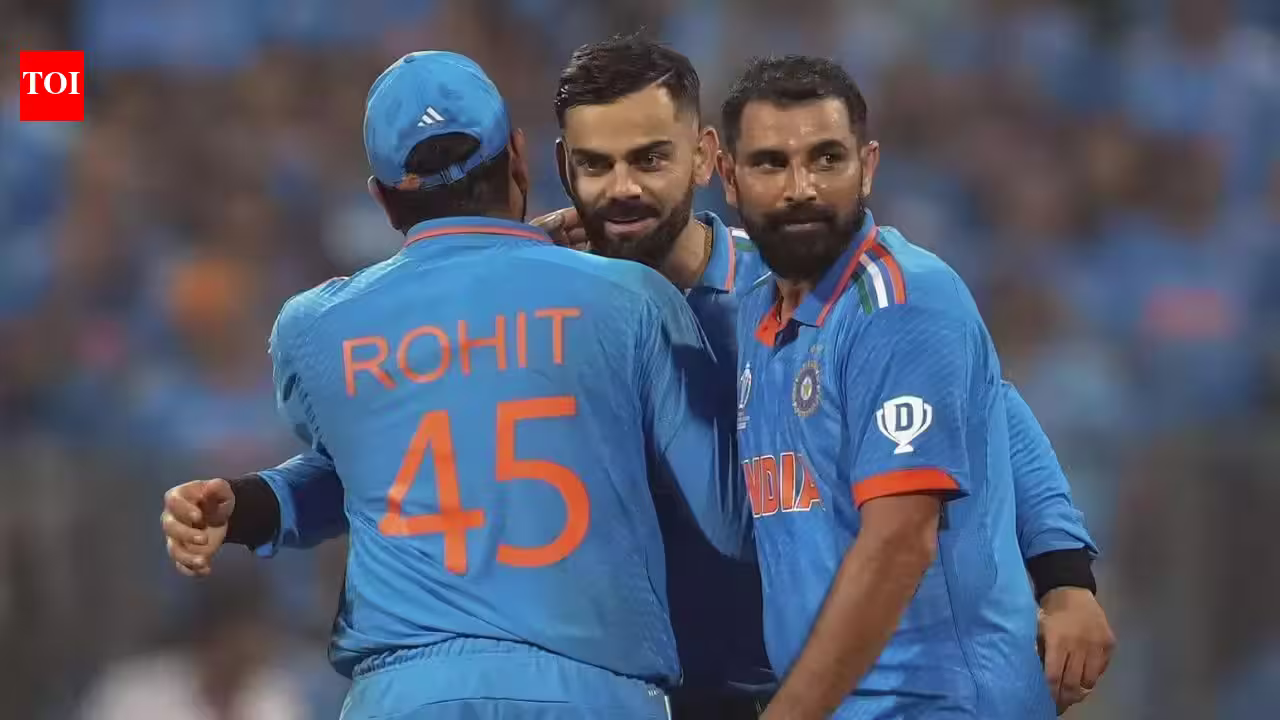
“Is Shami’s age going against him? I think that would be preposterous,” Chopra stated. “It makes no sense whatsoever to drop someone because of his age, because you are still selecting veterans like Virat Kohli and Rohit Sharma. They are older than Shami, and they remain central to the team’s plans.”
This perspective shifts the onus back onto the internal processes of the selection committee. If age is not the factor, then the decision-making process is likely rooted in a combination of fitness longevity, recovery time, and the tactical desire to integrate younger bowlers who can provide sustained performance across all formats of the game.
The Road Ahead: A Closing Window?
As the Indian team moves forward, the reality is that the pace bowling pipeline is more robust than it has ever been. With youngsters consistently clocking high speeds and maintaining fitness through the rigors of a packed international calendar, the “waiting room” for the senior team is crowded.
Shami remains a legend of the game, a man who has carried India’s bowling attack on his shoulders through countless hostile spells. However, in the high-stakes world of international cricket, sentiment rarely dictates selection. Unless Shami can demonstrate the sustained, high-intensity rhythm that made him the best in the world, the selection committee’s silence—and their reliance on newer faces—is likely to continue.
Ultimately, Chopra’s conclusion remains the most pragmatic take on a complicated situation: “I don’t think age is the factor. At some point, the selectors will spell out the reason, but I don’t think it is age.” For now, Shami continues his grind in the domestic circuit, but for a pacer who has been the heartbeat of India’s bowling, the path back to the blue jersey may require more than just experience—it requires a return to the absolute peak of his physical powers.
Disclaimer: This content is auto-generated for informational purposes only.
Source: Read Original News