









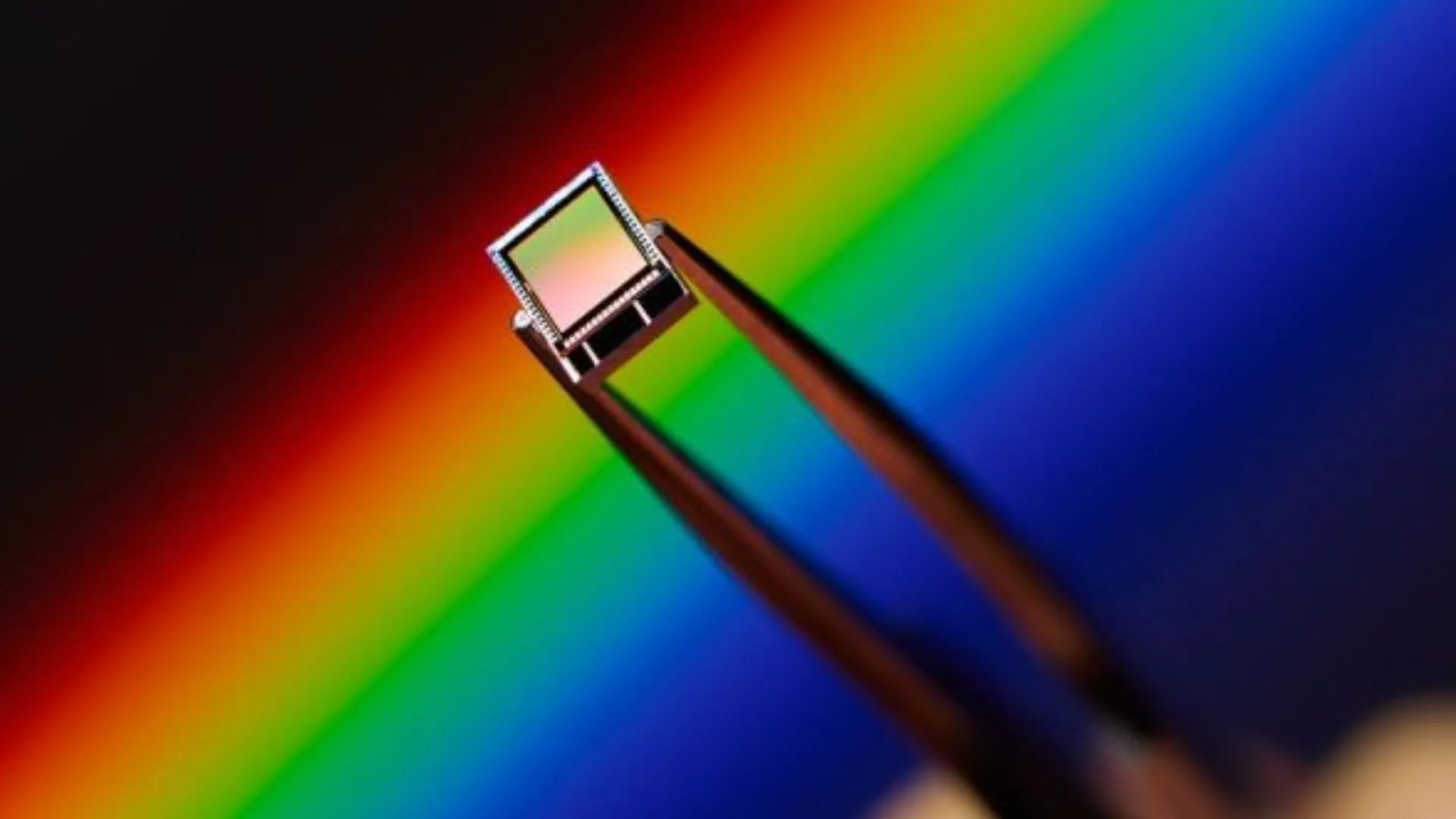
A New Paradigm in Photon Sensing
The evolution of imaging technology has historically been defined by the quest for higher resolution and greater light sensitivity. However, as the demands for real-time analysis in sectors like autonomous systems and medical diagnostics grow, the traditional architecture—where sensors act as passive collectors of raw data—is reaching a performance ceiling. Edinburgh-based semiconductor company Singular Photonics has introduced a solution to this bottleneck with Litavis, a new image sensor that merges photon counting, precise timing, and statistical processing directly onto a single silicon chip.
Litavis is being categorized as the world’s first single-photon avalanche diode (SPAD) sensor capable of in-pixel processing. By integrating histogramming and photon statistics at the pixel level, the sensor deviates from conventional designs that must shuttle massive volumes of raw data to external processors. This architecture not only redefines what an image sensor is but also sets a new standard for data efficiency in high-speed, low-light imaging environments.
Advanced Capabilities of SPAD Architecture
At the core of the Litavis device is SPAD technology, which is engineered to detect individual photons. This high sensitivity is essential for applications requiring detection at the quantum level or in environments with extremely low light. Where standard sensors might struggle with noise or lack of signal, Litavis leverages its sensitivity to extract precise timing information regarding the arrival of each photon.
What distinguishes Litavis is its software-configurable nature. Unlike specialized sensors that are hard-coded for a specific task, the hardware within Litavis can be reconfigured to suit different operational requirements. The sensor supports multiple modes, including traditional photon-counting imaging, programmable time gating, time-correlated single-photon counting (TCSPC), and coincidence detection. By providing this flexibility, the device functions as a multi-modal imaging platform rather than a static camera. This versatility ensures that a single hardware investment can address varied technical challenges without necessitating the design of multiple custom chips.
Processing Data at the Source
The most significant technical achievement of the Litavis sensor is its ability to perform digital photon processing within the pixel array itself. The sensor operates in a continuous 256 × 256-pixel photon-counting mode suitable for low-light conditions. Simultaneously, it can manage timestamped photon events across a 64 × 64 macropixel grid. This provides picosecond-resolution timing, which is vital for applications requiring high temporal precision.
The device also enables multi-event timing, allowing researchers to capture multiple photon arrivals during a single excitation cycle and assign them to specific time bins. Because the sensor performs in-pixel histogramming, it can analyze the statistical distribution of these events locally. By performing these calculations on-chip, the sensor drastically reduces the bandwidth requirements for data transfer. Consequently, system developers can achieve lower-latency performance and improved power efficiency, as the secondary processor is no longer burdened with the initial sorting and categorization of vast streams of raw photon data.
Broad Applications in Scientific and Industrial Domains
By moving intelligence into the sensor, Singular Photonics has created a tool that has far-reaching implications for fields that rely on complex light analysis. One primary use case is fluorescence lifetime imaging, where researchers monitor how long molecules remain in an excited state. Similarly, the sensor is well-suited for dynamic light scattering, a technique used to measure the size of particles in a fluid, and various forms of quantum sensing.
Beyond the laboratory, the sensor’s ability to handle high-speed, timestamped data is highly relevant for machine vision, physical artificial intelligence, and robotics. In these industries, the ability to interpret depth and temporal data in real-time is a requirement for safety and navigation. The software-configurable architecture allows developers to experiment with these different modes, effectively shortening the development lifecycle for new robotic or industrial sensing products.
The Future of Multimodal Imaging
The commercial introduction of Litavis represents a transition toward “intelligent sensing,” where the sensor is an active participant in data interpretation rather than a mere transceiver. CEO Shahida Imani has noted that the sensor was designed to address the need for scalability and adaptability in modern imaging systems. As industries shift toward more complex automated environments, the capacity to process data as it is captured becomes a critical competitive advantage.
The industry response has been immediate, with significant pre-orders placed by international institutions and corporations. As Singular Photonics prepares to demonstrate the technology at trade events like SPIE Sensors + Imaging and VISION, the broader community will gain insight into how this integration of photonics and local processing will reshape the landscape of digital imaging. By removing the traditional barriers between light capture and data interpretation, Litavis provides a foundation for the next generation of highly efficient, high-performance sensing platforms. The ability to shift between modes on the fly ensures that this hardware remains relevant as technical requirements evolve across medical, scientific, and industrial applications.
Disclaimer: This content is auto-generated for informational purposes only.
Source: Read Original News