








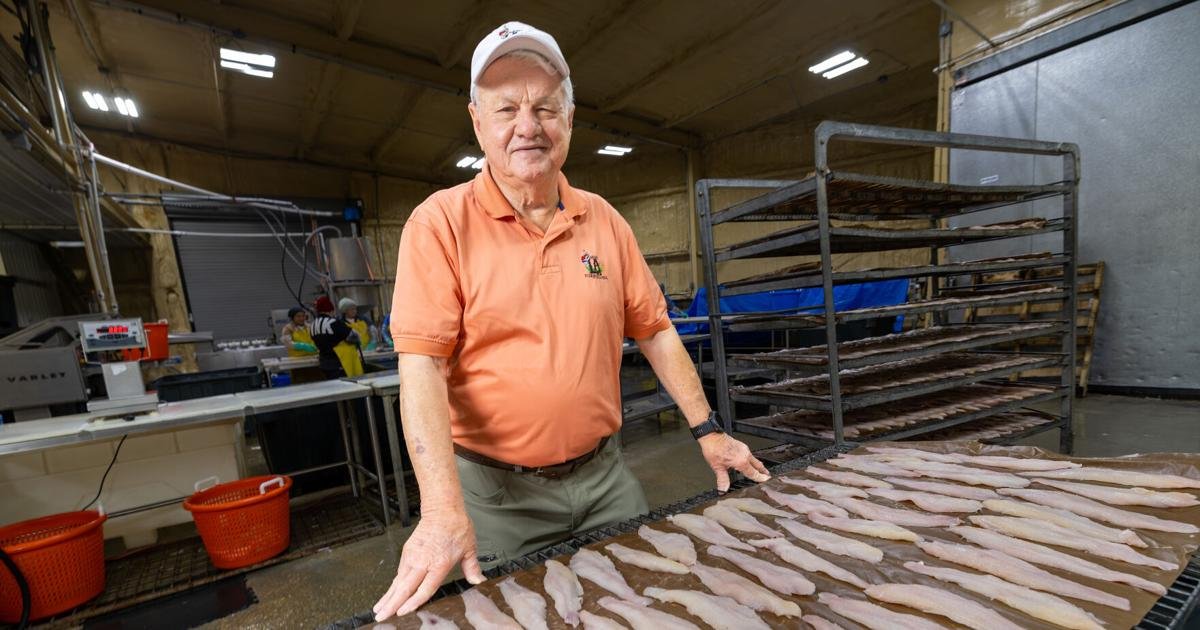
The Gulf of Mexico is currently the site of a high-stakes ecological and economic tug-of-war as researchers and corporations race to determine if the open ocean can become the next frontier for industrial-scale fish farming. While experimental platforms—such as the one operated by the Dauphin Island Sea Lab off the coast of Alabama—are currently testing the viability of raising redfish in submerged pens, the broader industry is looking toward a future of massive, commercial-scale offshore aquaculture.
Supporters argue that this shift is not only inevitable but necessary. With the United States importing roughly 85% of its seafood, proponents view domestic offshore farming as a pathway to food security and economic growth. However, this potential transformation faces intense scrutiny from environmentalists and traditional commercial fishing fleets, who fear the consequences of disease, habitat degradation, and pollution in one of the nation’s most vital water bodies.
## Tech-Driven Monitoring and Sustainable Scalability
To overcome the significant environmental challenges inherent in open-ocean farming, current pilot projects are integrating advanced technological solutions. Modern offshore aquaculture relies on high-tech monitoring systems to manage the delicate balance between high-density fish populations and the surrounding marine ecosystem.
The experimental farms utilize remotely operated underwater cameras and sensor arrays to track water quality, oxygen levels, and the health of the stock in real-time. By automating the feeding process through solar-powered machines, researchers can minimize waste—a critical factor in preventing the nutrient runoff that exacerbates the Gulf’s infamous “dead zones.” Furthermore, these platforms are engineered with submergeable technology, allowing the entire structure to be lowered deep below the surface to protect the livestock from the volatile weather and hurricanes that frequently impact the Gulf region.
## AI and Data Analytics in the Future of Aquaculture
As the industry scales, the role of artificial intelligence and data analytics will likely become the backbone of operations. Companies pursuing federal permits for massive net pens—each capable of holding hundreds of thousands of pounds of fish—are looking to predictive modeling to optimize growth cycles while minimizing ecological footprints.
AI-driven analytics are being deployed to monitor fish behavior and stress markers, enabling farmers to intervene before disease spreads through a pen. This level of precision is essential for shifting the narrative of offshore farming from a “recipe for disaster” to a controlled, science-backed industry. By applying the same data-centric approach used in modern agricultural technology, firms like Ocean Era and other stakeholders hope to prove that human consumption needs can be met without compromising the biodiversity of the Gulf’s waters.
## Regulatory Hurdles and the Path to Commercialization
Transitioning from experimental pilots to industrial operations involves navigating a complex federal permitting process. While the legislative landscape—marked by efforts like the MARA Act—has shown increasing support for sustainable offshore aquaculture, the pathway remains contentious.
The National Oceanic and Atmospheric Administration (NOAA) has already identified “Aquaculture Opportunity Areas” to streamline potential development. As the industry moves forward, the success of these early pilot programs will serve as a bellwether for local fishing communities. If these projects can demonstrate that they provide a stable, eco-friendly source of protein without triggering the environmental fallout seen in some international aquaculture operations, the Gulf may soon see a permanent shift in how it contributes to the national food supply. Whether this evolution will be remembered as a breakthrough in sustainable production or an industrial intrusion remains the central question of the debate.
Disclaimer: This content is auto-generated for informational purposes only.
Source: Read Original News