






A Gesture Beyond Diplomacy: Sheikh Khaled’s Final Act in India Highlights Human Connection
In the high-stakes world of international statecraft, where every movement is choreographed, every word is vetted, and every interaction is governed by strict protocols, genuine human connection is a rarity. During his recent high-profile visit to India, Sheikh Khaled bin Mohamed bin Zayed Al Nahyan, the Crown Prince of Abu Dhabi, demonstrated that true leadership is often defined not by the grandeur of official summits, but by the quiet, unscripted moments of humility.
As his state visit drew to a close, the delegation had already transitioned into the final phase of departure logistics. The air was thick with the formality that defines bilateral summits, and the Crown Prince was mere seconds away from concluding a successful tour aimed at deepening the strategic partnership between the UAE and India. However, before stepping into his vehicle for the final time, Sheikh Khaled paused.
A Moment of Unscripted Humility
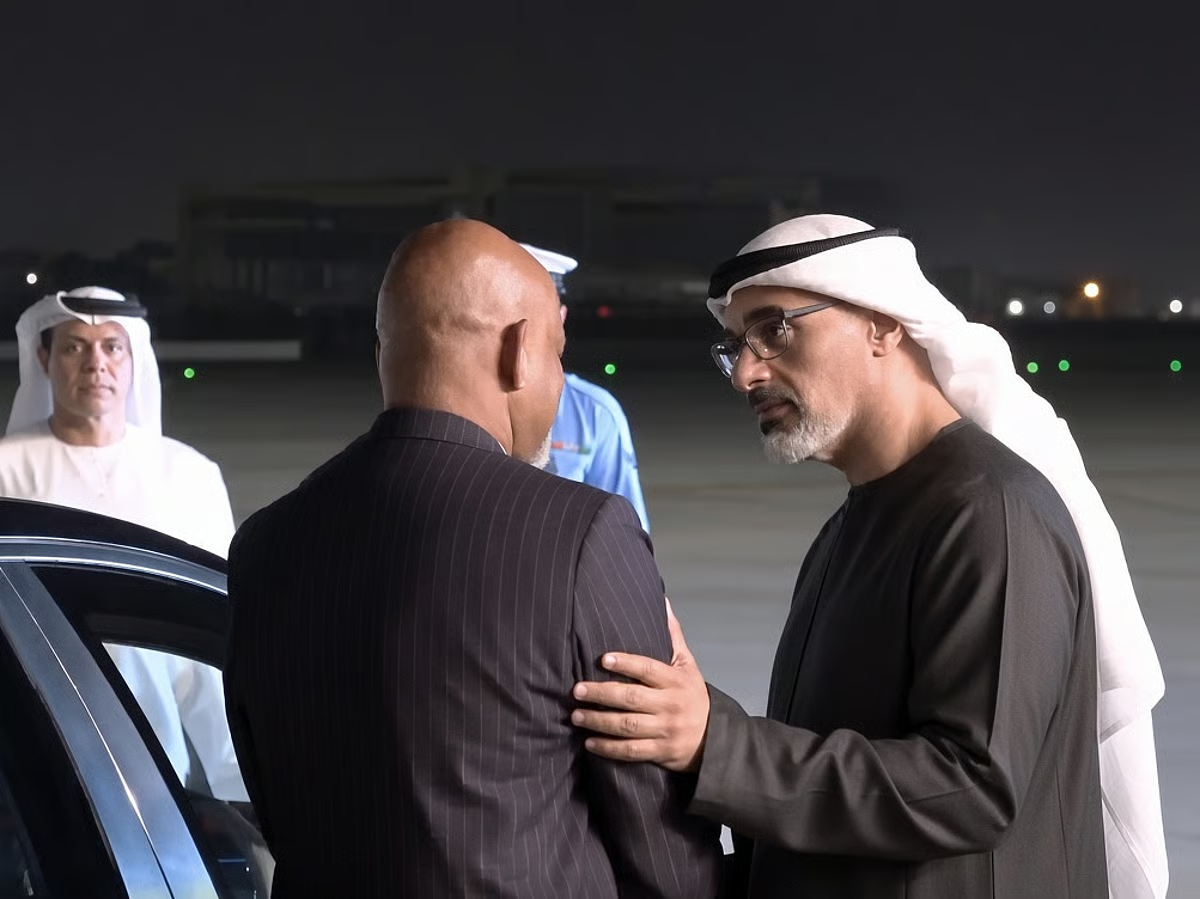
Observers noted that the Crown Prince, already on his path to depart, suddenly halted and turned back. He bypassed his security detail and official handlers to approach a man who had remained in the background of the high-level talks: the driver assigned to his convoy throughout his Indian visit. In a gesture that caught many by surprise, Sheikh Khaled extended his hand to offer a personal, warm handshake—a clear, deliberate act of appreciation for the individual who had navigated the hectic streets of the capital to ensure his safe and timely movement.
For those watching, the moment was striking. It was a departure from the rigid choreography typically associated with visiting dignitaries. While the visit was marked by discussions on energy security, trade corridors, and investment, this brief interaction spoke volumes about the character of the UAE leader. It underscored a philosophy of leadership that recognizes the dignity of every person, regardless of their role or title in the logistical machinery of a state visit.
Strengthening the UAE-India Bond
The incident serves as a poignant footnote to a visit that was already highly productive. The strategic partnership between the UAE and India has reached new heights in recent years, built on the bedrock of shared economic interests and deep cultural ties. Yet, as analysts often point out, the strength of international relations is ultimately sustained by personal rapport and mutual respect at the highest levels.
By acknowledging the person behind the wheel, Sheikh Khaled echoed the values of his predecessors, reinforcing the narrative that the “brotherhood” between the two nations is not merely a bureaucratic phrase, but a genuine sentiment. Such actions tend to resonate deeply with the Indian public, where humility and respect for service are highly revered cultural virtues.
The Significance of Quiet Diplomacy
In an era of polarized global politics, the “human touch” has become a potent tool of soft power. Leaders who can bridge the gap between their elevated status and the common experience often find greater success in building long-term alliances. As the Crown Prince departed, the image of him shaking the driver’s hand lingered in the minds of those present—a powerful reminder that the most significant diplomatic signals are sometimes sent without a single word being spoken.
This gesture has left a lasting impression on those who witnessed it, humanizing the stature of the Crown Prince and grounding the complex machinery of international diplomacy in the simple, universal language of kindness. It is a moment that will likely define the public memory of his visit far longer than the formal communiqués, proving once again that a leader’s greatness is reflected in how they treat those who expect the least from them.
Disclaimer: This content is auto-generated for informational purposes only.
Source: Read Original News