








The air in the Indian film industry is thick with anticipation, and for once, the noise is actually turning into a symphony. Nitesh Tiwari’s gargantuan undertaking, the retelling of the Ramayana, has spent months under the microscope of an unforgiving internet. But as of this week, the narrative has shifted. With the release of the film’s first track, “Jai Jai Ram,” on the auspicious occasion of Ganesh Chaturthi, the production has finally delivered a moment that feels like a genuine turning point.
The song, a divine collaboration between the legendary A.R. Rahman and poet-lyricist Dr. Kumar Vishwas, sung with haunting precision by Arijit Singh and Shreya Ghoshal, serves as more than just a musical debut. It is an aesthetic recalibration. After a turbulent few months of speculative leaks and mixed reactions to early footage, the “Jai Jai Ram” video feels like the production team finally showing their hand—and it’s a strong one.
A Musical Masterpiece Sets the Tone
Rarely does a song release carry the weight of an entire cinematic universe’s reputation, but such is the gravity of Ramayana. A.R. Rahman has crafted a composition that balances the ancient sanctity of the epic with the modern, immersive soundscape expected of a world-class production. Dr. Kumar Vishwas’s lyrics are deliberate, evocative, and deeply rooted in the cultural consciousness.
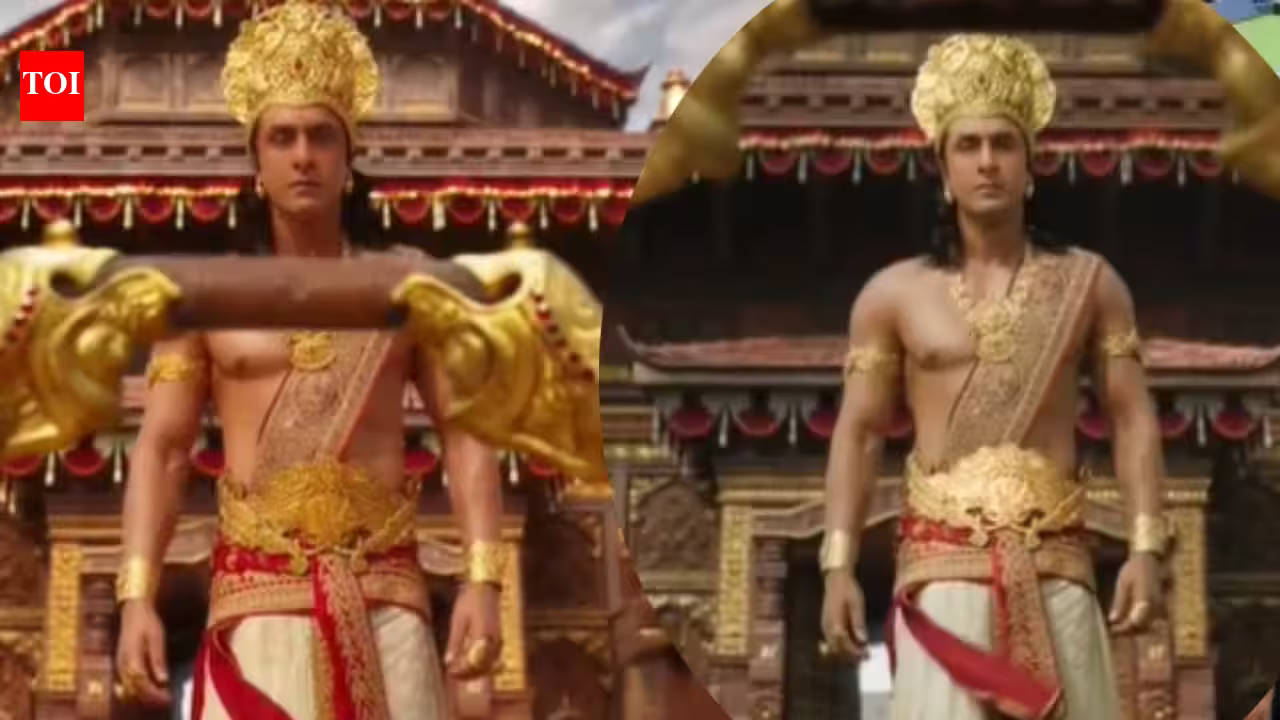
When the crystalline vocals of Shreya Ghoshal meet the soul-stirring depth of Arijit Singh, the result is a transcendental experience that feels appropriately epic. Yet, for all the auditory brilliance, it is what is happening on screen that has truly set social media ablaze. The visuals provided in the music video offer our clearest, most intimate look yet at Ranbir Kapoor as Lord Rama and Sai Pallavi as Sita. The chemistry captured in the fleeting, tender moments of their divine union has replaced the skepticism of recent months with a palpable sense of wonder.
The Great Visual Pivot: Addressing the Backlash
If you spent any time on X (formerly Twitter) or Reddit over the past 48 hours, you would have seen the side-by-side comparisons. For months, the digital discourse surrounding Ramayana was dominated by a cynical critique of its visual effects. Critics were vocal about color grading that felt washed out, VFX that lacked “finish,” and an overall aesthetic that many felt didn’t do justice to the scale of the mythos.
However, the “Jai Jai Ram” drop has sparked a fascinating reversal. Fans have been busy creating “Before and After” grids, juxtaposing previous teasers with the crisp, vibrant, and emotionally resonant frames from this new song. The upgrades are impossible to ignore. The color palette has been enriched, the lighting feels more deliberate, and the digital artistry surrounding the characters—particularly in the wedding sequence—shows a significant maturation in production value. The consensus is clear: the team isn’t just working; they are evolving.
When Production Teams Actually Listen
There is a recurring trope in the entertainment industry where creators claim to listen to their audience, but rarely do we see a tangible, structural change in response to that feedback. In the case of Nitesh Tiwari’s Ramayana, producer Namit Malhotra’s earlier promise that the team was “working diligently and pouring every effort into honouring the reverence” of the epic now rings with newfound credibility.
Back in April, when the project faced a wave of criticism following initial leaks, there was legitimate concern that the vision might be compromised by budgetary constraints or time pressures. By opting to treat the earlier clips as “just the beginning,” the production team has successfully managed expectations. They didn’t retreat or go silent; they doubled down on the post-production work. Seeing the tangible improvements in these frames provides a level of reassurance that is rare in the high-stakes world of mythological filmmaking. It suggests a collaborative spirit between the creators and the audience—a rare dynamic where feedback is treated as a roadmap rather than an insult.
The Scale of the Epic
Beyond the VFX and the melodies, let’s not lose sight of the sheer ambition required to pull this off. Directed by the visionary Nitesh Tiwari—whose knack for grounded, emotionally resonant storytelling (as seen in Dangal and Chhichhore) is now being applied to a canvas of cosmic proportions—the film is a massive logistical puzzle.
With Yash portraying the complex and formidable Ravana, Sunny Deol stepping into the mighty shoes of Hanuman, and Ravi Dubey bringing a nuanced depth to Lakshmana, the casting is as much of a draw as the technology. The decision to split the film into a two-part epic is a strategic masterstroke, allowing for the narrative density that the Ramayana demands. By the time the first installment hits theaters in Diwali 2026, the audience will have been on a two-year journey of anticipation, skepticism, and—if this song is any indication—growing admiration.
Diwali 2026: The Final Countdown
As the dust settles on the initial excitement of the song drop, the reality remains: we are still a long way from the finish line. The wait until Diwali 2026 is grueling, but it is also a necessary timeline for a project of this scale. The “Jai Jai Ram” video has done its job perfectly—it has effectively pivoted the conversation from “will this be good?” to “how much more can they do?”
For now, the project has successfully regained the benefit of the doubt. The audience has been given a taste of the grand tapestry Nitesh Tiwari is weaving, and for the first time in a long time, the public is leaning in rather than pulling away. If the production continues to iterate with this level of care and responsiveness, we might not just be looking at a film; we could be looking at the defining cinematic event of the decade. The journey to Diwali 2026 has officially begun, and based on this first step, it’s going to be a fascinating ride.
Disclaimer: This content is auto-generated for informational purposes only.
Source: Read Original News