









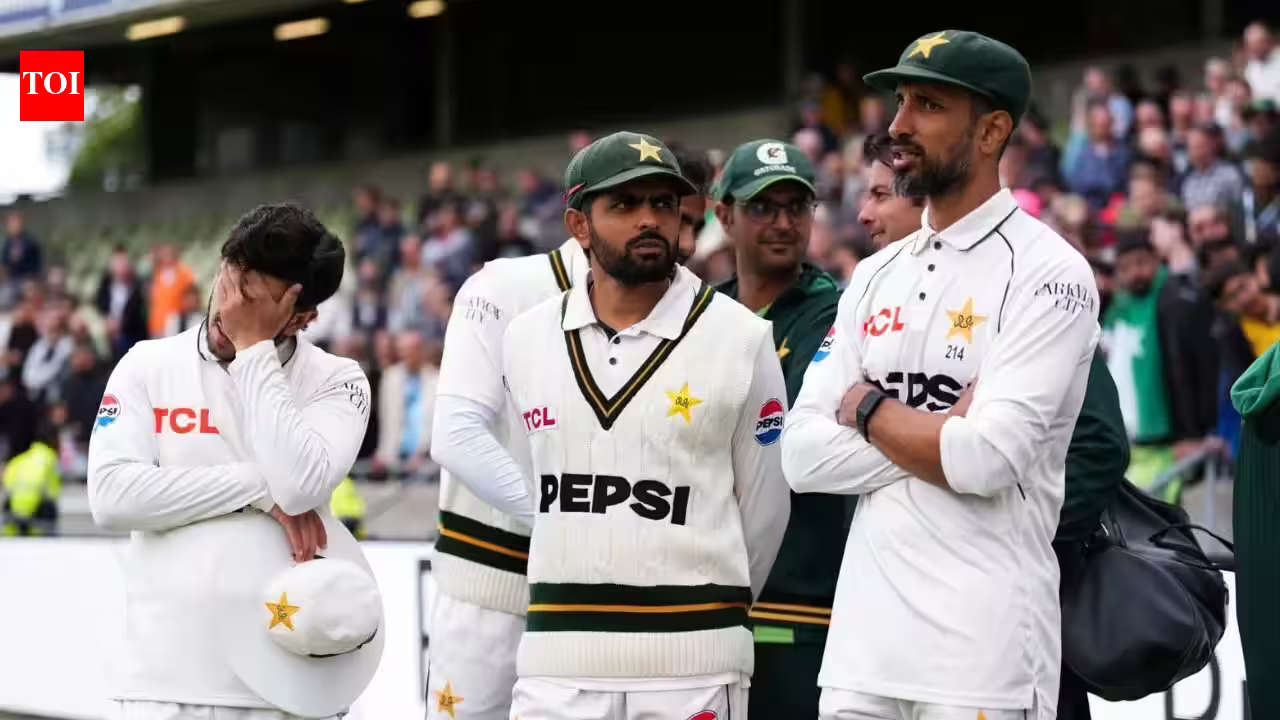
CRICKET’S landscape for Pakistan has darkened significantly this week as the team’s already dismal 0-3 Test series sweep at the hands of England was punctuated by a harsh disciplinary hammer blow from the International Cricket Council. The governing body has officially docked Pakistan 11 World Test Championship (WTC) points and slapped the entire squad with a 50 percent match fee fine, capping off a nightmare campaign in Birmingham.
The sanctions were issued following the conclusion of the third and final Test at Edgbaston, where match officials determined that Pakistan was an astounding 11 overs short of the minimum required over-rate. This administrative failure serves as a grim reflection of a side that struggled to find its rhythm, consistency, or composure throughout a punishing series on English soil.
A Double Jeopardy of Sanctions
The penalties, handed down by Ranjan Madugalle of the Emirates ICC Elite Panel of Match Referees, follow a rigorous review by the officiating team, which included on-field umpires Paul Reiffel and Chris Gaffaney, third umpire Allahudien Palekar, and fourth umpire Russell Warren.
The financial sting is substantial. Under Article 2.22 of the ICC Code of Conduct for Players and Player Support Personnel, teams are fined five percent of their match fee for every over they fall short of the target. With an 11-over shortfall, the math dictated a fine exceeding the total, triggering the maximum allowable penalty of 50 percent per player. Pakistan captain Babar Azam, acknowledging the team’s lapse in professionalism, pleaded guilty to the charges and accepted the sanction, bypassing the need for a formal hearing.
However, the sporting consequences are arguably more damaging. In the context of the World Test Championship, the ICC applies a “one point per over” deduction rule. By failing to complete their overs, Pakistan has forfeited 11 hard-earned points, further anchoring them to the bottom of the WTC table. They now languish in ninth place with a dismal points percentage of 4.63, a figure that paints a bleak picture of their standing in international red-ball cricket.
Collapse at Edgbaston
The disciplinary action acts as a painful footnote to a game that effectively mirrored Pakistan’s wider struggle throughout the series. At Edgbaston, the visitors were dismantled, falling to an eight-wicket defeat that solidified England’s 3-0 dominance.
The rot set in early for Pakistan, who were bundled out for a meager 133 in their first innings. England, playing with a renewed sense of purpose, capitalized on the fragile batting lineup to post 453, securing a commanding 320-run lead. While Pakistan showed flashes of resilience in their second innings—highlighted by Shan Masood’s gritty 95, Babar Azam’s 76, and an impressive 81 from debutant Razaullah—the damage had already been done.
Despite a valiant 121-run partnership for the ninth wicket between Razaullah and Mohammad Abbas, Pakistan could only set England a target of 130. The English side made short work of the chase, reaching 130/2 with Joe Root and Jordan Cox anchoring the victory with unbeaten fifties.
This final capitulation was merely the conclusion of a series defined by one-sided contests. England previously dominated the opener at Headingley with an innings and 103-run victory, followed by a clinical 194-run win at the historic Lord’s Cricket Ground.
The Road Ahead: Searching for Redemption
With the England tour now concluded, Pakistan’s statistics make for grim reading: nine Tests played, seven defeats, and a mere two victories. The 11-point deduction is more than just a regulatory fine; it is a symbol of a program in crisis.
The pressure on the team management and the players to arrest this slide will be immense as they look toward their next WTC commitment. In November, Pakistan will play host to Sri Lanka for a two-Test series held in Rawalpindi and Lahore. These matches will serve as a critical litmus test for a side currently searching for both form and discipline.
For Babar Azam and his squad, the upcoming home series is no longer just about winning matches; it is about reclaiming the dignity of their Test cricket identity. If they are to claw their way back from the basement of the WTC standings, they will need to address not only the tactical failings that led to their 3-0 humiliation but also the professional lapses that saw them penalized in the very match they were meant to be competing for pride.
As the dust settles on the Edgbaston debacle, the reality remains: Pakistan is at a crossroads. The ICC penalties are the price paid for a series that went wrong from the start, leaving the team with a mountain to climb as they attempt to salvage what remains of their World Test Championship campaign.
Disclaimer: This content is auto-generated for informational purposes only.
Source: Read Original News