









The Economic Impact of Digital Tolling Infrastructure
The rapid digitization of India’s transport sector is reaching a critical inflection point. As the Ministry of Road Transport and Highways (MoRTH) accelerates the transition toward a fully barrier-free tolling ecosystem, the economic implications are becoming increasingly clear. Union Minister Nitin Gadkari recently highlighted that the full implementation of this electronic toll collection framework could generate an annual revenue benefit of up to Rs 25,000 crore for the government. This shift represents more than just a logistical upgrade; it is a fundamental transformation of national infrastructure management.
The success of the FASTag initiative, which has already facilitated a 10% increase in toll revenue to over Rs 82,000 crore, underscores the efficacy of digital payment systems in curbing revenue leakage. By minimizing manual intervention, the government has been able to improve accountability across the national highway network. The current trajectory suggests that as systems transition from traditional plazas to automated, barrier-free environments, the leakage traditionally associated with cash-based systems will be virtually eliminated. This fiscal efficiency is crucial for the sustainable development of India’s expansive road network, as it allows for the reinvestment of saved funds into high-quality infrastructure projects.
Technological Foundations of Barrier-Free Movement
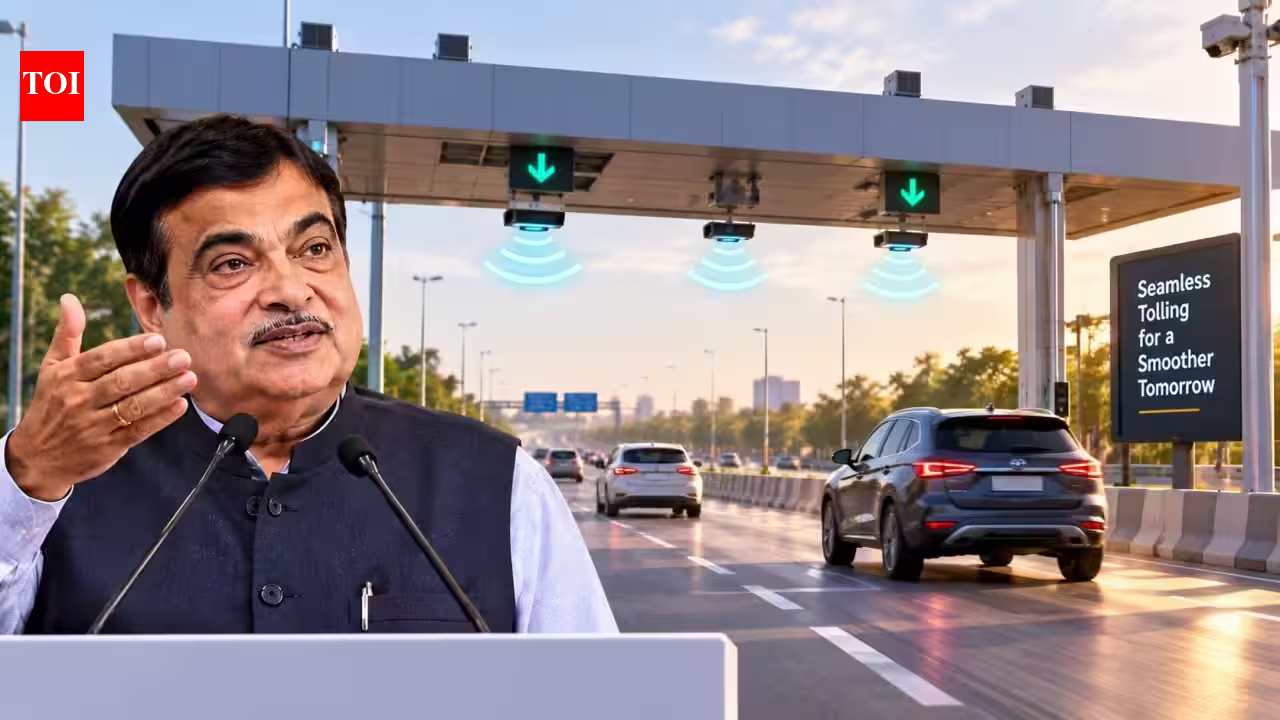
At the heart of this transition is the integration of Automatic Number Plate Recognition (ANPR) systems with existing FASTag protocols. The objective is to facilitate Multi-Lane Free-Flow (MLFF) tolling, a system where vehicles do not need to slow down or come to a complete halt to process payments. By removing physical barriers, the government aims to eliminate the bottlenecks that have historically plagued long-haul logistics.
Operational statistics provided by the Ministry indicate that the cost of operating toll collection infrastructure has seen a dramatic reduction, dropping from approximately 12% in the pre-digital era to current levels of 2–3%. This transition has significant implications for both public and private sector operators, who can now allocate capital toward maintenance and technological upgrades rather than intensive human resource management at toll plazas. As the country moves toward a 100% barrier-free rollout by March 2027, the synergy between ANPR cameras and cloud-based payment gateways will redefine the commuter experience on Indian highways.
Efficiency Gains and Environmental Sustainability
Beyond fiscal benefits, the transition to a barrier-free environment offers substantial environmental and productivity advantages. For decades, the Indian logistics sector suffered from the “hidden tax” of idle time at toll booths. Estimates suggest that vehicles previously spent an average of 12 minutes waiting at each plaza, leading to massive fuel wastage and increased carbon emissions.
The government’s shift toward seamless transit is projected to provide annual fuel savings exceeding Rs 5,250 crore. When these savings are aggregated across millions of commercial and private vehicles, the economic multiplier effect is significant. Reduced transit times directly translate into faster turnaround for the logistics industry, lowering the overall cost of goods distribution across the country. Furthermore, by reducing the start-stop cycle of heavy commercial vehicles at toll plazas, the system contributes to lower local air pollution levels, aligning national infrastructure goals with broader climate commitments.
Interoperability and the Future of Mobility Data
A core theme in the latest infrastructure development strategy is the concept of interoperability. The launch of the “OneTag” facility—which enables vehicle owners to link existing FASTags to new bank accounts via the Rajmarg Yatra app—is a testament to this philosophy. By decoupling the tag from a rigid banking structure, the government is introducing a customer-centric approach that prioritizes flexibility and ease of use.
The vision for the next phase of Indian mobility involves creating a unified data ecosystem. By integrating FASTag data with vehicle registries, insurance databases, and banking platforms, the government is laying the groundwork for a truly intelligent transportation network. This integration is vital for policy development, as it provides real-time traffic flow data, occupancy patterns, and logistics bottlenecks. Such granular visibility allows policymakers to make data-driven decisions regarding highway expansion, maintenance scheduling, and urban planning. The emphasis on interlinking these databases is expected to foster an environment where fintech startups can offer value-added services, ranging from dynamic insurance premiums based on driving behavior to optimized route planning for freight operators.
Addressing Challenges in Logistics and Enforcement
Despite the technological progress, the sector faces ongoing challenges, particularly regarding freight transparency and regulatory enforcement. Minister Gadkari has explicitly called upon the technology industry to develop robust solutions for detecting vehicle overloading. Overloading remains a significant concern, contributing to the premature degradation of road surfaces and posing severe road safety risks.
The move to digitize weight enforcement is the next logical step in the modernization of highway management. By leveraging the same digital infrastructure used for tolling, the ministry aims to create a transparent system where overloaded vehicles are automatically identified and penalized without the need for manual checkpoints that currently disrupt traffic flow. This push for “knowledge-based wealth” necessitates a deeper involvement from India’s growing startup ecosystem, which is uniquely positioned to build sophisticated sensors and AI-driven monitoring software. The goal is to move toward a self-regulating transport sector where technology acts as an objective enforcer of traffic and safety laws.
Building a Global Benchmark for Infrastructure
India’s experience with the rapid scaling of FASTag and the transition to MLFF serves as a case study for emerging economies. The ability to issue 13 crore FASTags and reach a 98% penetration rate at national highway toll plazas indicates that India possesses the digital maturity to handle large-scale infrastructural shifts.
The strategy going forward is not merely about collecting revenue but about optimizing the entire mobility value chain. As the nation prepares for the 2027 target, the focus must remain on the robustness of the underlying technology stack. The collaboration between government agencies, financial institutions, and the technology private sector is set to create a global benchmark for intelligent highways. By transforming physical assets into digital endpoints, India is setting the stage for a future where mobility is seamless, transparent, and significantly more affordable. The successful realization of this vision will not only drive government revenue but will also serve as a foundational pillar for India’s ambition to become a global logistics hub, reducing the cost of logistics and fostering faster economic integration across its states.
Disclaimer: This content is auto-generated for informational purposes only.
Source: Read Original News