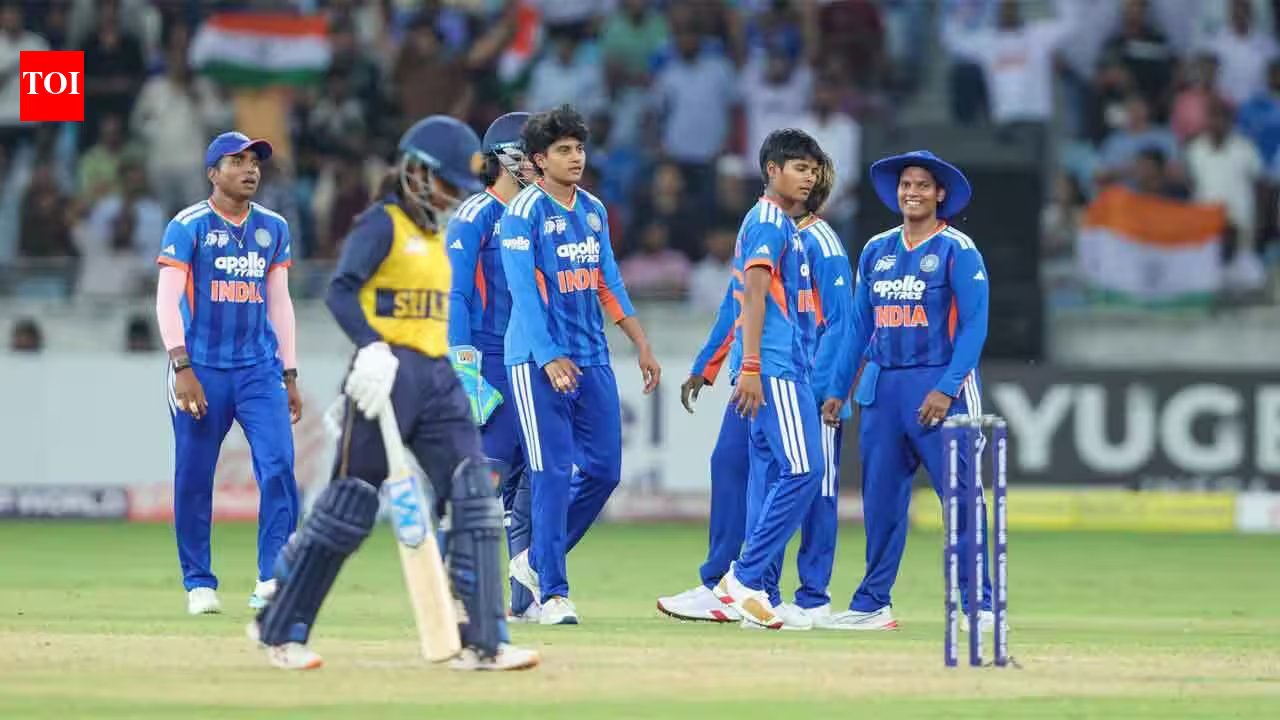









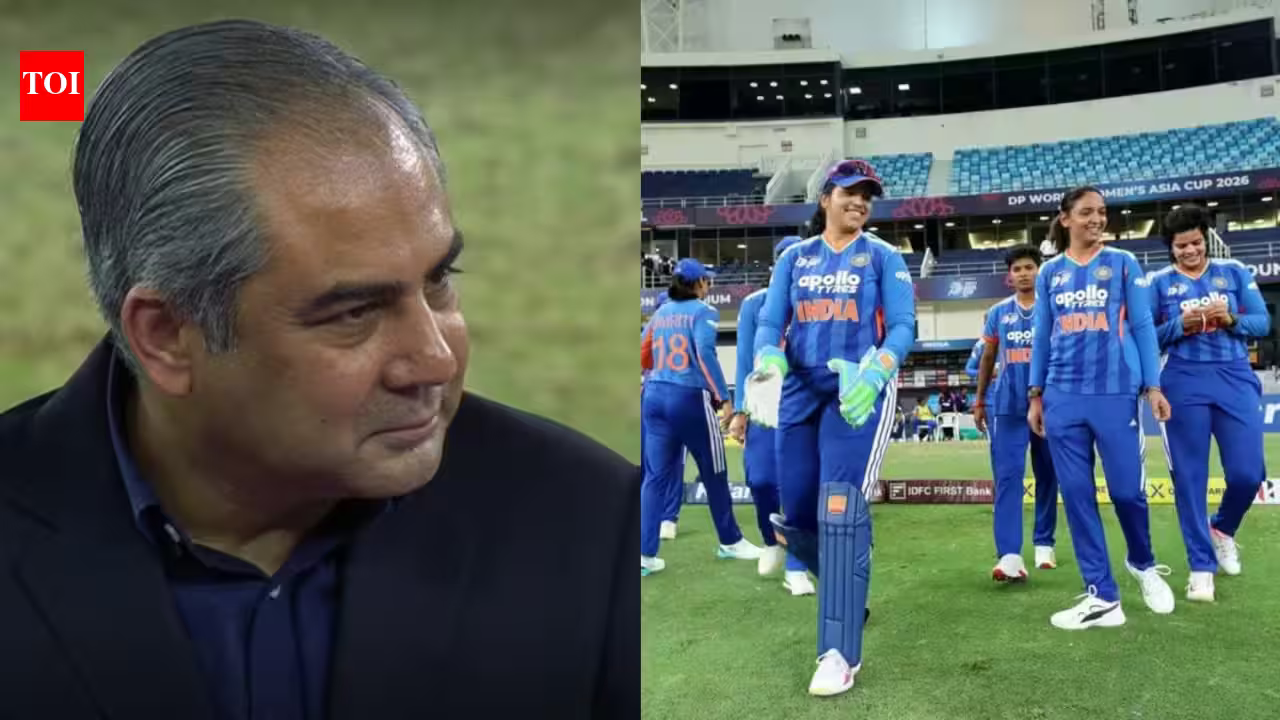
India’s women’s cricket team capped off a dominant run in the Women’s Asia Cup with a convincing 72-run victory over Sri Lanka on Sunday, securing a record-extending eighth title. Yet, the jubilant scenes on the field were punctuated by a striking diplomatic statement: the Indian squad opted not to receive the championship trophy from Asian Cricket Council (ACC) president Mohsin Naqvi.
The move, which left the presentation ceremony concluding without the traditional trophy hand-off to the winning captain, was confirmed by BCCI secretary Devajit Saikia as a calculated act of solidarity. By declining to accept the silverware from the ACC chief, the women’s team mirrored a similar stance taken by the Indian men’s team during the 2025 Asia Cup, signaling a continued friction between the sporting organizations in the wake of ongoing geopolitical tensions.
A Firm Stance on Solidarity
Speaking to the media shortly after the conclusion of the final, Saikia offered clarity regarding the team’s motives. “Our men’s team won the Asia Cup a year and a half ago. Since the April 2025 Pahalgam incident, the situation changed,” Saikia explained. “There was pressure on us from our citizens that we shouldn’t keep any relations with our neighboring country and not play cricket with them. While the government maintains a policy that we must fulfill commitments in multinational tournaments, that doesn’t mean we follow every condition laid out for us.”
Saikia emphasized that the military conflict remains a primary barrier to normal diplomatic relations in the sporting arena. “One of the main leaders who is working against the interests of our country—we can’t receive the trophy from him. The women’s team has expressed solidarity with the decision taken by the men’s team last year,” he added.
This development echoes the awkward proceedings of the 2025 men’s Asia Cup final, where Indian players were left waiting on the podium for over an hour before the trophy presentation could be settled. In this latest instance, despite Naqvi’s presence at the stadium—where he sat in the Royal Box alongside BCCI officials—the Indian team chose to bypass the formal exchange during the post-match ceremony.
Focus Remains on Professional Excellence
While the incident drew significant international attention, the BCCI hierarchy maintains that the controversy has no bearing on the team’s stellar athletic performance. India cruised through the tournament with a series of lopsided victories, underscoring the rapid development of the women’s game in the country.
“It doesn’t diminish the performances of our team,” Saikia noted. “We have won all our matches in a one-sided manner. The happiest part of this tournament is how India has left everyone else behind and surged so far ahead.”
Addressing the optics of sharing a box with Naqvi during the match, Saikia insisted that the proximity was a matter of administrative protocol rather than a softening of the BCCI’s position. “It’s not as if we wouldn’t meet anyone. I was sitting in the Royal Box throughout the match. Whenever anyone comes, we meet and talk with everyone. That’s just a normal tradition.”
Saikia confirmed that internal attempts were made to resolve the trophy presentation issue prior to the final, but those efforts ultimately proved unsuccessful. “We tried to solve today’s situation, but our efforts were not successful. We don’t have any regrets. Our ultimate priority and ambition was not to focus on who would give the trophy. We wanted the Indian team to win, and we’ve achieved that.”
Eyes on the Asian Games
With the Asia Cup trophy secured, the Indian squad has little time to dwell on the political undertones of the ceremony. The team’s focus has already shifted toward the upcoming Asian Games, set to take place in the Aichi Prefecture, Japan.
The logistical machine of the BCCI is already in motion, with the team preparing for a transit through New Delhi before departing for Japan. The schedule is demanding, with high-stakes matches slated for September 18, 20, and 22.
“Currently, there are no such [other] plans,” Saikia said regarding future scheduling. “All our attention is set on the Asian Games. Our goal is to bring home the gold medal, and that is our sole objective.”
As the dust settles on another successful campaign, the Indian women’s team continues to project a duality of absolute dominance on the pitch and unwavering adherence to national sentiment off it. Whether this recurring pattern of trophy-snubbing will lead to further restructuring within the ACC remains to be seen, but for now, the BCCI appears content to let their on-field results do the talking.
Disclaimer: This content is auto-generated for informational purposes only.
Source: Read Original News