







Beyond Digital: Why Nations Are Returning to Cash as a Strategic Safety Net
In an era defined by the rapid shift toward a cashless society, a counterintuitive trend is emerging across Europe. Governments in Austria, Finland, Germany, Sweden, and the Netherlands have recently issued formal advisories urging their citizens to maintain a tangible reserve of cash at home. This shift is not a rejection of digital innovation, but rather a pragmatic recognition that modern payment ecosystems—while efficient—are also uniquely fragile.
The Fragility of a Digital-Only Economy
For years, the convenience of tap-to-pay systems, mobile wallets, and instant bank transfers has pushed paper currency to the periphery of daily life. However, policymakers are now identifying a dangerous vulnerability: total reliance on digital infrastructure. In a world increasingly threatened by systemic risks—including large-scale cyberattacks, prolonged power outages, and geopolitical instability—electronic payment systems can blink out of existence in an instant.
The Dutch central bank, alongside Nordic and German financial authorities, has begun framing physical currency as a form of “insurance.” The rationale is simple: when the power grids fail or the internet backbone is severed, credit cards and digital clearinghouses become useless. In such scenarios, cash serves as the only medium of exchange that functions entirely independently of a central server or an electrical supply.
A Global Shift in Perspective
This movement marks a significant pivot in how governments view money. For much of the last decade, cash was often painted as an antiquated, inefficient legacy system destined for the museum. Now, it is being rebranded as “critical infrastructure.”
In Sweden, often cited as the world’s most cashless nation, the central bank’s latest reports emphasize the need for a resilient payment system that includes physical notes and coins. Similarly, in Germany, the emphasis on cash has long been a cultural staple, but it is now being underscored by national security guidelines meant to prepare citizens for “blackout” scenarios. By encouraging citizens to hoard a small, emergency stash of currency, these states are decentralizing their economic survival mechanisms, ensuring that local commerce can continue even when the global digital network goes dark.
Lessons for India’s Digital Frontier
India has undergone one of the most successful digital payment revolutions in human history. The Unified Payments Interface (UPI) has transformed the way millions transact, from street-side vendors to high-end retail outlets. While this infrastructure has brought immense transparency and convenience, the European experience serves as a sobering reminder of the need for redundancy.
As India continues to digitize its economy at breakneck speed, the conversation around “cash as a backup” is becoming increasingly relevant. While digital payments drive growth and financial inclusion during “good days,” cash is proving to be the essential shock absorber for “bad days.”
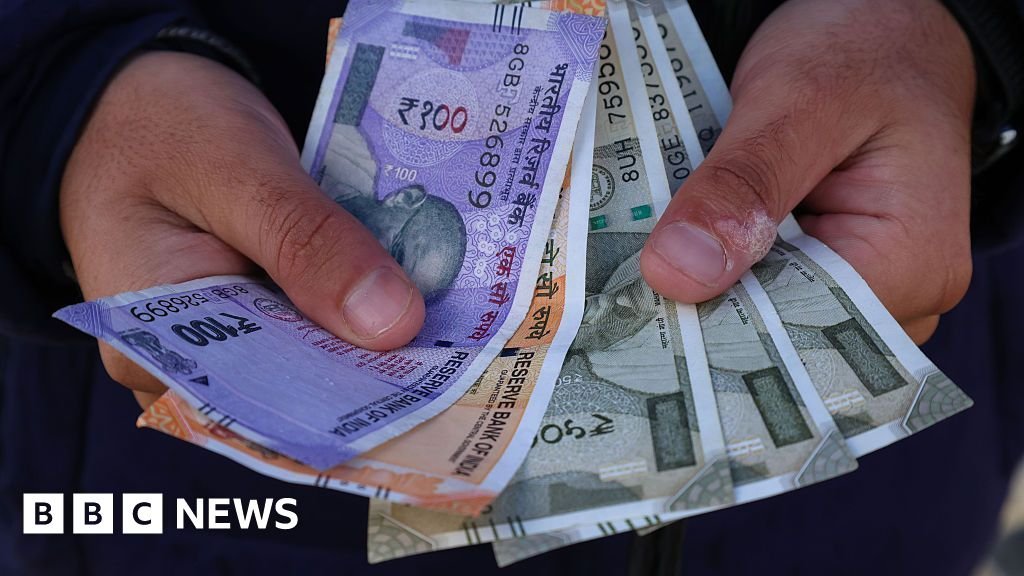
Financial experts suggest that even as India pushes toward a digital future, the role of the Reserve Bank of India in maintaining a robust cash-supply chain should not be viewed as an impediment to progress, but as a strategic asset. A truly resilient economy is one that does not put all its eggs in one digital basket. By acknowledging cash as an vital pillar of emergency preparedness, nations are not signaling a retreat from the digital age; they are simply buying themselves a crucial safety net for the unpredictable challenges of the future. Ultimately, in a world of increasing complexity, the most “high-tech” solution to a system-wide crash may well be the humble, printed banknote.
Disclaimer: This content is auto-generated for informational purposes only.
Source: Read Original News