









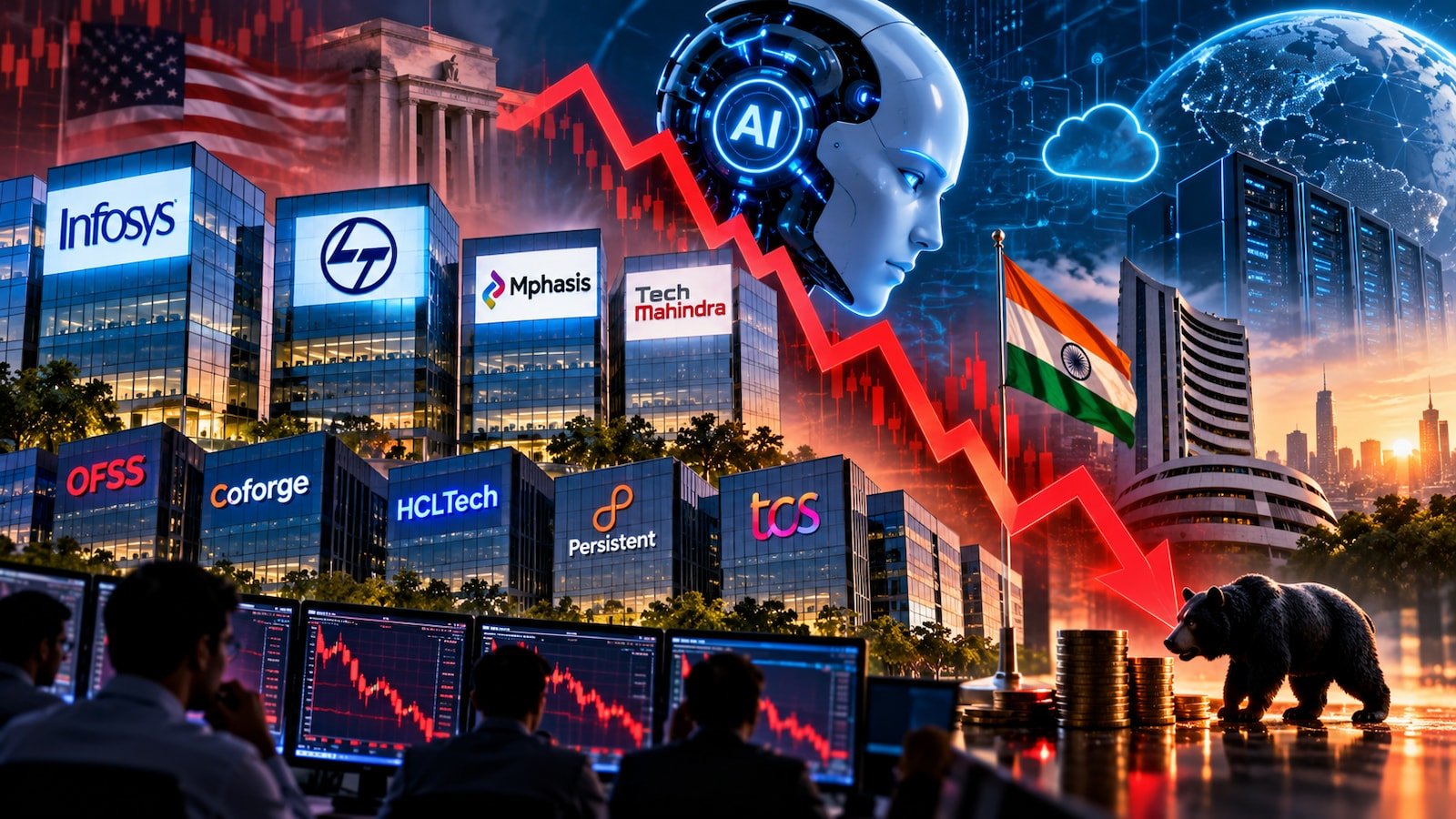
The global technology landscape is shifting as the frenetic, unchecked pace of artificial intelligence development faces a sudden, high-profile reality check. For India’s massive information technology (IT) sector, which has been battered by fears that generative AI would render traditional outsourcing obsolete, these calls for restraint may signal a long-awaited turning point.
Market sentiment regarding major players like Tata Consultancy Services (TCS) and Infosys has been deeply pessimistic since late 2024. During that period, the rapid deployment of advanced models by firms like OpenAI and Anthropic cast a long shadow over the Indian IT services business model, leading to a staggering $226 billion erosion in market capitalization for the sector. However, as industry titans—including Anthropic’s Dario Amodei, OpenAI’s Sam Altman, and SpaceX’s Elon Musk—begin to advocate for a more cautious and regulated approach to AI, investors are recalibrating their outlook.
## A Shift in Regulatory Sentiment
The recent push for “responsible AI” is providing a much-needed buffer for Indian tech stocks. Historically, investors feared that AI would aggressively cannibalize the margins of major IT service providers. Now, the narrative is evolving from one of total disruption to one of controlled integration.
Market analysts suggest that any regulatory guardrails placed on the development of AI models could actually benefit firms that have built their reputations on stability, process, and reliability. When the market perceives that AI will be integrated into the workforce through regulated, evolutionary steps rather than revolutionary, overnight replacement, the “fear factor” that plagued Indian IT stocks begins to dissipate. This shift is already manifesting in trading behavior, with US-listed shares of giants like Infosys and Wipro seeing upward momentum as investors seek to cover short positions in anticipation of a potential sector rebound.
## Undervalued Potential and Market Mechanics
Beyond the shifting AI narrative, simple market mathematics is also drawing investors back to the NSE Nifty IT Index. Currently trading at roughly 16 times its forward earnings estimate, the sector is positioned at two standard deviations below its five-year historical average.
This valuation gap suggests that the market may have overcorrected during the initial AI panic. Because many of these large-cap Indian firms remain highly cash-generative and maintain strong balance sheets, they are becoming increasingly attractive to institutional investors who prioritize fundamental value over speculative growth. As the market stabilizes, the combination of bargain-bin valuations and a cooling of “AI hysteria” creates a compelling setup for a rally. Financial experts point out that when macro factors, such as a stabilizing US dollar and a shifting yield curve, align with these attractive valuations, frontline Indian IT services companies often emerge as the primary beneficiaries of renewed buying interest.
## The Outlook for Global Tech Integration
While the immediate focus remains on stock prices, the broader technological implication of this “AI cooldown” is significant. For global enterprise clients, the transition to AI-driven workflows requires the deep institutional expertise and infrastructure maintenance that firms like TCS and Infosys provide.
By pivoting toward a model of “human-in-the-loop” AI development, these companies can reframe themselves as facilitators of the AI revolution rather than its victims. As the industry moves toward a more sustainable pace of innovation, the Indian IT sector stands to transition from a narrative of obsolescence to one of critical utility. Investors returning to the market today are betting that the disruption of the software industry will be a marathon, not a sprint—and in that marathon, the established titans of the Indian IT industry are once again looking like essential partners for the future of global enterprise.
Disclaimer: This content is auto-generated for informational purposes only.
Source: Read Original News