








For millions of digital-first consumers across India, the Unified Payments Interface (UPI) has become a seamless utility. However, a recent government notification regarding transaction thresholds has sparked widespread speculation about the future of digital payment costs. To clarify the shifting landscape of India’s fintech ecosystem, the Ministry of Finance has issued a new directive concerning the legal framework of electronic payments.
## Understanding the New Regulatory Threshold
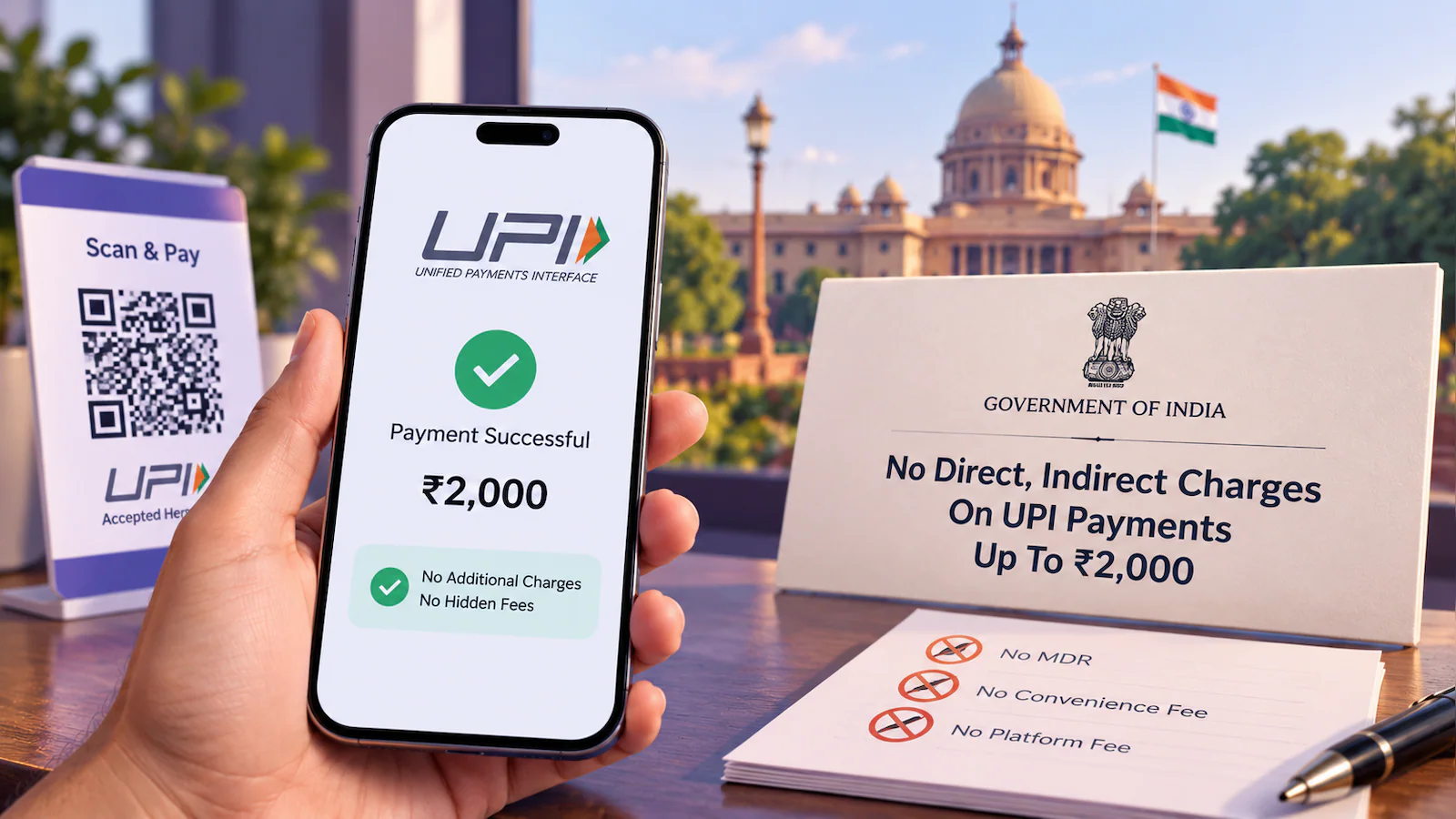
The government’s notification, dated September 14, provides a vital clarification for the digital economy: UPI transactions up to Rs 2,000 and payments made via RuPay debit cards are now classified under a protected category. Under these new rules, banks and payment system providers are strictly prohibited from imposing any direct or indirect charges on these transactions.
While the Rs 2,000 limit has dominated headlines, it is crucial to understand that this is not a fee-based cap. The government is not mandating that payments exceeding this amount will automatically trigger consumer transaction fees. Instead, the move represents a deliberate effort to create a structured regulatory framework for the Payment and Settlement Systems Act. By establishing this protected tier, the government ensures that everyday, small-ticket digital payments remain completely free for the average user, protecting them from unexpected bank-led surcharges.
## The Future of MDR and Merchant Costs
The broader debate currently occupying the tech and banking sectors revolves around the Merchant Discount Rate (MDR). As UPI infrastructure continues to scale—reaching a staggering 2,366 crore monthly transactions as of July 2026—the cost of maintaining the security, cybersecurity, and server integrity of the network has surged.
While the government remains steadfast that UPI will stay free for individual citizens, discussions are ongoing regarding the viability of a nominal MDR for high-value transactions at large merchants. Industry analysts suggest that if an MDR is eventually implemented, it would likely range between 0.25% and 0.4%, and it would be levied exclusively on merchants. This would serve as a revenue model to sustain the massive infrastructure required to support India’s ballooning digital payment volume, rather than a cost passed down to the consumer. For the average person, the act of transferring funds remains an entirely free service, regardless of whether the transaction is for a small grocery run or a larger purchase.
## Scaling Innovation: The Rise of Offline UPI
Beyond the discourse on fees, the industry is rapidly pivoting toward enhancing the “reach and reliability” of the UPI ecosystem. A major frontier in this evolution is “Offline UPI” or “Tap & Pay” technology.
As Shams Tabrej, CEO and Founder of Ezeepay, noted, the next phase of India’s digital transformation relies on accessibility in areas with inconsistent connectivity. “For India’s next phase of digital-payment adoption, reliability and ease of use will be as important as reach,” Tabrej explained. By enabling payments without an active data connection, the ecosystem is shifting its focus from mere volume growth to deep-tier inclusion. This technology is poised to benefit millions in Tier 2 and Tier 3 cities, where network stability has historically been a barrier to entry.
Ultimately, the latest regulatory update is less about limiting how much you can spend and more about fortifying the digital rails that support the country’s economy. While the tech industry continues to refine the balance between sustainability and consumer-friendly pricing, the core promise of UPI—an instantaneous, secure, and cost-free experience for the user—remains a top priority for the government’s digital agenda.
Disclaimer: This content is auto-generated for informational purposes only.
Source: Read Original News