








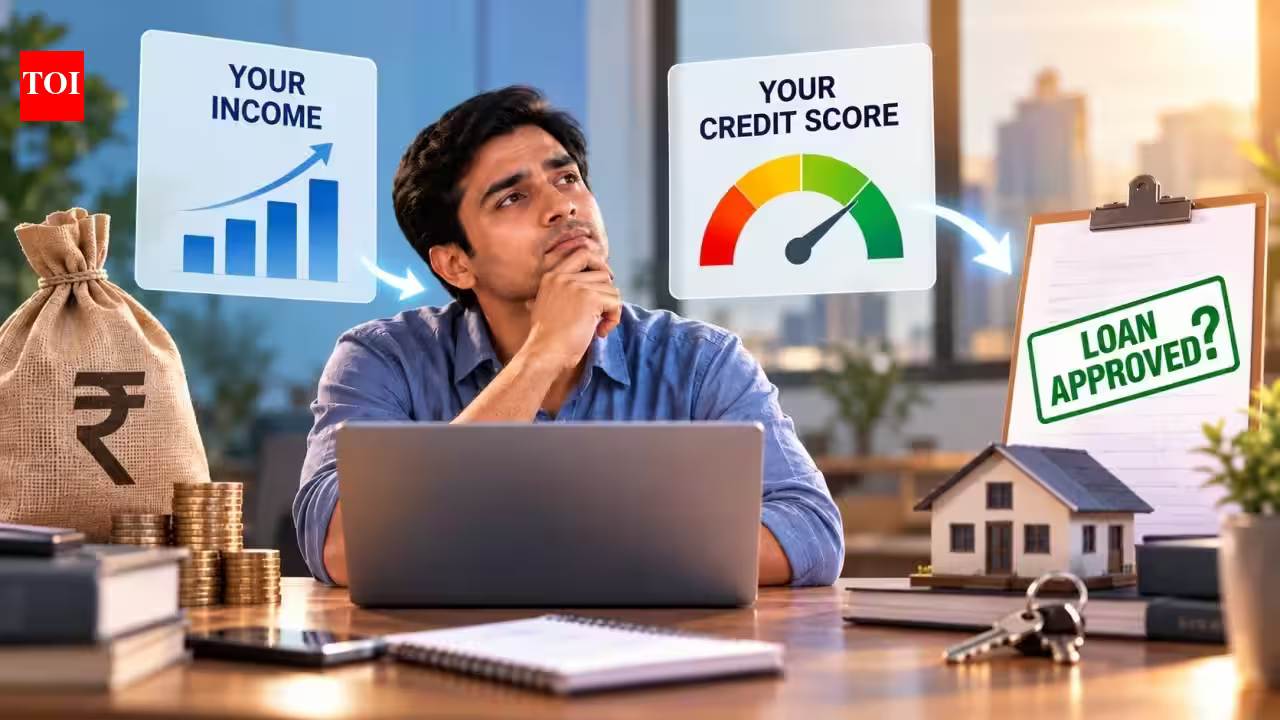
Understanding the intricacies of loan approval in the modern Indian financial landscape requires more than just a glance at one’s monthly salary. Financial institutions in India operate under rigorous risk-management frameworks, designed to ensure that credit flows to borrowers who not only have the financial capacity to repay but also demonstrate the intent to honor their commitments. For the average borrower, deciphering these underwriting criteria is the first step toward securing credit on favorable terms.
The Nuanced Role of Income and Employment Stability
While a high gross income is often perceived as the golden key to loan approval, lenders treat it as only one component of a larger assessment. In the Indian market, banks and Non-Banking Financial Companies (NBFCs) prioritize income stability and consistency over simple annual figures. An applicant with a steady salary from an established multinational corporation or a government entity often finds the approval process smoother than someone with a higher, yet fluctuating, income from a volatile sector.
Lenders evaluate the source of income to determine its longevity. A salaried professional possesses a predictable cash flow that makes risk modeling straightforward. Conversely, for self-employed individuals or business owners, the scrutiny is deeper. Lenders examine business vintage, profitability, and banking patterns to ensure the income is not merely a transient spike. For professionals like lawyers, architects, and doctors, documentation is critical, as income patterns can be erratic even for those with successful practices. Understanding that your employer’s reputation and your industry’s economic outlook influence your eligibility can help you manage expectations when applying for significant capital.
Decoding the Fixed Obligation to Income Ratio
Affordability is the cornerstone of responsible lending. A common pitfall for borrowers is conflating their borrowing capacity with their actual financial health. A lender may be willing to extend a large loan based on your high salary, but your existing debt obligations could render that loan unaffordable. This is where the Fixed Obligation to Income Ratio (FOIR) becomes the deciding factor.
In India, most prudent lenders aim to keep the total debt service ratio—including the EMI of the loan currently being applied for—below 55% of the applicant’s net monthly income. If your existing liabilities, such as personal loan EMIs, credit card payments, or educational loan repayments, already consume a significant portion of your earnings, your ability to take on new debt is severely limited. Two individuals with the same credit score and identical incomes may receive vastly different outcomes if one has minimal existing debt and the other is already leveraged to the limit. Before applying, potential borrowers should conduct an internal audit of their current financial commitments to ensure the addition of a new EMI will not jeopardize their long-term financial stability.
The Credit Score and Historical Behavioral Data
The credit score serves as a definitive summary of an individual’s past credit behavior. In the Indian financial ecosystem, this three-digit number acts as the first filter for automated underwriting systems. A high credit score signals to the lender that the borrower has a history of timely payments, low utilization of credit limits, and a balanced mix of credit products.
However, a credit score is not a standalone guarantee. A borrower with a high score but a poor income-to-debt ratio may still face rejection. Conversely, a poor credit score is almost universally detrimental. If a low score is the result of past defaults or legal write-offs, the application is likely to be rejected regardless of current income levels. It is essential for borrowers to monitor their credit reports regularly for errors, such as incorrect late-payment entries or accounts that were closed but remain listed as active, as these inaccuracies can unfairly diminish creditworthiness.
Navigating the Diversity of Lender Policies
One of the most critical insights for any borrower is that different lenders utilize different credit models and have varying risk appetites. A financial institution that focuses on high-net-worth individuals may have different documentation requirements than an NBFC that specializes in small-ticket personal loans. A rejection from one bank does not necessarily mean the applicant is ineligible for credit across the entire market.
This reality has fueled the growth of financial marketplaces in India. These platforms allow users to compare loan offers from multiple lenders, providing visibility into the specific eligibility criteria of each. By using these tools, a borrower can identify which institutions are most likely to accept their specific profile—whether they are a salaried professional, a freelancer, or a small business owner. This reduces the number of “hard inquiries” on a credit report, which occur when a person applies to multiple lenders in a short span, potentially damaging their credit score further. Instead, a data-driven approach to searching for loans allows for a more targeted and efficient application process.
Strategic Preparation for Loan Approval
The path to a successful loan application is paved with preparation and self-assessment. Rather than scrambling to fix financial issues at the point of application, prospective borrowers should aim for a proactive approach. This involves maintaining a consistent income, limiting unnecessary debt, and protecting their credit history over the long term.
A practical “Loan Approval Readiness” framework involves five key considerations. First, ensure that all income sources are well-documented; for the self-employed, this means maintaining clean financial statements and tax filings. Second, assess the current total debt burden to calculate the potential FOIR. Third, evaluate the long-term affordability of the new EMI to ensure it does not create a cash-flow crisis in the future. Fourth, verify the accuracy of the credit report well in advance of the application date. Finally, compare multiple offers rather than settling for the first available option.
By shifting the focus from simply “getting the loan” to “matching the financial profile with the right lender,” borrowers can significantly improve their prospects. The Indian credit market has become increasingly sophisticated, and the tools available to consumers today allow for a much more transparent interaction with financial institutions. Ultimately, long-term financial health is best served by sustainable borrowing—ensuring that the credit taken today adds value without compromising one’s fiscal flexibility for years to come.
Disclaimer: This content is auto-generated for informational purposes only.
Source: Read Original News