









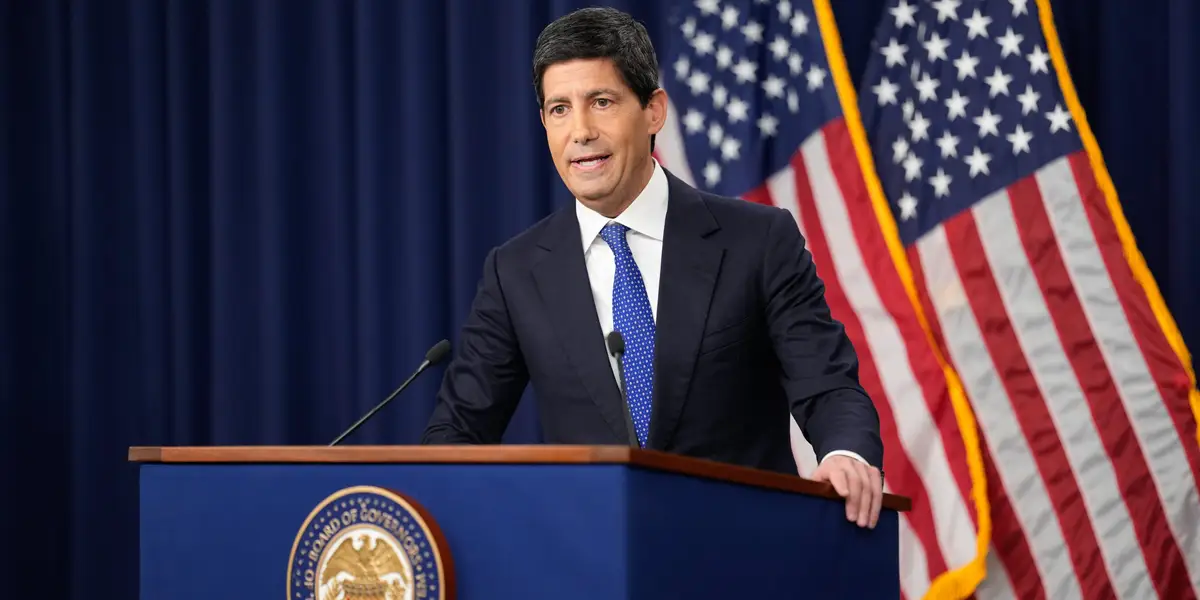
The Federal Reserve has officially broken its three-year streak of static interest rates, signaling a new, more aggressive era in the fight against stubborn inflation. During Wednesday’s meeting of the Federal Open Market Committee (FOMC), officials approved a quarter-point rate hike—a move that marks a definitive shift in the central bank’s strategy under the current administration.
Federal Reserve Chair Kevin Warsh framed the decision as a necessary step to address ongoing economic pressures, though he offered a sobering reality check for consumers: the hike will not produce immediate relief for those grappling with elevated costs at the grocery store or the gas pump. Warsh notably side-stepped providing “forward guidance,” indicating that future policy decisions will be made on a meeting-by-meeting basis, driven entirely by incoming data rather than external political pressure.
Market Sentiment and the “Silent” Chair
The markets’ reaction to the move has been one of cautious observation. Analysts are parsing the lack of traditional forward guidance to discern the Fed’s long-term intentions. Justin Wolfers, a professor of public policy and economics at the University of Michigan, observed that the decision to hike reflects a more “serious” approach from the Chair. By refusing to telegraph future moves, Warsh is deliberately attempting to shift market focus away from the Fed’s rhetoric and toward the hard data of the broader economy.
While the Federal Reserve maintains its autonomy, the tech-driven landscape of modern finance has made this data-dependent strategy more complex. High-frequency trading and AI-driven algorithmic models now consume economic releases in milliseconds, meaning that the “data-dependent” approach results in significant market volatility the moment new reports are published.
The Housing Market and Consumer Resilience
The decision to raise rates has naturally cast a spotlight on the housing sector. Industry experts, such as Bill Banfield of Rocket Mortgage, maintain that while the housing market remains foundationally solid, higher interest rates are undeniably creating an affordability squeeze.
Interestingly, the current environment is creating a unique dynamic for prospective buyers. With inventory levels reaching a six-year high in many metropolitan areas, the market has transitioned into a buyer’s space. However, this is tempered by the reality that the cost of borrowing has significantly increased. Economists like Olu Sonola of Fitch Ratings warn that the current “aggregate resilience” of the economy masks a growing divide between households that are insulated from higher interest rates and those being hit hard by the increased cost of credit.
A New Strategy for Inflation Control
The consensus among experts—including analysts from Goldman Sachs and Principal Asset Management—is that this quarter-point hike is likely just the beginning. The shift indicates that the Federal Reserve is no longer comfortable waiting for inflation to resolve itself through market corrections alone.
By taking this action, the Fed has effectively signaled its commitment to its 2% inflation target, even against a backdrop of pressure for lower rates. For the average consumer and tech-savvy investor alike, the path forward remains uncertain. With the Fed signaling a potential “mid-cycle adjustment” that could include two or three additional hikes, the upcoming Consumer Price Index (CPI) reports and energy price trends will be the critical metrics to watch. As the Fed continues to prioritize its independence and its dual mandate of price stability and maximum employment, it faces the difficult task of cooling the economy without triggering a sharp downturn in consumer spending or housing activity.
Disclaimer: This content is auto-generated for informational purposes only.
Source: Read Original News