






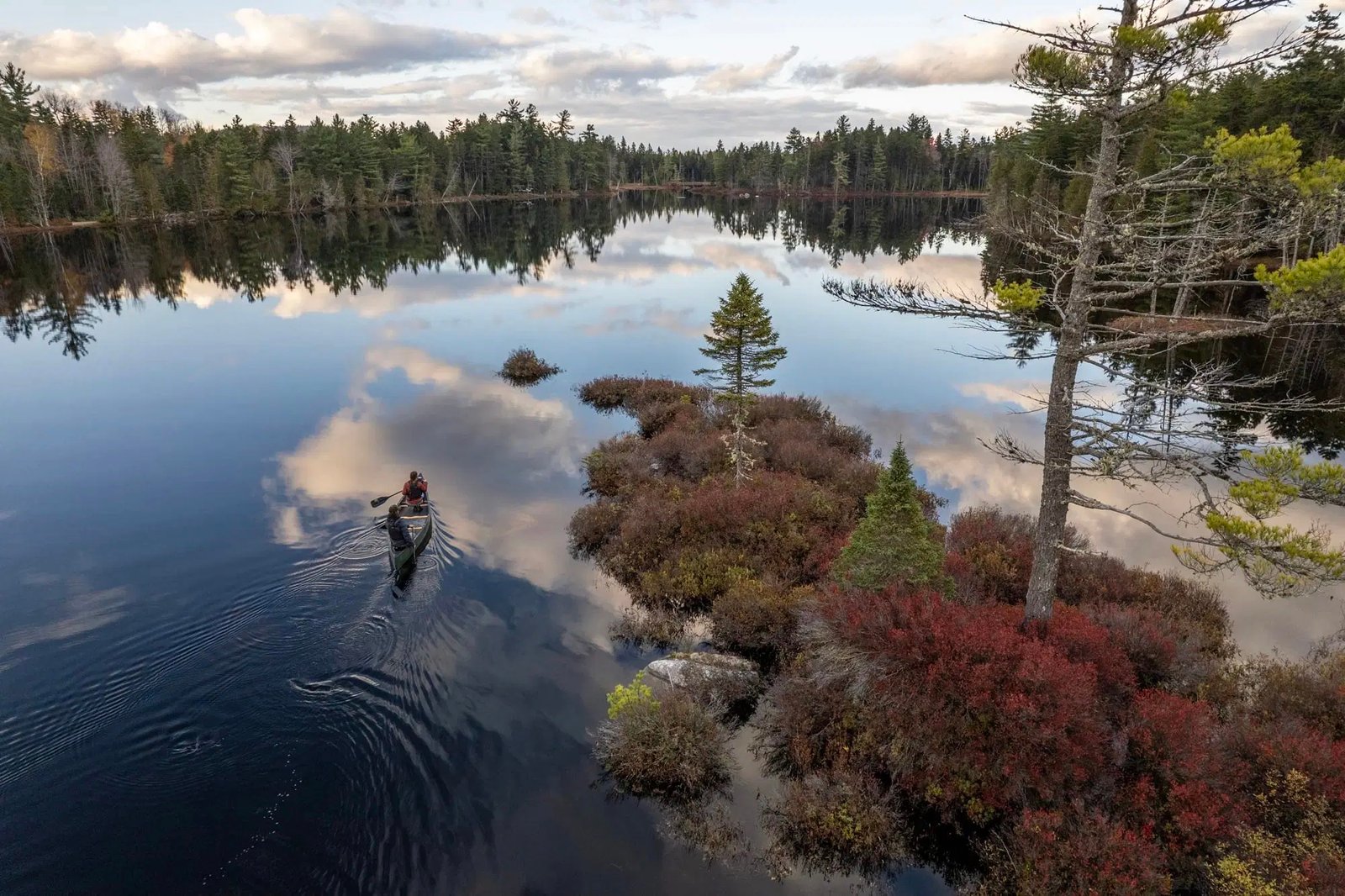
In a landmark victory for Indigenous land sovereignty and conservation, the Penobscot Nation has successfully reclaimed 11,297 acres of ancestral territory in Maine. This transfer, finalized on September 16, marks the inaugural phase of an ambitious initiative to recover over 30,000 acres near the East Branch of the Penobscot River, situated in the shadow of Mount Katahdin—a site of deep spiritual and cultural significance to the tribe.
The acquisition was achieved through a strategic partnership between the Penobscot Nation and the Trust for Public Land (TPL). While the land is currently held as fee land, tribal leadership is already working toward the long-term goal of placing it into federal trust, which would provide greater legal protections for the territory.
## A Model for Collaborative Conservation
The effort to restore this land is part of the larger “Tributary Land Returns” project, a collaborative movement involving Maine’s four federally recognized Wabanaki tribes and seven conservation organizations. The initiative aims to return more than 50,000 acres through 11 distinct projects. To date, seven of these projects have reached completion, demonstrating a shift toward Indigenous-led land stewardship as a primary model for environmental protection.
Chuck Loring Jr., the Penobscot Nation’s Natural Resources Director, described the restoration as a deeply moving experience that helps mend generations of displacement. “Being able to restore those lands back to our stewardship is a very moving thing,” Loring said. He noted that the Nation has already begun active ecological monitoring, including the use of trail cameras to track wildlife and baseline water-quality testing to ensure the long-term health of the river ecosystems.
## Financial Momentum and Tech-Driven Stewardship
Securing the funding for such a large-scale project requires immense logistical and financial coordination. To date, the partners have raised $20.7 million toward a total goal of $32.5 million. This figure covers the acquisition costs, legal fees, staff time, and the interest on the bridge financing TPL utilized to act quickly when the timber land was suddenly put up for sale in 2022.
In the digital era, conservation efforts like these are increasingly supported by sophisticated tools. While the Penobscot Nation focuses on traditional land care, the partnership utilizes modern data collection and project management software to track ecological baseline conditions. As AI-driven environmental modeling and satellite monitoring become more accessible to non-profits and tribal nations, organizations like TPL are able to coordinate massive, multi-stakeholder land transfers with greater transparency and speed. These digital advancements allow the tribe to maintain rigorous stewardship standards, ensuring the land remains a protected sanctuary for hunting, fishing, and cultural ceremony.
## Economic and Cultural Impact
The return of this land is not merely an environmental victory; it is also a move toward regional economic revitalization. The Penobscot Nation and TPL envision that the recovered property will open a new, more efficient southern access route to the Katahdin Woods and Waters National Monument. By shortening the travel time from nearby communities like Millinocket, the project is expected to boost local businesses and tourism.
As the Penobscot Nation prepares for the second phase of the project in the coming year, the success of this first 11,000-acre milestone—an area roughly the size of Portland, Maine—stands as a testament to what is possible when tribal sovereignty is centered in conservation strategy. Darren Ranco, executive director of the Wabanaki Commission on Land and Stewardship, emphasized that this work does more than just preserve nature; it begins to heal the historical wounds of dispossession, proving that Indigenous land management is a robust and necessary path forward for the future of Maine’s wilderness.
Disclaimer: This content is auto-generated for informational purposes only.
Source: Read Original News