







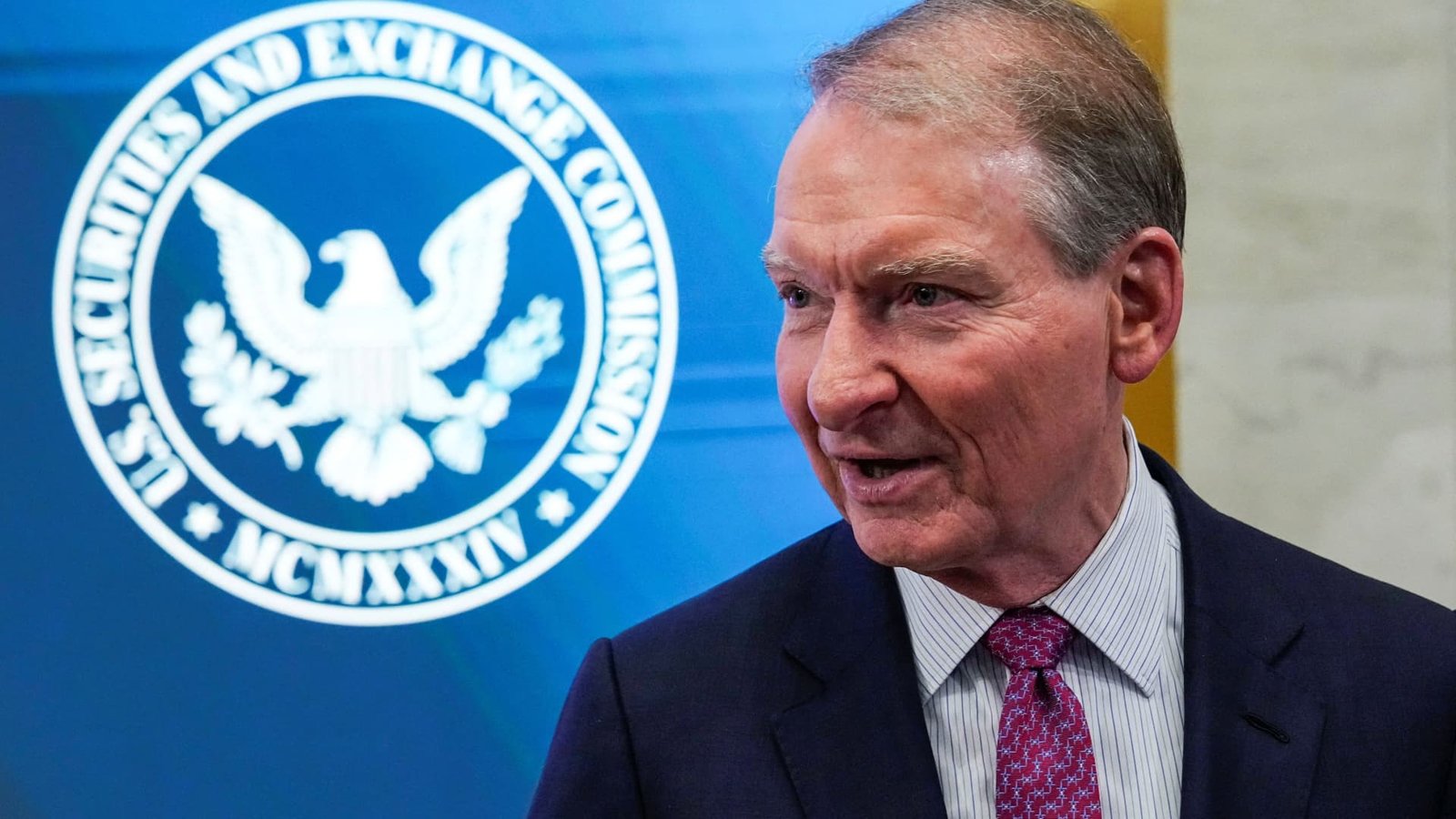
The Securities and Exchange Commission (SEC) has officially cleared a path for the domestic expansion of tokenized equities, unveiling a regulatory framework that could fundamentally alter how Americans interact with the stock market. Effective immediately, the agency’s new “Innovation Exemption” allows eligible trading platforms to offer digital, blockchain-based representations of publicly traded U.S. companies.
This pivot marks a significant shift in the SEC’s approach to digital asset infrastructure. While the crypto industry recently suffered a legislative blow when the Clarity Act failed to advance in the Senate, the SEC is now utilizing its existing authority to define the boundaries of “on-chain” finance. The exemption is a core component of “Project Crypto,” an initiative launched last year aimed at modernizing American capital markets through blockchain integration.
## Balancing Innovation with Shareholder Sovereignty
Under the new guidelines, tokenization—the process of issuing digital versions of securities on a distributed ledger—must adhere to strict standards to ensure investor protection. A primary concern for regulators has been the preservation of shareholder rights. According to the SEC’s order, anyone holding a tokenized stock must be entitled to the exact same benefits as an owner of traditional equity, including dividend payouts and the ability to cast proxy votes.
The SEC has also introduced a “veto” power for public companies, a direct response to recent industry tensions. Trading venues are now required to notify a company 30 days before their shares are listed as tokens. If the issuing company objects within that window, the platform is barred from proceeding. This rule aims to quell disputes, such as the recent friction between Robinhood and AMC, where the latter expressed concern that unauthorized tokenization could dilute the relationship between a firm and its investors.
SEC Chair Paul Atkins framed the move as a pragmatic step toward long-term modernization. “The Commission is not cementing today’s technology as the standard for tomorrow,” Atkins stated. “Instead, it is allowing the market to evolve… using that insight to inform a nimbler and future-ready regulatory framework.”
## Impact on Tech Platforms and Future Trading
For major fintech players like Coinbase, Robinhood, Kraken, and Gemini, the exemption provides a long-sought roadmap for bringing offshore trading experiments to the U.S. market. Historically, these firms have offered tokenized equity products to international users, but were hesitant to launch domestically due to regulatory ambiguity.
The move is poised to usher in a new era of 24/7 market activity. By moving securities on-chain, proponents argue that settlement times—which currently take days in traditional systems—could become near-instantaneous. However, the SEC is cautious, implementing volume caps within the five-year exemption period to prevent excessive volatility and manage price swings during thin trading hours.
## The Role of Tech and Market Evolution
As financial markets move toward a digital-first model, the intersection of blockchain and traditional finance is becoming increasingly central to the tech industry’s agenda. While AI-driven predictive tools and cloud-based analytics have already revolutionized financial data processing, tokenization represents the next phase: the digitization of the underlying assets themselves.
Industry leaders are already pivoting to meet the new criteria. Robinhood has recently signaled its intention to allow users to redeem tokens for underlying shares on a 1:1 basis, aiming to satisfy the SEC’s requirement for functional parity between tokens and traditional stock.
While the exemption is a temporary measure, the SEC emphasizes that it is a testing ground. The data gathered over the next five years will be instrumental in crafting permanent, durable legislation. For now, the transition to an on-chain financial ecosystem is no longer a theoretical exercise, but a regulated reality that is set to reshape the landscape for both retail investors and major financial institutions.
Disclaimer: This content is auto-generated for informational purposes only.
Source: Read Original News