







Travel chaos gripped Australia’s three largest international gateways this morning as a widespread technical outage crippled automated border processing systems, forcing thousands of passengers into snaking queues at Sydney, Melbourne, and Brisbane airports.
The disruption, which began during the peak morning travel window, rendered the electronic gates (e-gates) at international terminals inoperable. These automated kiosks, which use facial recognition technology to verify passports and identities, are a critical component of Australia’s border security infrastructure. With the systems offline, the automated process was replaced by manual verification, causing a sudden and severe bottleneck for thousands of travellers attempting to clear customs for outbound and inbound flights.
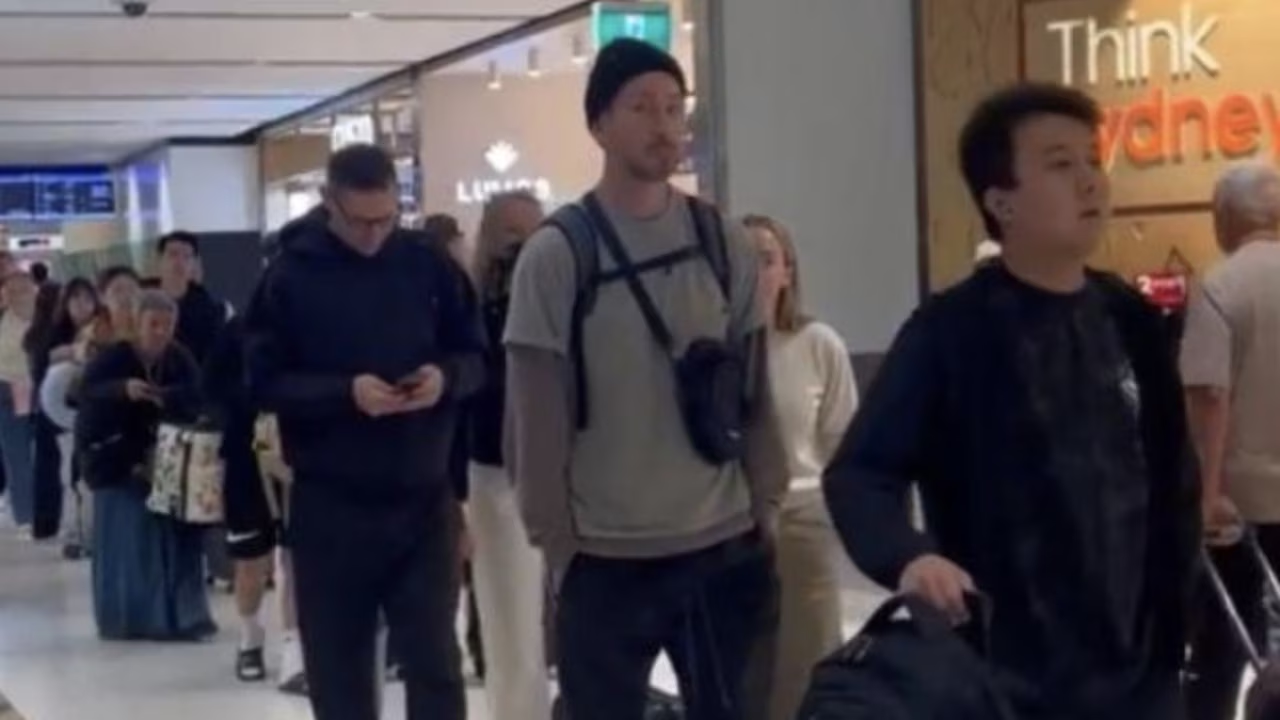
Social media platforms were quickly flooded with images from Sydney’s international terminal, where frustrated passengers documented lines stretching back through the departure halls and into the general terminal concourses. Many travellers expressed concerns about missing their scheduled flights as processing times slowed to a crawl.
The Australian Border Force (ABF) acknowledged the crisis early in the morning, confirming that technical teams were working to identify the root cause of the failure. In an effort to mitigate the gridlock, the ABF enacted emergency protocols, surging additional officers into the affected areas to perform manual identity checks. While this move restored a level of flow, the sheer volume of passengers resulted in significant delays that rippled across airport operations for several hours.
By 11:00 am, the ABF confirmed that the technical glitch had been rectified and that the e-gates were once again operational. A spokesperson for the agency stated that all backlogs had been successfully cleared, and normal processing had resumed across the three impacted cities.
“The Australian Border Force is aware of a technical outage impacting e-gates for outbound and some inbound passengers,” the spokesperson said earlier today. “Additional ABF officers were surged into work areas to manually process passengers and provide as minimal disruption as possible. We wish to thank travellers for their patience during this time.”
Despite the restoration of services, questions remain regarding how such a widespread system failure was allowed to occur simultaneously across multiple major airports. The ABF has confirmed that the cause of the technical outage remains under active investigation.
Aviation experts noted that while manual processing is an effective contingency measure, the incident highlights the potential vulnerability of Australia’s reliance on high-tech border infrastructure. For the thousands of travellers caught in the melee, the morning was defined by frustration and uncertainty, though airports have now returned to a state of normalcy as the backlog of flights clears.
The ABF has encouraged any passengers who may have missed their flights due to the processing delays to contact their respective airlines for assistance with rebooking.
Disclaimer: This content is auto-generated for informational purposes only.
Source: Read Original News