








NAGOYA—The memories of the 2002 Busan Asian Games are etched in the annals of Indian sporting history, defined by a single, golden swing from a young Shiv Kapur. For over two decades, that individual gold medal has stood as the solitary peak for Indian golf on the continental stage—a record that Kapur now desperately wants to see eclipsed.
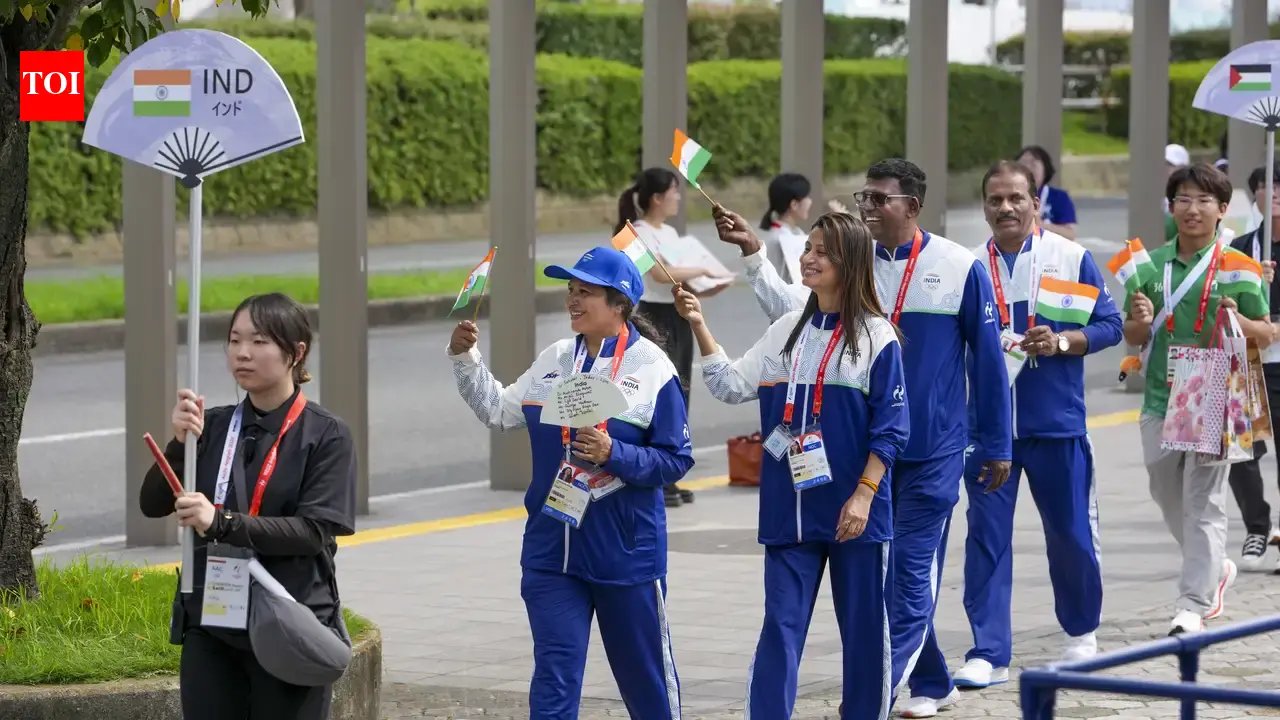
As the golfing world turns its attention toward the 2026 Asian Games in Nagoya, beginning September 30, the legendary golfer believes the current Indian contingent possesses the firepower, maturity, and pedigree to finally shatter the twenty-year drought.
A Legacy Looking for a Successor
Kapur, now 44, remains a pivotal figure in the evolution of Indian golf. Reflecting on his victory in Busan, he speaks with the pride of a trailblazer. “It’s been more than 20 years since my gold medal, and I’m hoping this team breaks that jinx,” Kapur said during an event for the Indian Golf Poker League (IGPL) in Delhi.
For Kapur, the medal was never just personal hardware; it was a watershed moment for the nation. “Even today, that medal remains the biggest achievement of my career because it belonged to India as much as it belonged to me,” he added. The weight of that achievement has hung over the sport for two decades, but the veteran believes the psychological barrier is set to crumble.
The Nagoya Mission: A Balanced Attack
The selectors have curated a squad that balances grit with global experience. The men’s side will feature the hard-hitting Yuvraj Sandhu, the consistent Veer Ahlawat, and the technically sound Saptak Talwar. On the women’s side, the expectations are perhaps even higher, with a formidable trio featuring the trailblazing Aditi Ashok—who has consistently put India on the map with her Olympic heroics—alongside the seasoned Diksha Dagar and the surging Pranavi Urs.
Kapur emphasized that this isn’t just a collection of talent; it is a group that has cut its teeth on the Asia Tour and the Ladies European Tour. This exposure to diverse course conditions and high-pressure environments is, according to Kapur, the “X-factor” that earlier Indian generations lacked.
“India has steadily emerged as one of Asia’s strongest golfing nations,” Kapur noted. “The experience within the squad, combined with the confidence gained from recent international performances, gives us a genuine chance of challenging for medals in both team and individual events.”
The Emotional Weight of the Tricolour
Beyond the technicalities of swing mechanics and course management, Kapur warns the current squad about the unique mental landscape of the Asian Games. Unlike the DP World Tour or the LIV Golf circuit, where success is quantified in world rankings and prize money, the Asian Games operate on a different frequency of national expectation.
“When you’re playing for India, it’s completely different,” Kapur explained. “Every shot means more because you’re representing the country, not just yourself. That’s what made Busan so special for me. You carry the expectations of over a billion people on the green with you, and learning to channel that pressure into focus is the ultimate test of an athlete.”
A Stronger Domestic Bedrock
The optimism surrounding the 2026 team is also rooted in the structural changes within Indian golf. The domestic circuit has matured, providing a more robust pipeline for talent to graduate to international waters. This consistent production line has allowed players to maintain form throughout the calendar year, a far cry from the sporadic opportunities available to Indian golfers two decades ago.
Kapur views this evolution as the most encouraging sign for the sport’s longevity. “Indian golf is entering an encouraging phase,” he said. “We are no longer just producing one-off sensations; we are producing players capable of competing consistently at the highest level. We have the infrastructure, the talent pool, and the momentum.”
Records Are Made to be Broken
As the countdown to Nagoya continues, the conversation inevitably circles back to the 2002 gold. While Kapur’s legacy is secure, he expresses a selfless desire to see his personal record relegated to the history books. In his view, the stagnation of the gold medal count would be a failure for the sport, not a triumph of his own longevity.
“Records are meant to be broken,” Kapur concluded with a smile. “I’d be happier than anyone if one of these boys or girls comes back with the gold. That’s how Indian golf moves forward. It’s time for a new generation to write their own chapter.”
Whether it is the clinical precision of Aditi Ashok or the relentless drive of the men’s contingent, the stage is set for a historic campaign. Should an Indian golfer stand atop the podium in Nagoya this September, they will not only be securing a medal; they will be liberating a legacy from the two-decade shadow cast by Kapur’s Busan masterclass. For the sake of the sport’s future, the veteran golfer hopes that when the final putt drops in Japan, it will be the sound of a new era beginning.
Disclaimer: This content is auto-generated for informational purposes only.
Source: Read Original News