








Standing in the expansive green space of Northern Roots, it is difficult to fathom the site’s former life. Where visitors now walk, there once stood two cotton mills, two coalmines, and an industrial railway. In more recent decades, 24 hectares of this 65-hectare (160-acre) site in Oldham, Greater Manchester, served as a landfill, leaving a scarred landscape that was largely left to nature.
Over the past five years, the charity Northern Roots has embarked on a radical transformation, aiming to convert this industrial “burden” into the UK’s largest urban farm and eco-park. On 19 September, the project reaches a significant milestone with the opening of a new public facility. The site will feature a café, shop, production kitchen, performance space, a forestry skills centre, outdoor play areas, and a fully operational urban farm.
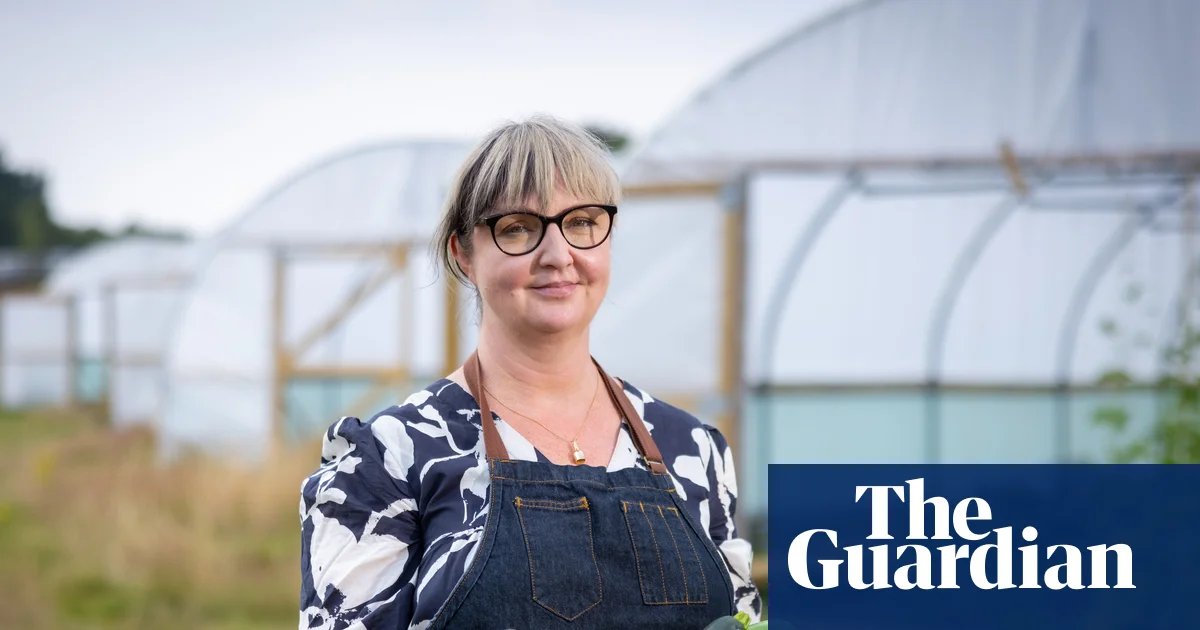
The initiative began as a partnership between Oldham council and the charity, shifting the local government’s perspective on land use. “We wanted to look at what this land could do for Oldham, rather than simply seeing it as land that needed maintaining,” says Anna da Silva, founder and CEO of Northern Roots.
The project operates on a philosophy of “participation pathways,” designed to draw local residents out of their homes and into a communal, outdoor environment. The charity offers seven core activity programmes covering farming, arts, sports, business, and education. Among these, the most innovative is the Natural Health Service. Commissioned by NHS England, this initiative moves beyond traditional green social prescribing—which often emphasizes physical activity—to focus on the intentional, restorative connection with the natural world.
Sessions within the Natural Health Service might include bushcraft, foraging, or simply taking time to observe the surrounding environment, away from the clinical pressures of a GP surgery. For participants, the site acts as a neutral, democratic ground. “There’s something really levelling and very democratic about doing things outside in nature,” says Faiza Awan, a community champion at the site. Her colleague, Louise Gibbs, adds that the outdoor setting provides a sense of comfort that helps individuals “slow down” and grant themselves permission to prioritize their mental health.
The impact of the programme is supported by empirical data. Independent NHS research published in 2025 found that participants saw their mental wellbeing scores improve by an average of 8.15 points on the Short Warwick-Edinburgh Mental Wellbeing Scale. Furthermore, the project generated an estimated £4,940 in social value per participant, proving that nature-based interventions can alleviate pressure on overburdened public services.
However, the team at Northern Roots emphasizes that the project’s value transcends quantitative metrics. It is about fostering a sense of belonging and community ownership in an area that has historically been divided. By engaging with the land, residents are reconnecting with their local environment in a way that feels empowering rather than passive.
As the charity looks toward the future, it has set ambitious goals: attracting 300,000 visitors annually by 2030, scaling its social prescribing efforts, and providing consistent vocational training in sustainable industries. Ultimately, da Silva argues that the Northern Roots model should be replicated across the country. She maintains that urban green spaces should be treated as “critical infrastructure,” as essential to a healthy society as hospitals or schools.
“We need commissioners to invest in these spaces in the same way they would built infrastructure,” da Silva says. By proving that a reclaimed industrial site can function as an engine for both environmental restoration and social wellbeing, Northern Roots is building a compelling case for a new, greener approach to urban development—one that fundamentally changes how people feel about their local landscape and their place within it.
Disclaimer: This content is auto-generated for informational purposes only.
Source: Read Original News