






India Faces Trade Uncertainty as US Enacts Strict New Sanctions Law
In a major development that could reshape global trade dynamics, US President Donald Trump signed the Lindsey O. Graham Sanctioning Russia and Iran Act of 2026 (H.R. 5334) into law on September 18. The legislation introduces a sweeping statutory framework designed to tighten the economic vise on Russia and extend long-standing sanctions against Iran. For India, the law presents a precarious challenge, as it links the US import tariff regime directly to a country’s energy procurement policies regarding Russia.
The 100 Per Cent Tariff Threat
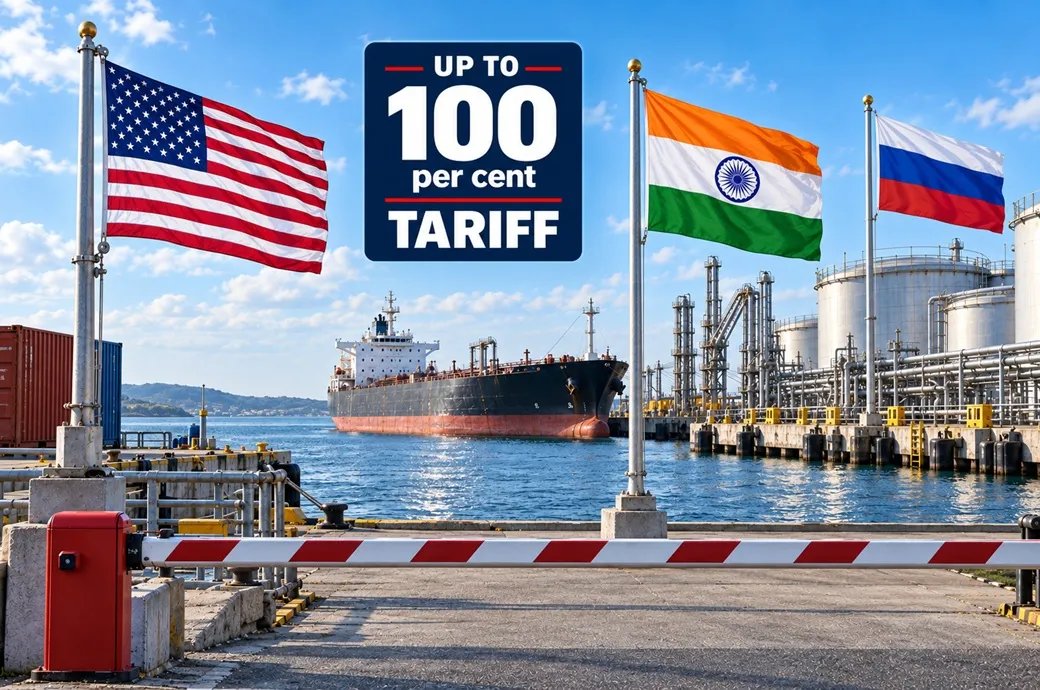
The most critical component of the legislation for global markets is a provision targeting nations that maintain significant energy ties with Moscow. Under the new law, the US administration is authorized to impose duties of up to 100 per cent on goods imported from countries that rank among the top five purchasers of Russian crude oil or natural gas by total volume.
The 12-month window preceding the enactment serves as the baseline for determining these rankings. As India and China are currently among the largest buyers of Russian energy, they fall squarely within the scope of this provision. While the law grants the US President significant discretion regarding the implementation, including the authority to grant waivers or determine specific tariff rates, the potential for a catastrophic impact on Indian exports to the US remains high.
Defining the Exemptions
The act provides a narrow path for avoiding these punitive duties, particularly concerning natural gas imports. A country may qualify for an exemption if its Russian gas imports constitute less than 15 per cent of Russia’s total gas export volume and the nation can demonstrate it has undertaken “significant steps” to reduce its reliance on Russian energy.
However, for crude oil, the language of the law is more rigid, leaving the burden of proof on the affected nations to negotiate their way out of the tariff framework. Trade analysts note that the ambiguity surrounding the “significant steps” clause creates a period of intense uncertainty for Indian exporters and sourcing teams, who must now brace for potential tariff adjustments that could be triggered as early as mid-October.
Implications for Indian Industry
The House of Representatives finalized the bill on September 16, following an aggressive push to target Russia’s leadership and its lucrative energy sector. With the law scheduled to come into full effect within 30 days of the President’s signature, Indian companies have little time to recalibrate their supply chains or engage in high-level diplomatic discussions with the White House.
For India, the situation is delicate. Since the onset of the conflict in Ukraine, India has maintained a stance of strategic autonomy, continuing to purchase Russian oil to ensure domestic energy security and keep inflation in check. The US legislation effectively penalizes this economic strategy by tethering energy trade to broader trade relations.
As the 30-day countdown begins, the Indian government is expected to intensify diplomatic efforts in Washington. The objective will be to secure clarity on the discretionary powers of the President and advocate for a nuanced application of the law that recognizes India’s unique energy security requirements. Until such assurances are provided, manufacturers across various sectors—from textiles to engineering goods—face a volatile trade environment, with many firms already reviewing their exposure to the US market in anticipation of potential volatility.
Disclaimer: This content is auto-generated for informational purposes only.
Source: Read Original News