



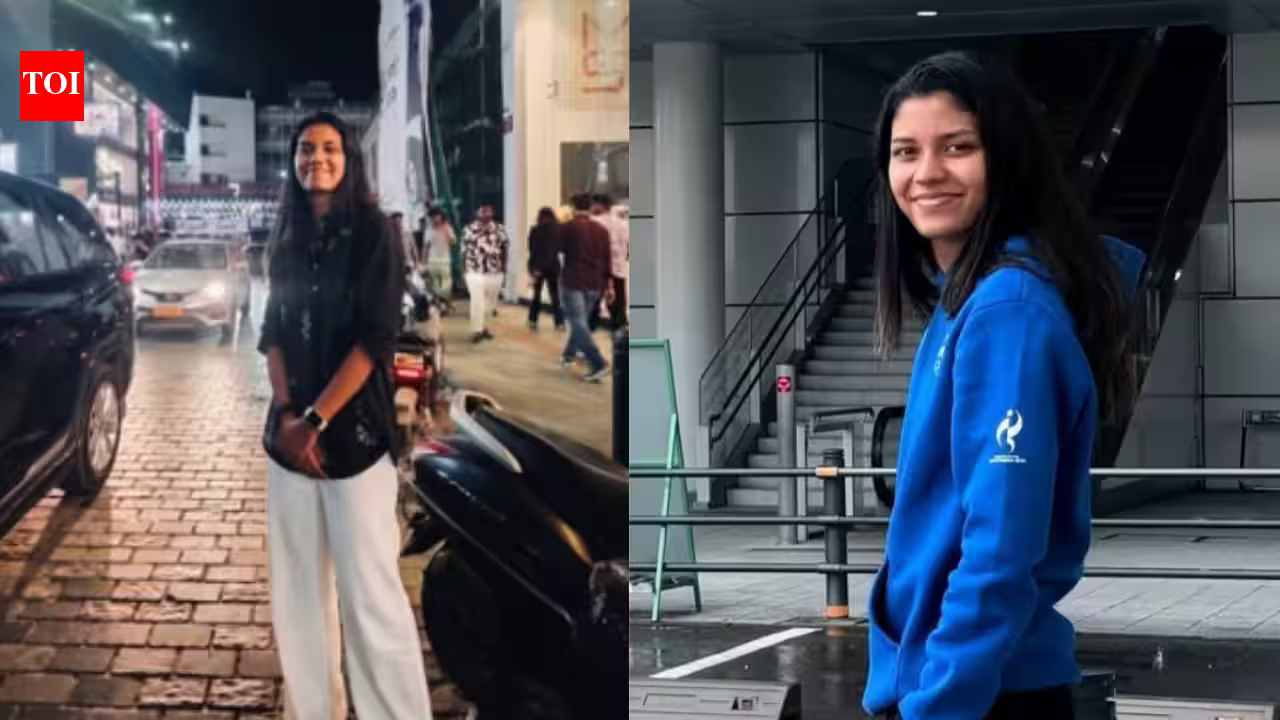



HISTORY beckons for India in the burgeoning sport of Teqball. At the Aichi-Nagoya 2026 Asian Games, Quimcy Joaquim Dsouza has positioned herself on the precipice of a monumental achievement. While the 24-year-old Mumbai native fell just short of a gold-medal match appearance on Saturday, a resilient campaign has left her with one final, high-stakes objective: becoming the first Indian athlete to secure a Teqball medal on the continental stage.
After a grueling semifinal defeat against Indonesia’s Ima Sumaya, Dsouza now shifts her focus to Sunday’s bronze-medal showdown. Standing between her and a historic place on the podium is Japan’s Yuina Sakamoto, an opponent Dsouza knows she can defeat, having already bested her during the group stage.
From the Track to the Teqball Table
The path to Aichi-Nagoya has been anything but conventional for Dsouza. Her athletic origins trace back to the age of 13, when she emerged as a promising middle-distance runner. However, the allure of the pitch soon proved irresistible. Dsouza transitioned into football, representing Maharashtra in various age-group competitions.
Though her trajectory in professional football did not reach the heights she once envisioned, her competitive fire remained undimmed. Armed with a degree in Sports Management and a professional stint at Decathlon, Dsouza’s career took a definitive turn when she encountered the mesmerizing skill of Brazilian legend Ronaldinho on Instagram. Watching the maestro showcase his precision on the curved Teqball table ignited a new passion. She pivoted from the football field to the specialized world of Teqball, rapidly ascending to become the leading figure in the Indian circuit.
A Trailblazer’s Credentials
Dsouza’s rise is not merely a product of chance; it is the result of relentless dedication. As a seven-time national champion, she has effectively carried the mantle for Indian Teqball, becoming the first woman from the nation to compete on the international circuit. Her commitment extends beyond her own play; she founded the Teqball Club of Bengaluru, a grassroots initiative designed to cultivate the next generation of players in a country where the sport is still in its infancy.
Her international reputation was further bolstered earlier this year when she secured a ninth-place finish at the Teqball World Championships in Romania. That performance served as a precursor to her current Asian Games run, proving that the Indian talent is capable of standing toe-to-toe with the global elite.
The Aichi-Nagoya Campaign
Teqball’s debut at the Asian Games has provided the perfect stage for Dsouza to showcase her versatility and technical prowess. She entered the tournament with immense intent, topping Group A with an unblemished record. Her group-stage campaign was highlighted by a grit-defining comeback victory over Japan’s Yuina Sakamoto. After dropping the opening set 10-12, Dsouza showcased nerves of steel to clinch the next two sets 12-11 and 13-11, signaling to the rest of the field that she was a genuine medal contender. A subsequent victory over Cambodia’s Koemyean DY confirmed her spot in the semifinals.
The Semifinal Heartbreak
On Saturday, Dsouza faced a formidable challenge against Indonesia’s Ima Sumaya. The match began promisingly for the Indian, who took the first set 12-7 with clinical precision. However, momentum shifted in the second, with Sumaya clawing back to take the set 12-9.
The decider was a tense affair. Dsouza surged to an early 3-0 lead and appeared poised to seal the victory at 4-1. Yet, in the high-pressure environment of the Asian Games, Sumaya found her rhythm, mounting a tactical comeback that saw her seize control of the final exchanges. The set concluded 12-7 in favor of the Indonesian, denying Dsouza a spot in the final but keeping her aspirations for a bronze medal very much alive.
A Final Chance for History
With five distinct medal events—singles, doubles, and mixed doubles—Aichi-Nagoya 2026 has been a significant milestone for the sport of Teqball. For Dsouza, who also competed in the mixed doubles event alongside Mohamed Anas Imran Beg, the focus is now squarely on the upcoming match against Sakamoto.
The rematch offers a unique psychological advantage; having defeated the Japanese athlete in the group stages, Dsouza knows the formula for success. However, the stakes of a bronze-medal match are vastly different. Both players will be under immense pressure to deliver, and for India, the result carries the weight of history.
As Dsouza prepares for Sunday, the Indian sporting fraternity will be watching with bated breath. Whether she walks away with the hardware or not, her journey from a Mumbai runner to an Asian Games semifinalist stands as a testament to the growth of Teqball in India. A win on Sunday would not just be a personal victory for Dsouza; it would serve as the foundational achievement for the sport’s future in the nation.
Disclaimer: This content is auto-generated for informational purposes only.
Source: Read Original News