







NAGOYA is known globally as a bastion of clockwork precision, where trains arrive to the second and civic life moves with an orchestrated, rhythmic efficiency. However, as the city prepares to host the 20th Asian Games, that reputation for flawless punctuality has hit an unexpected snag. In an embarrassing lapse for the organizing committee, the official flag-hoisting ceremony scheduled for Friday was marred by significant delays and confusion, casting a shadow over the early logistical preparations for the continental spectacle.
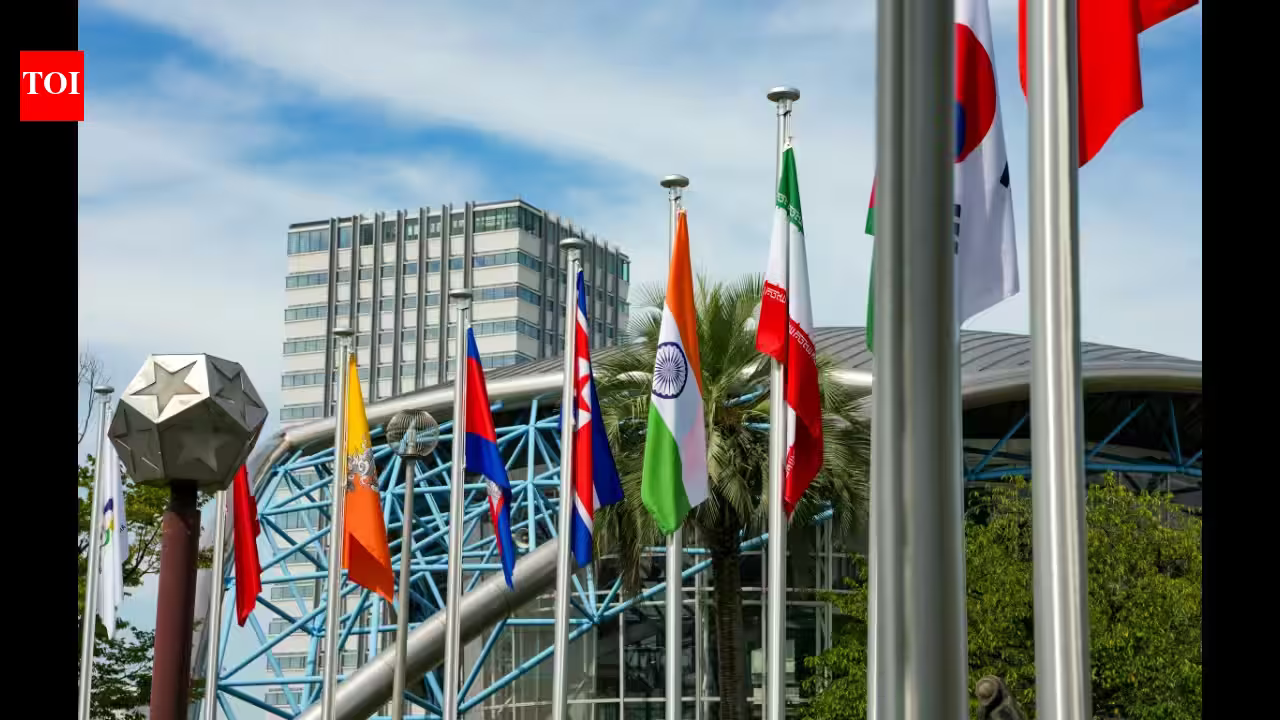
The ceremony at Garden Pier, intended to welcome the participating nations with traditional fanfare, was meant to be a straightforward affair. Instead, it devolved into a frustrating ordeal as six delegations—India, Yemen, North Korea, Palestine, Chinese Taipei, and Timor-Leste—were left standing in limbo.
A Ceremonial Standoff
The event, slated for a 1:30 p.m. start, initially saw a modest delay of 20 minutes. As the tension in the air mounted, the ceremonial band began its performance, signaling that the proceedings were finally underway. Yet, in a bizarre turn of events, the delegations were abruptly halted just moments before they were set to take the stage. Athletes and officials were ordered to hold their positions, eventually being ushered back to the waiting area without any clear explanation.
While Indian athletes were not in attendance, the national contingent’s leadership—including Chef de Mission Sahdev Yadav and Deputy Chefs de Mission Sharath Kamal, Anjali Bhagwat, Lijo Thottan, and Alaknanda Ashok—were present to witness the breakdown in protocol.
Organizational Friction: “Miscommunication” or Mismanagement?
In the immediate aftermath of the delay, conflicting reports emerged regarding the cause. Initial speculation pointed toward the late arrival of a high-profile chief guest. However, an official from the Aichi-Nagoya Asian Games Organizing Committee (ANAGOC) later offered a more pointed, albeit vague, explanation regarding the internal mechanics of the Games.
“The communication between the Olympic Council of Asia (OCA) executive board and the organizing committee was not well, that’s why this happened. It’s not like somebody delayed the ceremony,” the official stated, attempting to shift the narrative from one of personal tardiness to a systemic, structural breakdown.
The admission highlights a potentially deeper friction between the OCA’s supervisory body and the local organizers. For a nation that prides itself on seamless infrastructure, this public-facing failure suggests that the bureaucratic bridge between the international governing body and local executors is currently strained.
Indian Delegation Takes Proactive Measures
As the host city grapples with these growing pains, the Indian contingent is already moving to insulate its athletes from the fallout. Recognizing that logistical bottlenecks—ranging from transport issues to accommodation hurdles—could derail the competitive focus of the team, Chef de Mission Sahdev Yadav has taken an aggressive stance on damage control.
“Initially there were problems, but we have booked extra hotel rooms,” Yadav told reporters, acknowledging the reality of the situation. “Our officials are at the airport to sort out issues. There is mismanagement, but in a Games on this scale, it happens. We are focused on solving the problem for our athletes.”
Yadav’s frank admission that “there is mismanagement” reflects a pragmatic approach from the Indian camp. Rather than waiting for the host committee to rectify every logistical error, the Indian delegation has taken the initiative to secure 18 additional hotel rooms, with plans to procure another 10 to ensure the comfort and safety of their athletes. By staying ahead of the curve, the Indian team aims to minimize the impact of the ongoing organizational chaos on their training schedules and mental preparation.
High Stakes in Nagoya
The Asian Games are one of the most complex sporting events on the planet, involving thousands of athletes, media, and support staff. While minor hiccups are often expected in the lead-up to the opening ceremony, the public nature of the flag-hoisting failure has raised concerns about the readiness of the venues and the capability of the organizing committee to manage the immense pressure that comes with the Games.
The OCA will likely be looking for immediate assurances that the communication gaps identified at Garden Pier will be closed before the Games officially kick off. For Japan, the pressure is now on to return to its hallmark standards of excellence. With the world watching, Nagoya must prove that it can overcome these early hurdles and deliver an Asian Games that meets the high expectations of the sporting community.
For now, as the athletes arrive and the final preparations are made, the focus remains on the field of play. But for the organizers, the clock in Nagoya is no longer just a neutral tool—it is a reminder that in the high-stakes world of international sports, every second counts, and efficiency is the ultimate currency.
Disclaimer: This content is auto-generated for informational purposes only.
Source: Read Original News