

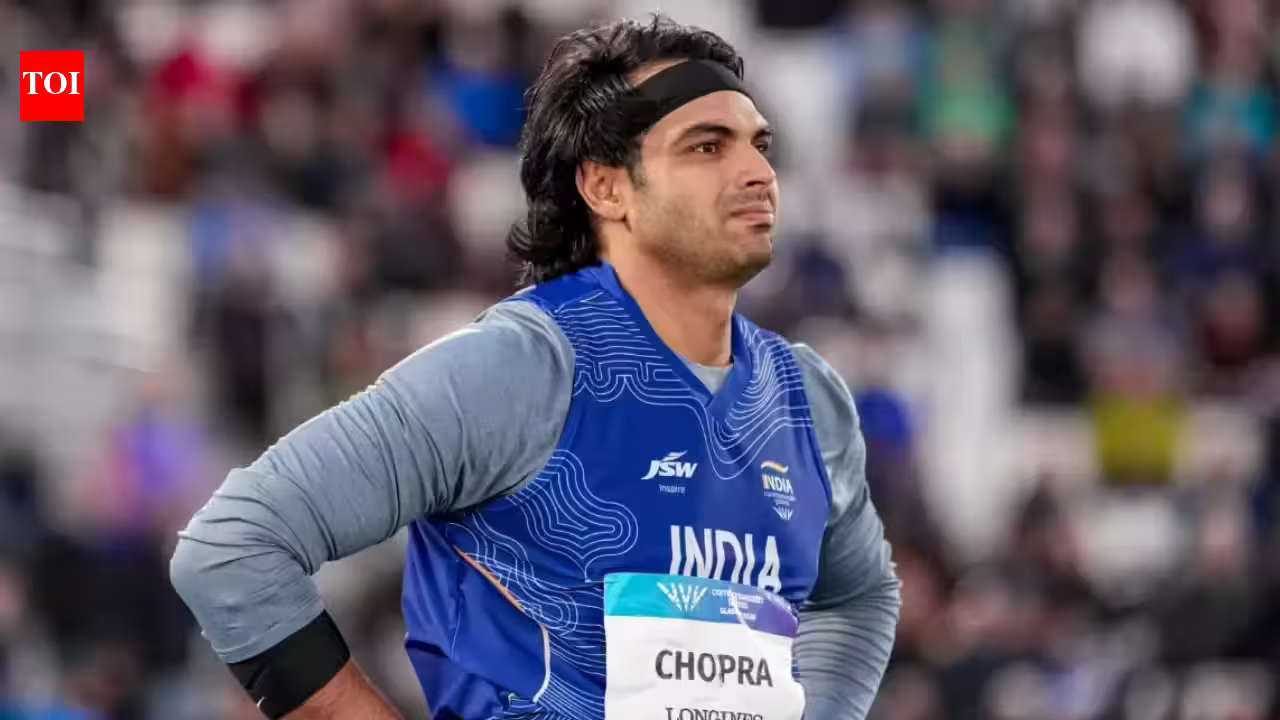


Nagoya will feel distinctly different this year as the roar of the crowd prepares to welcome Asia’s finest athletes, yet one of the continent’s most iconic figures will be conspicuously absent from the runway. Neeraj Chopra, India’s golden boy and a reigning force in the men’s javelin throw, has officially confirmed his withdrawal from the 2026 Asian Games, citing a persistent ankle ligament injury that has sidelined him during the most critical juncture of his season.
The news comes as a sobering blow to the Indian contingent and fans alike. Chopra, who was looking to secure an unprecedented third consecutive Asian Games gold medal following his dominant performances in Jakarta (2018) and Hangzhou (2023), revealed the crushing reality of his situation in a heartfelt message posted to LinkedIn.
## A Legacy Interrupted by Physical Toll
For a world-class athlete who has consistently carried the weight of a nation’s expectations on his broad shoulders, the inability to compete is a unique brand of agony. “The Asian Games have given me some of the most special moments of my career, and not being able to represent India at this edition is difficult,” Chopra admitted.
His journey to this point has been marked by remarkable resilience. Since his breakout, he has navigated a minefield of physical setbacks that would have forced lesser competitors into early retirement. From his right elbow surgery in 2019 to a groin injury that sidelined him for the 2022 Commonwealth Games, and a series of muscle strains throughout the 2023 and 2024 seasons, Chopra has become all too familiar with the recovery room.
This latest ankle ligament injury occurred during a training session, forcing the 28-year-old to make the pragmatic, if painful, decision to pull out of both the Asian Games and the prestigious Diamond League final. Reflecting on the gravity of his role, Chopra noted, “Being able to carry the hope of a country into competition is a privilege. To miss out on that opportunity does hurt.”
## Finding Perspective Beyond the Podium
While the athletic world fixates on medals, records, and podium finishes, Chopra’s recent reflections offer a rare glimpse into the psychological toll of elite sport. The life of a professional javelin thrower is one of isolation—months spent in foreign training camps, rigorous physical therapy, and the relentless pressure of constant public scrutiny.
In his statement, Chopra emphasized the vital importance of his personal support network. When the body fails, it is often the mind that needs the most urgent maintenance, and for the Olympic gold medallist, that maintenance comes from friends who refuse to view him solely as an athlete.
“Injuries are a part of sport. You cannot control everything that happens to you. You can only control how you respond to it,” he wrote. “A big part of that response is the people around me… I have friends who know I’m not in the best place right now, but when they call, they don’t ask me about my ankle. They just talk, we laugh, we remember old times… this reminds me that there is more to life than the next competition.”
This philosophy underscores a maturity that has defined Chopra’s career as much as his explosive distance. By separating his identity from his output, he has found a way to navigate the “lowest times” without succumbing to the burnout that frequently claims athletes at his level.
## Looking Toward the Future
Chopra’s most recent competitive appearance was a runner-up finish at the Lausanne Diamond League, where he was edged out by Sri Lanka’s Rumesh Pathirage. While that performance showed he was still in peak form, the subsequent injury has forced an abrupt halt to his 2026 campaign.
As the Indian contingent prepares to depart for Nagoya, they do so with a message of support from their star performer. “To the Indian contingent in Nagoya, I will miss walking alongside you. But I will be backing you. I have precious memories of the Games. I hope you make some too.”
For now, the focus shifts from the javelin sector to the recovery ward. Chopra is no stranger to mounting comebacks, and while the 2026 Asian Games will proceed without him, the narrative of his career remains unfinished. The challenge now is not to reach a certain distance or break a new record, but to heal, recover, and eventually return to the discipline that has captivated millions of fans across the globe.
As he begins his rehabilitation, one thing remains clear: Neeraj Chopra’s absence from Nagoya is a testament to the fragile nature of high-performance athletics, but his candid perspective on recovery serves as a powerful reminder that there is a human behind the gold-medal hero—one who knows exactly how to weather the storm and return to the spotlight when the time is right.
Disclaimer: This content is auto-generated for informational purposes only.
Source: Read Original News