





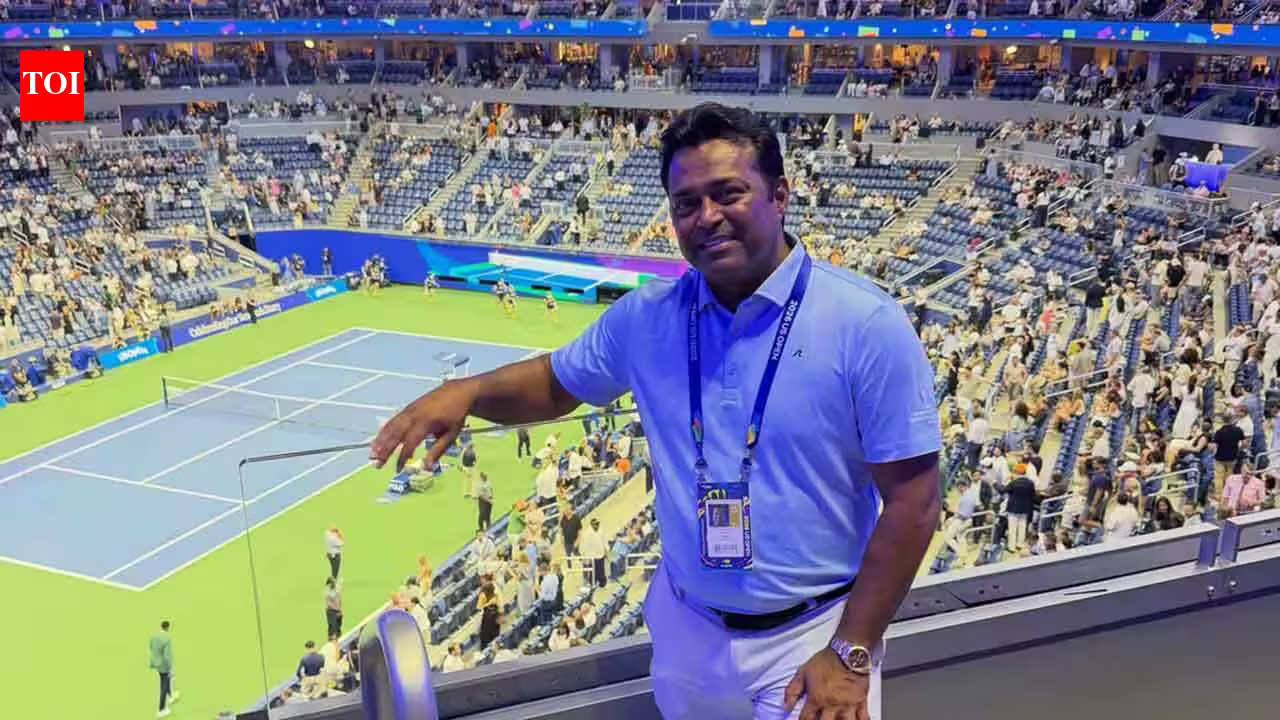

THIRTY YEARS after etching his name into the annals of sporting history with a bronze medal at the 1996 Atlanta Olympics, Leander Paes is preparing to deliver his most significant winner yet. The legendary Indian tennis icon has officially thrown his hat into the ring for the presidency of the All India Tennis Association (AITA), aiming to overhaul a national sports body that has long been criticized for institutional stagnation and a lack of transparency.
Speaking from the sidelines of the US Open in New York, the 18-time Grand Slam champion framed his candidacy not as a pursuit of political power, but as a necessary intervention for the future of Indian tennis. For Paes, the mission is simple: return the sport to the players and dismantle the administrative hurdles that have stifled talent for over a decade.
Bridging the Gap Between Success and Support
Reflecting on the last two decades, Paes expressed a sense of urgency regarding the state of Indian tennis. While the nation has enjoyed rare, brilliant flashes of success—bolstered by the collective 38 Grand Slam titles won by Paes, Sania Mirza, Mahesh Bhupathi, and Rohan Bopanna—the former world No. 1 in doubles believes the country has failed to capitalize on its own history.
“We have had success, so I ask, what did we do with it? Did we capitalise on it?” Paes questioned. “I feel strongly that the players have not been supported, not those who achieved the results nor those who are trying to forge career paths now.”
Paes points to a recurring issue: talented young players are often left to navigate the brutal financial landscape of professional tennis on their own, funding their own travel, coaching, and lodging. His platform centers on creating a “clear and clean development pathway” where financial transparency replaces the opacity that has plagued the association’s reputation in recent years.
The Professionalization Mandate
Paes revealed that his decision to run was not impulsive. It followed years of quiet consultation with state associations, fellow players, and his late father, Dr. Vece Paes. The elder Paes, a former Olympian himself, had once warned his son that entering sports administration would be a “tough position” where his on-court legacy could be overshadowed by the mud-slinging of political maneuvering.
However, the advice remained consistent: if one enters the fold, they must act as a professional.
“I’m interested in governance, not politics,” Paes stated, emphasizing his intent to professionalize the AITA state by state. “My goal is to get the administration of AITA to such a level that it sets the standard for other sports associations in the country.”
A Blueprint for the Next Decade
Looking toward a ten-year horizon, Paes outlined an ambitious vision inspired by the developmental models of China, Italy, and Spain. His primary objective is to create a robust domestic tournament calendar, reducing the need for Indian players to constantly travel abroad to secure essential ranking points.
“The sport is played round the year globally. I want India to have a full calendar too—men, women, and juniors,” Paes explained. By building a domestic circuit that serves as a pipeline for junior talent, he aims to increase the presence of Indian athletes in Grand Slam draws. His target is to have approximately 15 singles players and multiple doubles teams competing regularly on the sport’s biggest stages.
Paes also envisions an ecosystem where the “past, present, and future” of Indian tennis are interconnected. He advocates for a system where retired icons like Mirza, Bhupathi, and Vijay Amritraj are actively integrated into coaching and event management roles, ensuring that their collective wisdom is passed down to the current generation, such as Sumit Nagal.
Taking Ownership of the Future
The path ahead for the AITA elections will likely be fraught with challenges, but Paes is banking on his “personal equity” to draw in both government and corporate investment. He argues that tennis is a global language, and India has the potential to be a dominant voice if the structural rot is cleared away.
“We begin by having conversations,” Paes said. “The players need to come together and work together. This is our sport, we must take ownership of it.”
As the tennis world gathers in New York, the conversation surrounding the AITA presidency has taken a professional, high-stakes turn. For a man who built a career on defying odds and executing the impossible, this new campaign to fix the foundations of Indian tennis may well be the most vital challenge of his life. Whether the governing body is ready for his brand of transparency and professional rigor remains to be seen, but one thing is certain: Leander Paes is no longer just playing the game—he is attempting to change the rules.
Disclaimer: This content is auto-generated for informational purposes only.
Source: Read Original News