







Understanding the Lunar Mechanics of the October Supermoon
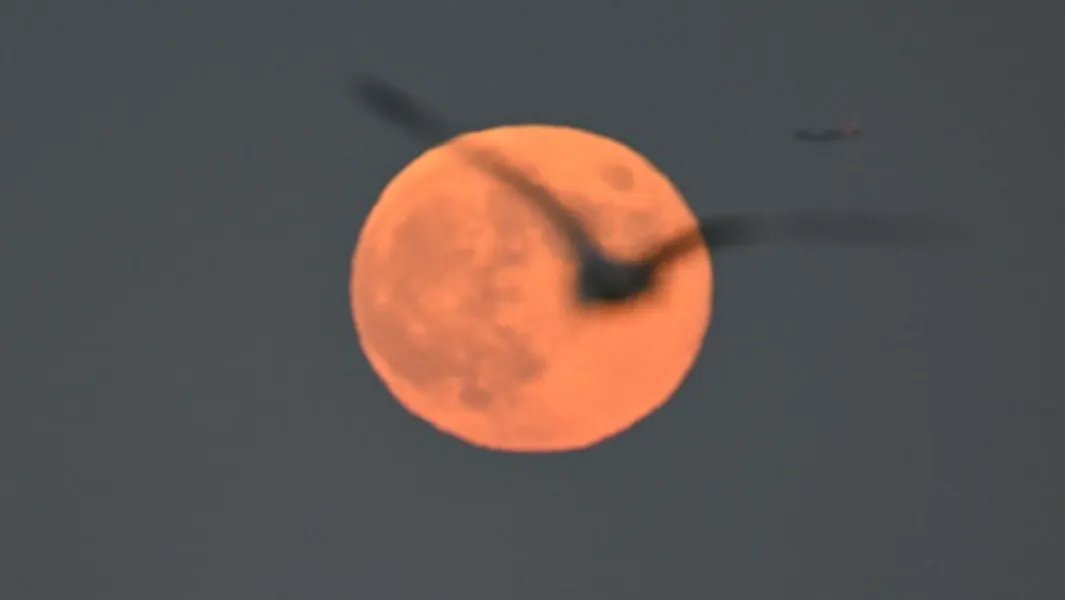
The celestial event occurring this October centers on the Hunter’s Moon, a lunar phenomenon that has garnered significant attention from both amateur stargazers and professional astronomers. This particular full moon is classified as a supermoon, a term that describes the alignment of a full moon with its perigee. The perigee is the point in the moon’s elliptical orbit where it is physically closest to Earth.
Because the moon does not orbit our planet in a perfect circle, its distance varies by approximately 30,000 miles throughout a single month. When a full moon occurs near this point of proximity, it appears perceptibly larger and brighter than a typical full moon. Specifically, a supermoon can appear up to 14 percent larger and 30 percent brighter than the moon at its most distant point, known as the apogee. This October, the moon will reach its perigee at a distance of approximately 222,055 miles from Earth, making it the closest and largest supermoon of the calendar year.
The Astronomical Significance of the Hunter’s Moon
The moniker “Hunter’s Moon” is rooted in traditional astronomical tracking, typically referring to the first full moon following the Harvest Moon. Historically, this moon provided farmers and hunters with extended periods of light during the autumn evenings, which was critical for gathering food and preparing for the winter months.
From a modern scientific perspective, the Hunter’s Moon is significant because of the specific angle at which the moon rises during this time of year. As the moon moves along the ecliptic, the path the sun follows across the sky, the angle between the horizon and the moon’s orbit becomes shallow. This causes the moon to rise at nearly the same time for several consecutive nights. For observers on the ground, this means there is a very short interval between sunset and moonrise, providing a prolonged period of illumination that distinguishes this moon from those in other months.
Technical Details and Optimal Viewing Times
For those planning to observe the phenomenon, precision in timing is essential to catch the moon at its peak illumination. The moon is officially full at the exact moment when the sun and the moon are on opposite sides of the Earth, aligned at 180 degrees of ecliptic longitude. This October, that alignment will occur precisely at 7:26 a.m. EDT. However, because the moon will be below the horizon for much of North America during that exact second, the most effective time for observation will be during the moonrise of the evening prior or the evening of the peak.
To maximize the viewing experience, enthusiasts should look toward the eastern horizon shortly after sunset. Optical illusions, often referred to as the moon illusion, frequently enhance the appearance of the moon when it is near the horizon. By observing the moon against the backdrop of terrestrial objects like buildings, trees, or distant mountains, the human brain perceives the lunar disk as significantly larger than it appears when it is high overhead in the center of the night sky.
Impacts on Earth and Tidal Dynamics
The proximity of a supermoon has measurable effects on Earth beyond the visual display. The gravitational pull of the moon is the primary driver of Earth’s tides. When the moon is at perigee, its gravitational influence is slightly stronger than usual, leading to what are known as perigean spring tides.
During this phase, coastal areas may experience higher-than-average high tides and lower-than-average low tides. While these fluctuations are generally well within natural variances, they can occasionally lead to localized coastal flooding in low-lying regions, especially if weather conditions like high winds or storm surges are present. Mariners and coastal residents often monitor the perigee schedule to prepare for these tidal variations. The increased gravitational intensity caused by the proximity of the moon serves as a reminder of the interconnected physical forces that govern the movement of Earth’s oceans.
Equipment and Methods for Enhanced Observation
While the supermoon is visible to the naked eye, those interested in capturing or studying the lunar surface will find that specific tools can greatly improve the experience. For casual observation, binoculars with 7x or 10x magnification are sufficient to distinguish the lunar maria, which are the dark, basaltic plains formed by ancient volcanic eruptions, and the lighter, cratered highlands.
For those attempting photography, using a tripod is critical to maintain stability during long exposure times. Because the moon is an exceptionally bright object in the night sky, high shutter speeds are necessary to prevent motion blur and avoid overexposing the crater details. A telephoto lens with a focal length of at least 300mm is recommended to capture the disk in sufficient detail. Furthermore, utilizing manual focus settings allows the operator to overcome the tendency of autofocus systems to struggle when locking onto high-contrast objects against a pitch-black background. By applying these technical adjustments, observers can bridge the distance of 222,000 miles to document the intricate geography of the lunar surface during this rare astronomical alignment.
Disclaimer: This content is auto-generated for informational purposes only.
Source: Read Original News