







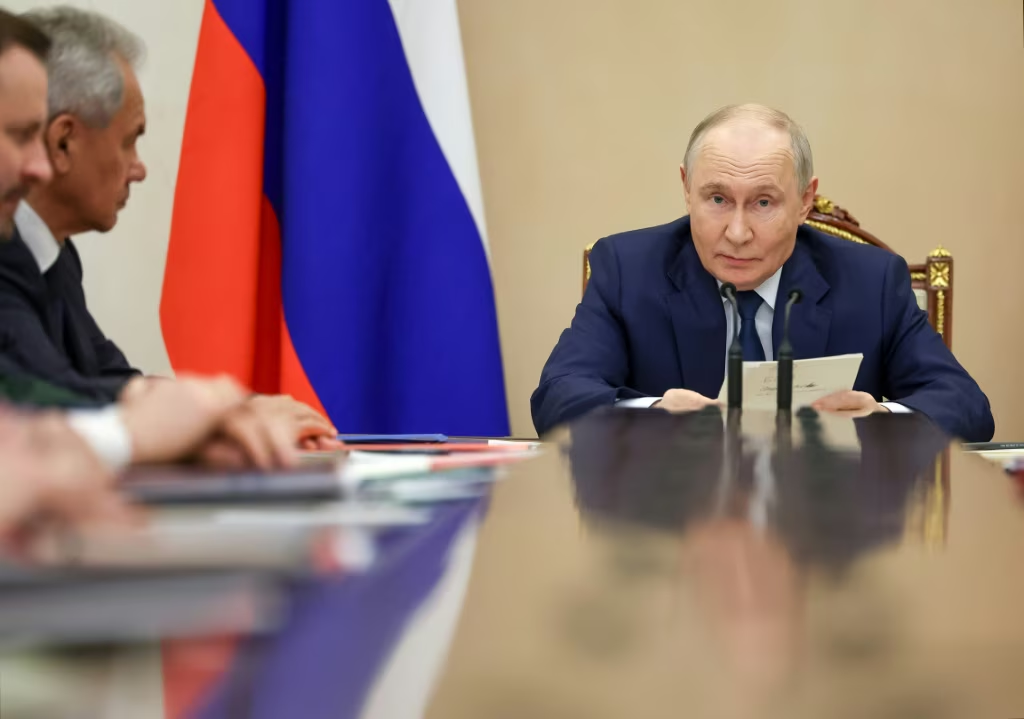
MOSCOW — Russians headed to the polls on Sunday for the final day of parliamentary elections, a process expected to cement the Kremlin’s absolute grip on power as the nation enters the fifth year of its grinding military campaign in Ukraine.
The ruling United Russia party, a staunch supporter of President Vladimir Putin, is widely expected to secure a clean sweep of the 450 seats in the State Duma. With the Supreme Court having barred the anti-war Yabloko party from the ballot, the remaining political organizations cleared to run are firmly aligned with the Kremlin’s objectives. Consequently, the election offers little in the way of surprise, but observers are watching for signs of public sentiment regarding the conflict, which remains Europe’s deadliest since World War II.
The atmospheric tension surrounding the vote reached a peak as Moscow Mayor Sergei Sobyanin reported a massive drone offensive by Ukraine. According to Russian officials, air defenses intercepted over 1,600 drones, including 450 aimed directly at the capital. “The unprecedented attack was clearly planned with the aim of disrupting the elections,” Sobyanin said on Telegram. “The enemy did not succeed.”
For the Kremlin, the election is a tool of mobilization. President Putin has cast the vote as a vital show of unity and a direct “answer to those who want to weaken Russia.” However, beneath the veneer of manufactured stability, there is growing anxiety. Rumors of a potential new military mobilization persist—despite official denials—fearing a repeat of the 2022 draft that prompted an exodus of hundreds of thousands of Russian men.
On the ground, economic frustrations are beginning to bleed into the public discourse. Some citizens cited job losses and stagnating wages, while others expressed unwavering support for the status quo.
The political opposition, mostly driven into exile or silenced following the death of Alexei Navalny in an Arctic prison earlier this year, remains deeply fractured on how to respond. While Yabloko has urged voters to abstain, arguing that participation validates a fraudulent process, allies of the late Navalny have encouraged voters to head to the polls at noon on Sunday in a collective act of silent protest.
Logistical challenges have plagued the process, with the Central Election Commission reporting “powerful” cyberattacks on Moscow’s electronic voting system and incidents of sabotage in the country’s far east. Ella Pamfilova, chair of the Commission, decried these as deliberate attempts to disrupt the democratic exercise.
As polling stations prepare to close at 1800 GMT, the primary focus shifts to the potential turnout data and whether the Kremlin can project the appearance of overwhelming support during one of the most volatile periods in modern Russian history. With the result a foregone conclusion, the true test for the Kremlin lies not in the seat count, but in the legitimacy afforded by a population increasingly weary of war and economic strain.
Disclaimer: This content is auto-generated for informational purposes only.
Source: Read Original News