

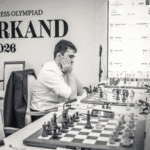




SAMARKAND — As the latest Chess Olympiad gets underway in the historic city of Samarkand, the global chess community is once again reminded of the profound influence of the former Soviet republics. The sport’s current landscape—marked by the meteoric rise of players like Uzbekistan’s Javokhir Sindarov and the legacy of the 2022 Olympiad champions—traces its roots back to a radical political experiment that began over a century ago.
The dominance of nations like Uzbekistan, Russia, Ukraine, and Armenia is no historical accident. Between 1952 and 1990, the Soviet Union entered nineteen Olympiads, winning eighteen and finishing runner-up in the only tournament they failed to conquer. Even after the USSR’s collapse, the “Soviet school” of chess continued to define the sport, with Russia dominating the 1990s and early 2000s, followed by successes from Ukraine and Armenia. It is a staggering level of hegemony for a game that did not originate in the region.
Chess as a tool to build the ‘New Soviet Man’
While chess had a respectable following in Tsarist Russia—counting luminaries like Leo Tolstoy among its fans—the Bolsheviks saw the game not merely as an intellectual pursuit, but as a strategic asset. Following the 1917 Revolution, the new state dismantled many imperial cultural symbols, but they actively appropriated chess, molding it into a cornerstone of their vision for the “New Soviet Man.”
The mastermind behind this transformation was Alexander Ilyin-Zhenevsky, a multifaceted figure who served as both a chess master and a high-ranking military official. During the chaos of the Russian Civil War, Ilyin-Zhenevsky served within Vsevobuch, the government’s universal military training system. He argued that chess possessed a unique pedagogical power: it taught soldiers how to maintain cold nerves, exercise long-range foresight, and make dynamic, high-stakes decisions under intense pressure.
This philosophy was put to the test in October 1920, when sixteen of the nation’s strongest players gathered in Moscow for the All-Russian Chess Olympiad. The event provided a stark look at the hardships of post-revolutionary life; the tournament was nearly derailed by a strike. Players, struggling with severe food shortages, demanded better rations from the military. Even the legendary Alexander Alekhine, who won the tournament, famously refused to play against starving opponents, standing in solidarity with his peers. Alekhine would go on to become the first Soviet chess champion before eventually leaving the country, leaving behind a legacy that would be heavily redacted by the state he once represented.
How the Bolsheviks turned chess into a mass movement
The Bolshevik leadership viewed chess as the perfect tool for social engineering: it was inexpensive, required no element of chance, and rewarded disciplined study. By the mid-1920s, the game was being pushed out of elite parlors and into the heart of the working class. Chess clubs sprouted in factories, and the state mobilized magazines and newspapers to publish pedagogical materials.
To cement the game’s status as a symbol of cultural progress, the state leaned into mass spectacle. In 1924, in a display that signaled the end of the old world, the government staged a massive live-action chess match in Leningrad’s Palace Square. Red Army soldiers and sailors replaced wooden pieces on a giant board, physically moving across the hallowed ground of the former Tsarist regime. The imagery was unmistakable: the revolutionary state had claimed the symbols of power and replaced them with the intellectual exercise of the new socialist order.
The bureaucratization of the game was finalized with the rise of Nikolai Krylenko, a senior revolutionary who served as the People’s Commissar for Justice. Krylenko was instrumental in launching the chess magazine 64 and ensuring that chess was firmly embedded within the national physical culture bureaucracy. Under his guidance, the state constructed a comprehensive ecosystem of coaches, tournaments, and career paths that turned promising youngsters into world-class grandmasters.
From workers’ clubs to a Soviet chess machine
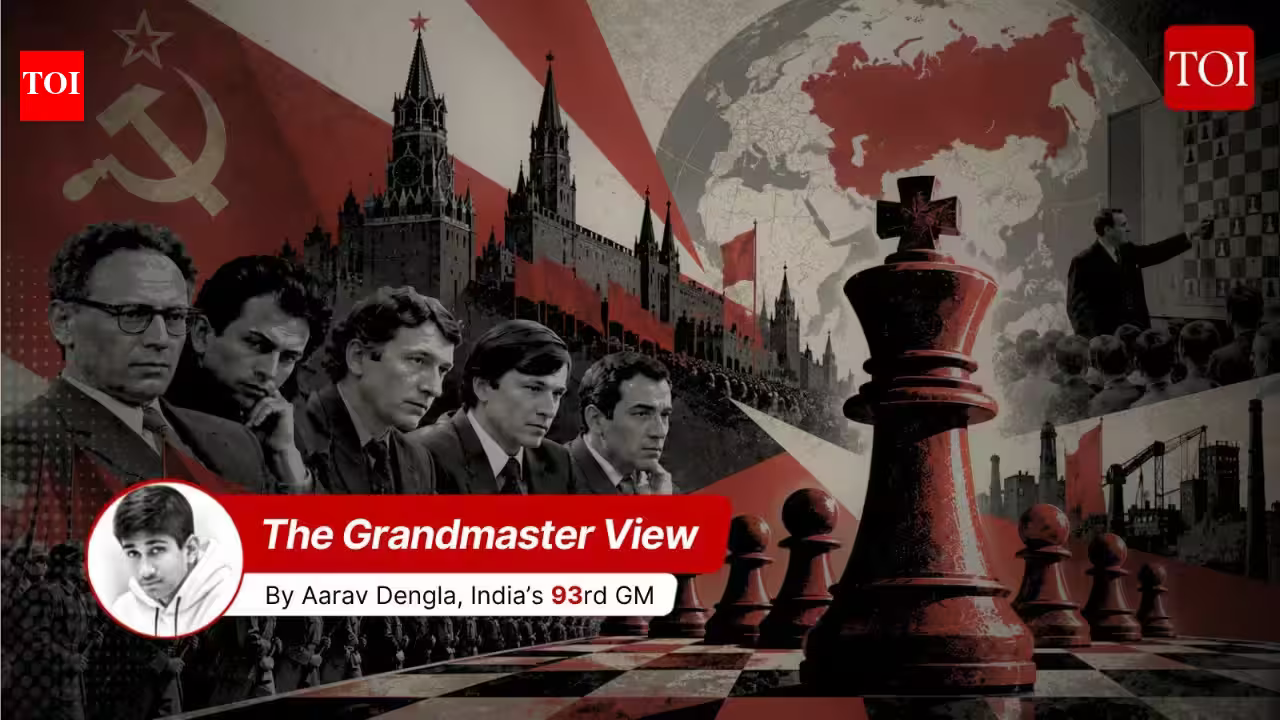
This state-sponsored pipeline produced an unparalleled lineage of champions. From Mikhail Botvinnik to Tigran Petrosian, Mikhail Tal, Boris Spassky, Anatoly Karpov, and Garry Kasparov, the “Soviet machine” churned out thinkers with drastically different styles, all united by a common foundation of rigorous state training.
The tragic irony of this system is captured in the fates of its architects. Ilyin-Zhenevsky perished in a German bombing raid during the Siege of Leningrad in 1941, while Krylenko, the man who turned chess into an engine of state pride, was purged and executed by that very state during the Great Terror of 1938.
Yet, the machine they built proved more resilient than the government that spawned it. As the modern generation of players from the former Soviet sphere gathers in Samarkand, they continue to demonstrate that thirty-two pieces on sixty-four squares—once considered a tool to build revolutionaries—remain the ultimate training ground for those who wish to master the art of the endgame.
Disclaimer: This content is auto-generated for informational purposes only.
Source: Read Original News