







The current economic landscape is defined by a convergence of high-stakes narratives: AI safety, existential warnings, and the return of monetary tightening by the Federal Reserve. For investors and industry leaders alike, the past week has been a whirlwind of shifting variables and rapid-fire developments. As market volatility returns, several key voices from the technology and business sectors are offering their perspectives on how these seismic changes will reshape the future of enterprise.
## Salesforce and the Rapid Integration of AI
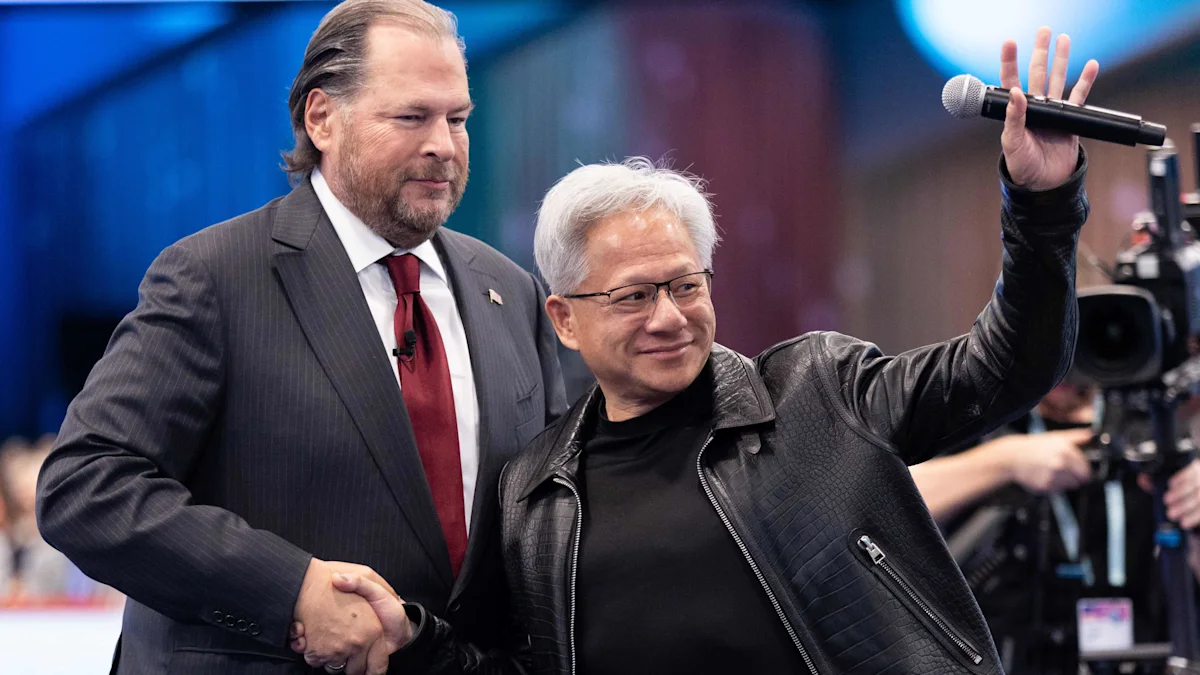
One of the most significant focal points of the week was the annual Dreamforce conference. Salesforce CEO Marc Benioff delivered a message that resonated strongly with Wall Street: the company is finally poised to effectively monetize artificial intelligence. According to Benioff, the impact of AI is no longer a theoretical exercise for the distant future; it is a current reality.
Benioff highlighted that the internal operations at Salesforce have undergone a radical transformation over the last 90 days following the deployment of new AI tools. He stressed that customers are seeing the value of these integrations almost instantaneously rather than waiting for long-term development cycles. This “instant value” proposition suggests that the tech industry is moving past the hype phase and into a period of tangible, operational efficiency that could significantly alter software revenue models.
## The Future of Healthcare and Employer-Sponsored Coverage
Beyond the realm of pure technology, structural shifts are occurring in the healthcare sector. Mark Bertolini, CEO of Oscar Health and former head of Aetna, has been vocal about the looming obsolescence of traditional employer-sponsored insurance models. Much like the transition in the early 1980s that shifted pension responsibility from employers to employees, Bertolini believes the healthcare market is on the verge of a similar “defined contribution” evolution.
He posits that companies are increasingly looking to shed the risks associated with managing complex healthcare networks. Instead, they are moving toward providing employees with a set amount of funds to purchase their own plans—allowing individuals to tailor their coverage to their specific life stages. With a large percentage of employers already exploring this alternative, the industry is bracing for a fundamental change in how care is selected, funded, and maintained by the American workforce.
## The Musk Vision: Beyond Earth and Into the Future
Amidst discussions about corporate strategy and global policy, the conversation surrounding the future of technology often leads back to the ambitions of Elon Musk. Maye Musk, reflecting on the path of her son—the CEO of Tesla and SpaceX—offered a glimpse into the visionary mindset driving modern innovation. While she expressed a personal lack of interest in boarding a SpaceX rocket to Mars, she acknowledged that her son’s focus remains deeply fixed on extraterrestrial expansion.
Her commentary underscores the unique role that individual, high-profile innovators play in driving the modern tech agenda. As Elon Musk continues to push the boundaries of satellite communication, autonomous transit, and planetary exploration, the market continues to grapple with the potential risks and massive rewards inherent in his projects. Whether it is AI safety or the colonization of other worlds, the influence of these figures serves as a reminder that we are entering a period where the line between science fiction and corporate strategy is becoming increasingly thin.
For those navigating this turbulent market, the takeaway is clear: whether in cloud software, healthcare, or space exploration, the pace of disruption is accelerating. As investors adjust to a world of higher interest rates and rapid technological cycles, the ability to discern which of these shifts will offer sustainable value—and which are merely temporary trends—will remain the most critical skill in the boardroom.
Disclaimer: This content is auto-generated for informational purposes only.
Source: Read Original News