


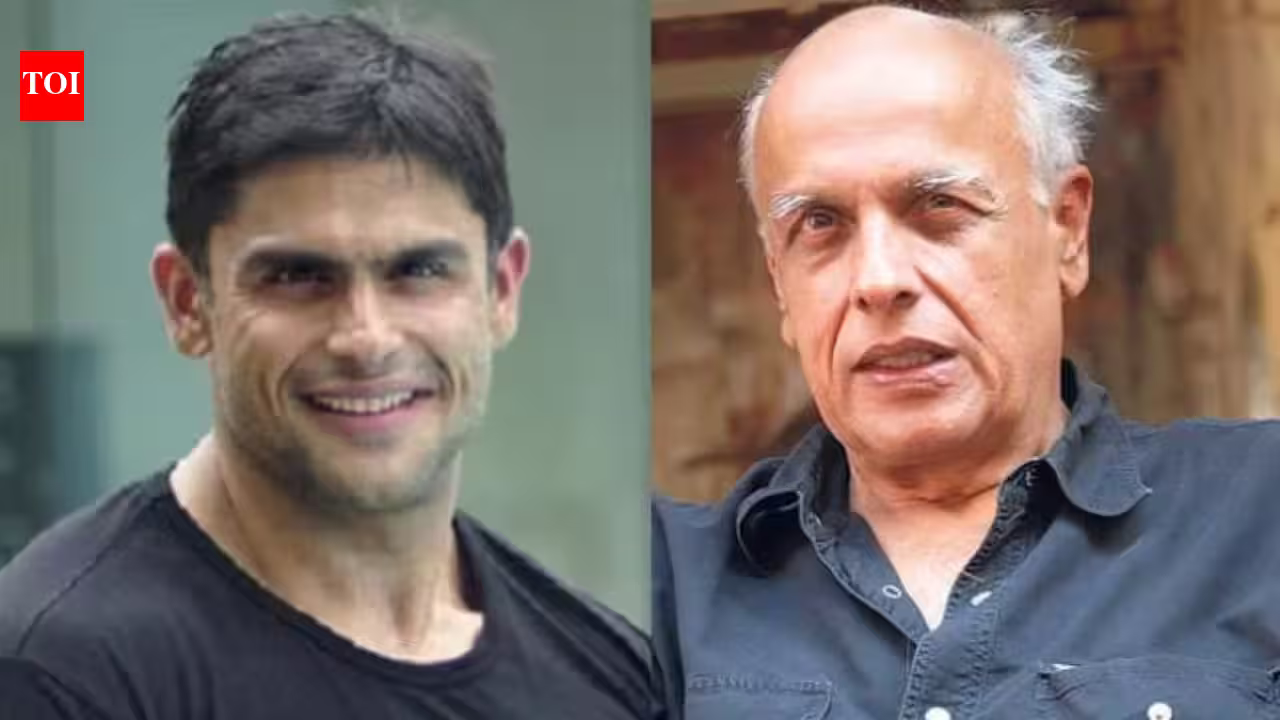




The Cycle of Absence: Unpacking the Complicated Bond Between Mahesh and Rahul Bhatt
Mahesh Bhatt has built a multi-decade career on the bedrock of vulnerability. Throughout the 1980s and beyond, the veteran filmmaker turned the camera inward, mining his own trauma, his search for identity, and his turbulent personal life to craft cinema that felt raw and relentlessly honest. From the semi-autobiographical Arth, which dissected the wreckage of his first marriage, to the deeply poignant Zakhm, which tackled the secret life of his mother, Bhatt has rarely shied away from showing his scars. Yet, among all the narratives he has woven into the fabric of Indian cinema, one story remains notably painful: his fractured relationship with his son, Rahul Bhatt.
The Architecture of Abandonment
The story of the Bhatt family is not merely one of domestic discord; it is a generational inheritance of emotional distance. To understand the chasm between Mahesh and Rahul, one must first look at the man who set the precedent. Mahesh Bhatt grew up in a household characterized by “the visit.” His father, Nanabhai Bhatt, kept two families, leaving Mahesh’s mother, Shirin Mohammed Ali, in a position where she was never publicly acknowledged as a wife.
Mahesh recalls these childhood years with a haunting clarity. His father would drop by, but he would never take off his shoes—a symbolic gesture that he was never truly home. While Nanabhai provided for their education and survival, he provided no sense of permanence or paternal stability. As Mahesh admitted years later, he grew up without a template for what a father should be. When he became a father himself, he found himself repeating the patterns he had spent a lifetime resenting, inadvertently passing the baton of abandonment to his own son.
A “Super B*stard Child”: Rahul’s Truth
If Mahesh’s childhood was marked by the secrecy of his mother’s status, Rahul Bhatt’s childhood was marked by the public fallout of his father’s choices. Born to Mahesh and his first wife, Kiran, Rahul arrived into a marriage already fraying at the edges. By the time Rahul was three, the household had shattered. Mahesh’s subsequent public relationship with Parveen Babi and his later marriage to Soni Razdan created an atmosphere that, for a young child, felt like a series of “unholy alliances.”
In S. Hussain Zaidi’s book Headley and I, Rahul offered a candid, albeit painful, assessment of his upbringing. He went as far as to describe himself as a “bstard child”—not in a legal sense, but in an emotional one. He felt that his father had failed the fundamental requirements of parenthood, leading him to characterize himself as a “super bstard child.” For Rahul, the tragedy wasn’t just that his father left; it was that the departure felt like a conscious choice to prioritize other lives over the one he had already created.
Mirror Images in the Shadows
The irony of the Bhatt family dynamic is how clearly both men see their reflections in one another. In a moment of rare, unfiltered connection, Mahesh famously told his son, “You and I do have one thing in common. A childhood without a father.”
Both men carried the burden of being “different.” For Mahesh, the stigma was the hidden identity of his mother. For Rahul, it was the crushing weight of public perception, exacerbated by the bullying he faced regarding his weight and his family’s fractured state. As a child, Rahul often found himself defending his mother’s honor against a world that whispered about his father’s infidelity. This created a paradoxical dynamic: both men were fiercely protective of their mothers, viewing their respective fathers as the primary source of their internal chaos. Yet, where Mahesh sought to purge his pain through the alchemy of filmmaking, Rahul remained largely on the outside looking in, wrestling with the silence left behind by his father’s absence.
The Weight of Accountability
As he matured, Rahul did not seek to replicate his father’s fame or lifestyle. His journey took him through high-profile controversies, most notably the scrutiny he faced following his association with David Headley in the wake of the 26/11 attacks. During these crises, one might have expected a father-son reconciliation, but the walls remained high. Rahul remained profoundly reluctant to turn to his father for support, a testament to the depth of the emotional distance between them.
For his part, Mahesh Bhatt has shown a surprising capacity for self-flagellation regarding his role in his son’s life. He has publicly acknowledged that the wound he inflicted on Rahul was real and irrevocable. “I left home when he was around three and he felt I had abandoned the family for another woman,” Mahesh confessed in a 2018 interview. “And this was a grievance I couldn’t deny because it was true.” There is a tragic honesty in this admission—a recognition that while he may have been a titan of the film industry, he was, in the eyes of his son, a failed custodian of the heart.
Breaking the Cycle or Living the Legacy?
The question that lingers over the Bhatt family history is whether such cycles can ever truly be broken. Mahesh Bhatt’s films have often functioned as a form of therapy, a way to organize the trauma of his youth into a coherent narrative. For Rahul, the process has been far more solitary. He has had to reconcile the man he saw on screen—the eloquent, successful, and often controversial Mahesh Bhatt—with the man who was physically and emotionally missing from his developmental years.
Ultimately, the story of Mahesh and Rahul is a reminder that celebrity and artistic expression provide no immunity from the messy, often destructive nature of family dynamics. While they share a lineage, they have lived in different worlds. One built a career by laying his private life bare, while the other spent years trying to move past the damage caused by those very revelations. Their relationship remains an unfinished script—one defined not by the things they said to each other, but by the hollow spaces where a father should have been.
Disclaimer: This content is auto-generated for informational purposes only.
Source: Read Original News