









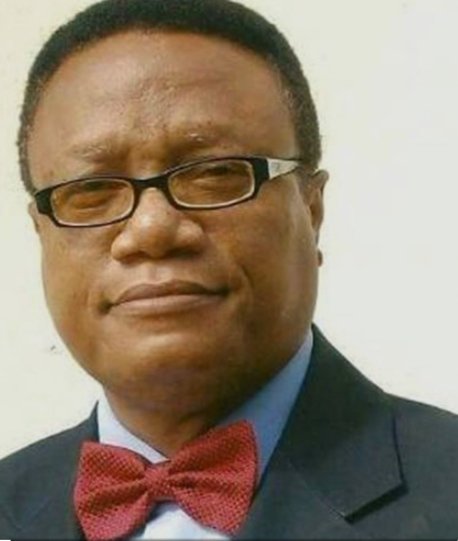
The recent controversy surrounding scholar Jason Arday has ignited a critical re-examination of the modern university, moving far beyond the professional fate of one individual to confront the systemic biases embedded in academic institutions. In a recent installment of The Toyin Falola Interviews (TFI), a panel of experts argued that the academy’s self-image—as a bastion of objective, neutral, and merit-based inquiry—often masks a reality where institutional culture is shaped by deeply entrenched historical inequalities.
The discussion, featuring insights from Professor Shose Kessi and Dr. Christine Vogt-Williams, challenged the assumption that academic standards exist in a vacuum. Panelists contended that the criteria for “excellence,” “merit,” and “academic integrity” are not universal truths but are products of specific institutional histories that frequently disadvantage Black and minority ethnic academics.
Dr. Vogt-Williams highlighted the “invisibility and hyper-visibility” experienced by Black scholars. In this environment, an individual may be overlooked when credit is due, yet scrutinized with extreme intensity when a mistake occurs. This dynamic, she noted, creates a “cruel logic” where institutions use diversity initiatives to facilitate entry for marginalized scholars, only to place the burden of proving their worth solely upon those individuals. When a Black scholar succeeds, they are often treated as a symbolic triumph for institutional diversity; when they stumble, that failure is frequently projected onto their identity, serving as proof of incompetence.
Professor Kessi, drawing on her research into student experiences at the University of Cape Town, illustrated how institutional exclusion is often enacted through everyday, subtle mechanisms. These include a Eurocentric curriculum, persistent skepticism toward the academic achievements of Black students, and the subtle pressure to conform to Western modes of speech and professional behavior. Kessi argued that the issue lies not only in explicit policy but in the “application” of policy—how committees interpret research contributions, how they distribute funding, and how they define “professionalism.”
The panel suggested that even when universities claim to be neutral, their definition of a “good scholar” often carries narrow assumptions about intellectual style and institutional pedigree. This creates a barrier where Black scholars must navigate systems built on knowledge traditions that have historically pathologized Blackness. As Kessi noted, the academy has not only reflected societal prejudice but has, at times, manufactured the intellectual frameworks that sustain it.
Consequently, the TFI panel concluded that demographic representation—simply hiring more Black faculty—is insufficient if the underlying structures of authority and knowledge production remain untouched. True transformation, they argued, requires a comprehensive intervention that addresses the ideological and bureaucratic roots of institutional racism. For the academic community, the Arday controversy serves as a litmus test: it asks whether universities will continue to treat structural problems as individual failings or finally confront the historical biases that define their own definitions of success.
Disclaimer: This content is auto-generated for informational purposes only.
Source: Read Original News