




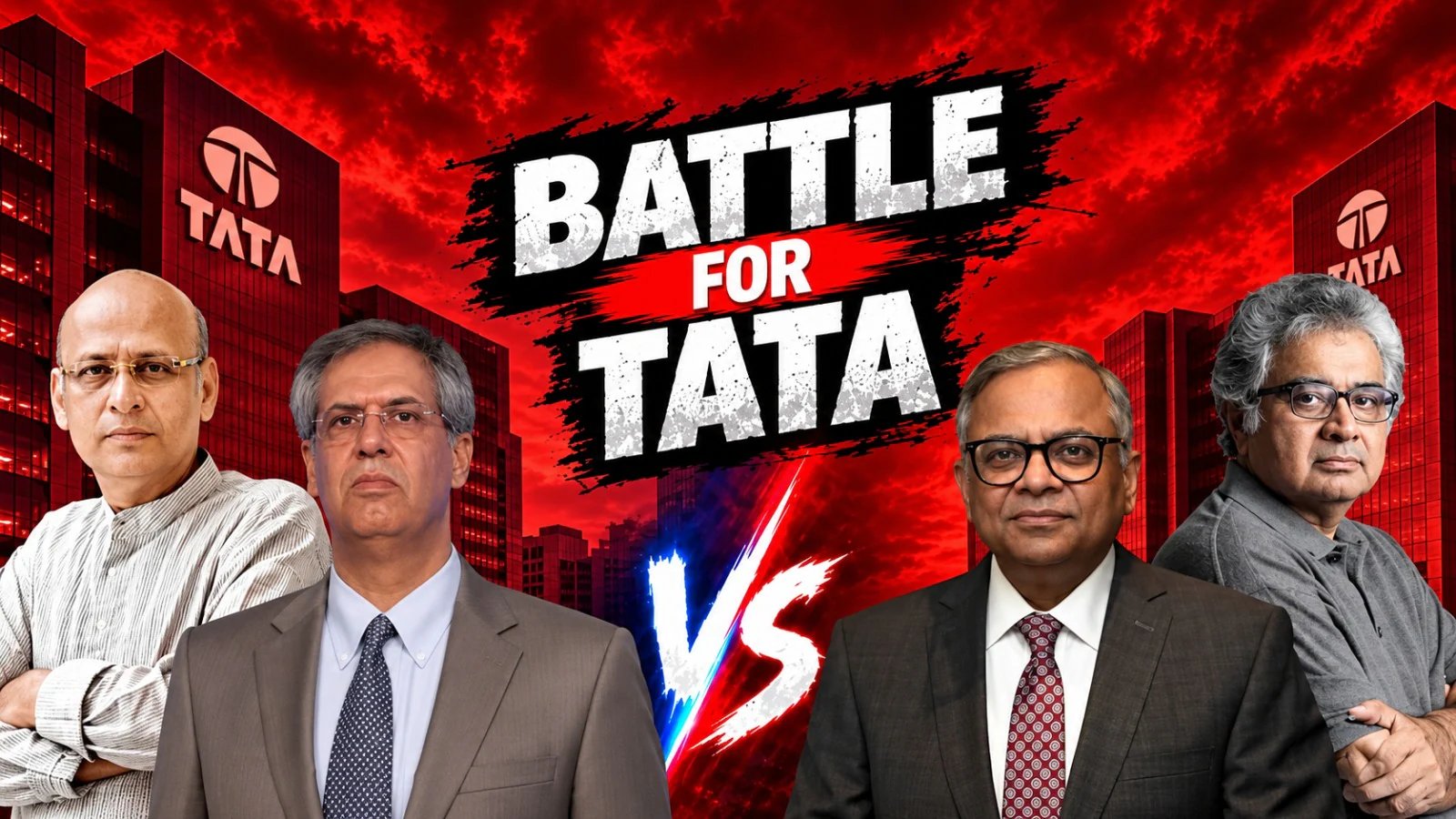
The ongoing boardroom friction at Tata Sons has reached a critical juncture, with the landmark 2021 Supreme Court ruling in the Cyrus Mistry case being pulled back into the spotlight. At the center of this dispute is the interpretation of Tata Trusts’ special governance powers, which are currently being weighed against the broader authority of the company’s board of directors.
## Governance Under Scrutiny: The Role of Articles of Association
The current conflict stems from the September 17 decision by the Tata Sons board to reappoint N Chandrasekaran as executive chairman for another five-year term. Tata Trusts, which maintains a 66% stake in the conglomerate, is challenging the validity of this move. The dispute centers on Article 121 of the company’s Articles of Association, which requires that certain board decisions receive affirmative support from directors nominated by Tata Trusts.
The situation became complex during the recent vote, as the two Tata Trusts nominees on the board reached a deadlock: Venu Srinivasan voted in favor of the reappointment, while Noel Tata opposed it. This split has triggered a fierce legal debate regarding whether a general board majority—or the chairman’s casting vote—can override the specific voting conditions mandated for Trust-nominated directors.
## The 2021 Supreme Court Legacy
Senior counsel Abhishek Manu Singhvi, representing Tata Trusts, has invoked the 2021 Supreme Court verdict to emphasize the “primacy” of the Trusts within the governance hierarchy of Tata Sons. During the high-profile Cyrus Mistry litigation, the apex court upheld the validity of special voting rights for Trusts-nominated directors, acknowledging that these individuals carry dual responsibilities to both the holding company and the philanthropic beneficiaries of the Trusts.
However, legal experts point out that the 2021 judgment provided a framework for the legitimacy of these provisions, not a manual for every possible future deadlock. While the ruling recognized the Trusts’ influence, it did not explicitly outline a solution for when their own nominated representatives disagree on a motion. The question now is whether the affirmative voting requirement is a procedural hurdle that must be cleared unanimously by those nominees, or if the mechanism is subject to standard board-room dynamics when a split occurs.
## Corporate Governance and the Tech-Driven Future
This dispute arrives at a time when major global firms, including those in the rapidly evolving tech sector, are increasingly looking at how boardroom authority is distributed. As companies integrate AI-driven data analytics and digital transformation strategies to survive in volatile markets, the stability of top-tier leadership remains paramount.
Industry observers, such as Vishal Gada, Founder & CEO at Aurtus, suggest that the Tata Sons saga serves as a quintessential case study in corporate governance. “The leadership reappointment discussions at Tata Sons highlight a fundamental question: balancing board-majority decisions with shareholder rights,” Gada noted. He emphasized that the crux of the matter is the “operational ambiguity” regarding how protected sub-group vetoes function when the holders of those vetoes are divided.
The role of the chairman’s casting vote is another flashpoint. Reports suggest that a legal opinion previously sought by Noel Tata argued that a casting vote cannot serve as a substitute for the mandatory affirmative support required by the Trusts’ nominee directors under the Articles of Association. As the legal battle unfolds, it underscores the necessity for companies to maintain clear, unambiguous bylaws that can navigate the intersection of shareholder rights, philanthropic oversight, and executive management. For the tech-heavy conglomerate, the resolution of this conflict will likely set a significant precedent for how India’s largest business groups structure their internal power dynamics in the years to come.
Disclaimer: This content is auto-generated for informational purposes only.
Source: Read Original News