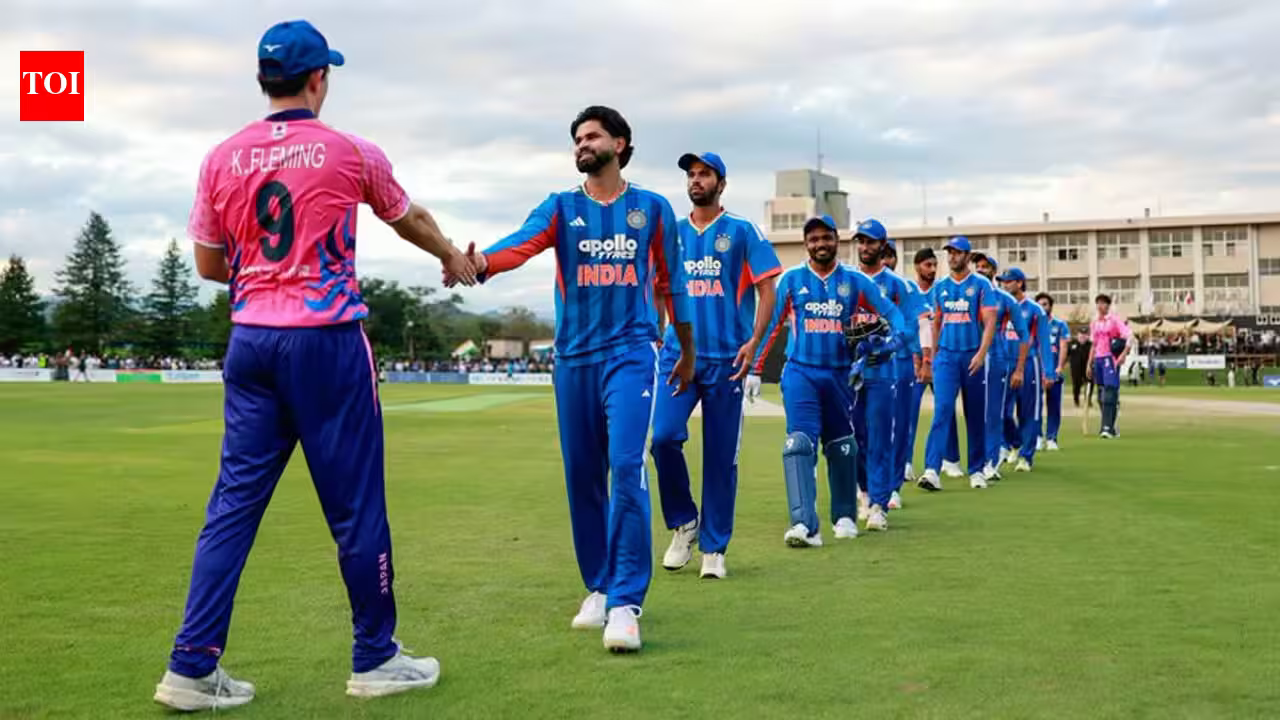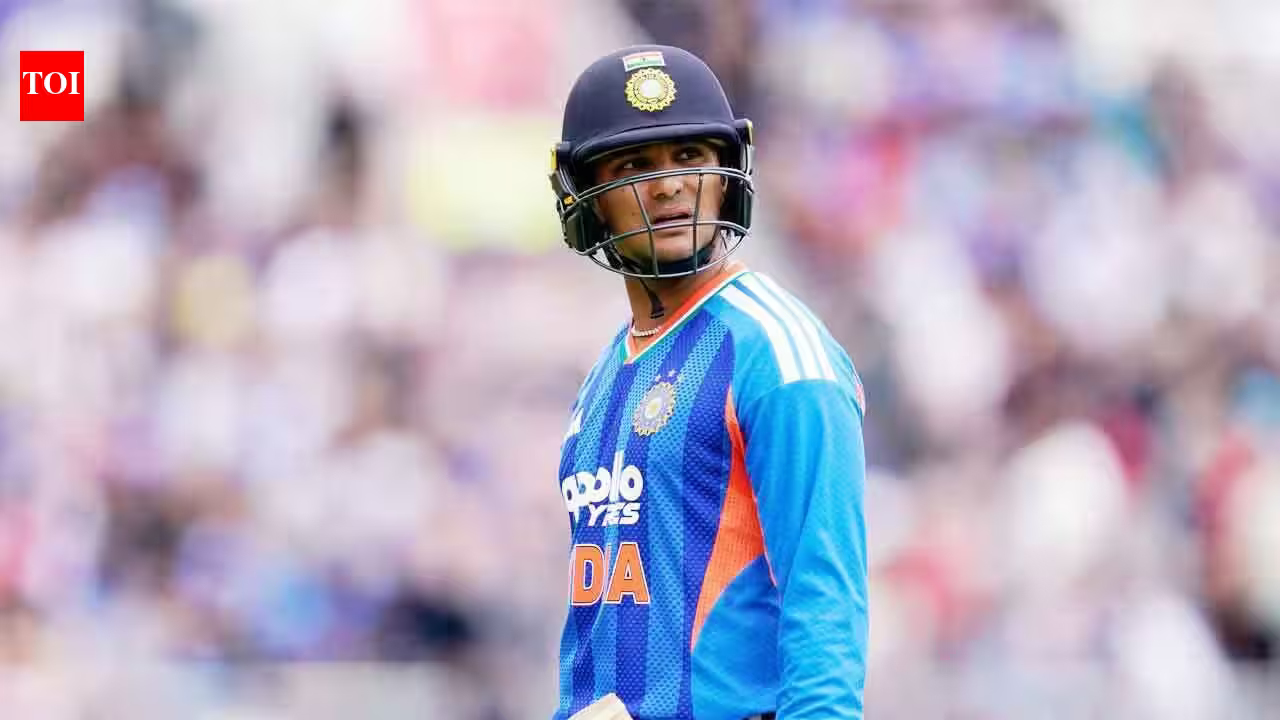








SANO, JAPAN — In a historic clash that fused international diplomacy with the high-octane intensity of T20 cricket, Indian captain Shreyas Iyer etched his name into the annals of the sport on Tuesday. As rain-sodden skies at the Sano International Cricket Ground forced officials to truncate the proceedings to a five-overs-a-side sprint, Iyer made a strategic decision that defied conventional wisdom, becoming the first captain from a Full Member nation to elect to bat first in a five-over T20I encounter.
The match, serving as the centerpiece for the “Sport 75” initiative—a celebration of 75 years of diplomatic relations between India and Japan—was delayed significantly by persistent morning rain and a challenging outfield. When the toss finally occurred, the tactical landscape had shifted entirely. With no room for error and the margin for a comeback non-existent, most skippers would typically opt to chase, banking on the security of a target. Iyer, however, threw caution to the wind, betting on his explosive batting lineup to post a total that would demoralize the Japanese side from the outset.
A Historic First at Sano
The encounter marks the first time in history that an Indian men’s T20I side has faced Japan. While India has built a reputation for dominance against emerging nations, this match carries a weight beyond the scoreboard. The fixture acts as a poignant opening ceremony for a broader cultural and sporting exchange, underlining the “Sport 75” initiative’s commitment to deepening bilateral cooperation through the medium of cricket.
For India, the challenge was to uphold a staggering historical trend: the team holds a near-perfect record in inaugural meetings against new opponents. Having won 16 of their 19 first-ever encounters against new sides, India’s prowess in adapting to unfamiliar conditions is well-documented. Their only rare stumbling blocks in such openers came years ago against New Zealand and West Indies, with a solitary “no result” against Scotland. Entering Tuesday’s match, the pressure was on the Men in Blue to maintain their reputation as the world’s most formidable “first-time” performers.
Aggressive Selections for a Sprint Format
In a format where every delivery is worth a significant percentage of the total match, team composition became paramount. Captain Iyer and the selection panel signaled their intent by retaining the destructive opening duo of Sanju Samson and Abhishek Sharma.
Samson, currently enjoying a purple patch with back-to-back fifties, provides the poise, while Abhishek Sharma enters the arena with the wind at his back after his record-breaking 30-ball century against Afghanistan—a feat that stands as the fastest T20I hundred by any batter from a Full Member nation. Their synergy at the top of the order is designed to provide the explosive start required to maximize a mere 30 balls of batting time.
Further down the order, the squad reflects a balance of power-hitters and utility players, with Tilak Varma, Shivam Dube, and Axar Patel ready to capitalize on the death-overs chaos that a five-over game inevitably generates.
Bumrah Rested, Thakur Steps In
Tactically, India opted for a minor rotation in their bowling ranks, choosing to rest strike bowler Jasprit Bumrah. In his stead, Yash Thakur gets the nod to lead the pace attack alongside Arshdeep Singh. Thakur’s inclusion is a testament to the depth of the current Indian squad, which is fine-tuning its machinery ahead of the upcoming Asian Games, where they will arrive as the tournament’s defending champions.
For Japan, captain Kendel Kadowaki-Fleming faces the steepest challenge of his career. Leading a team against a cricketing superpower in a high-pressure, shortened format requires nerves of steel. The Japanese XI features a mix of disciplined prospects, including the likes of Lachlan Yamamoto-Lake and wicket-keeper Alexander Shirai-Patmore, all of whom are looking to prove their mettle on the international stage.
Beyond the Boundaries
While the statistical anomaly of the five-over toss will likely be the talking point for cricket analysts, the significance of the event in Sano transcends the match statistics. As the Indian team takes the field, they are not merely playing for a win, but representing a cross-continental bridge.
The conditions remain testing, with the damp outfield likely to play a role in the ball’s movement and the fielders’ mobility. However, as the first ball was bowled, the atmosphere at the Sano International Cricket Ground was electric, reflecting the spirit of friendship and competition that defines the “Sport 75” program.
Regardless of the final outcome, this unique T20I has already succeeded in its primary objective: highlighting the growth of cricket in Japan and strengthening the enduring ties between two nations committed to a future of shared success. With the defending Asian Games champions now back in the thick of international action, all eyes are on whether India can maintain their historical dominance or if the shortened nature of the game levels the playing field for the hosts in an unexpected, historic upset.
Disclaimer: This content is auto-generated for informational purposes only.
Source: Read Original News