








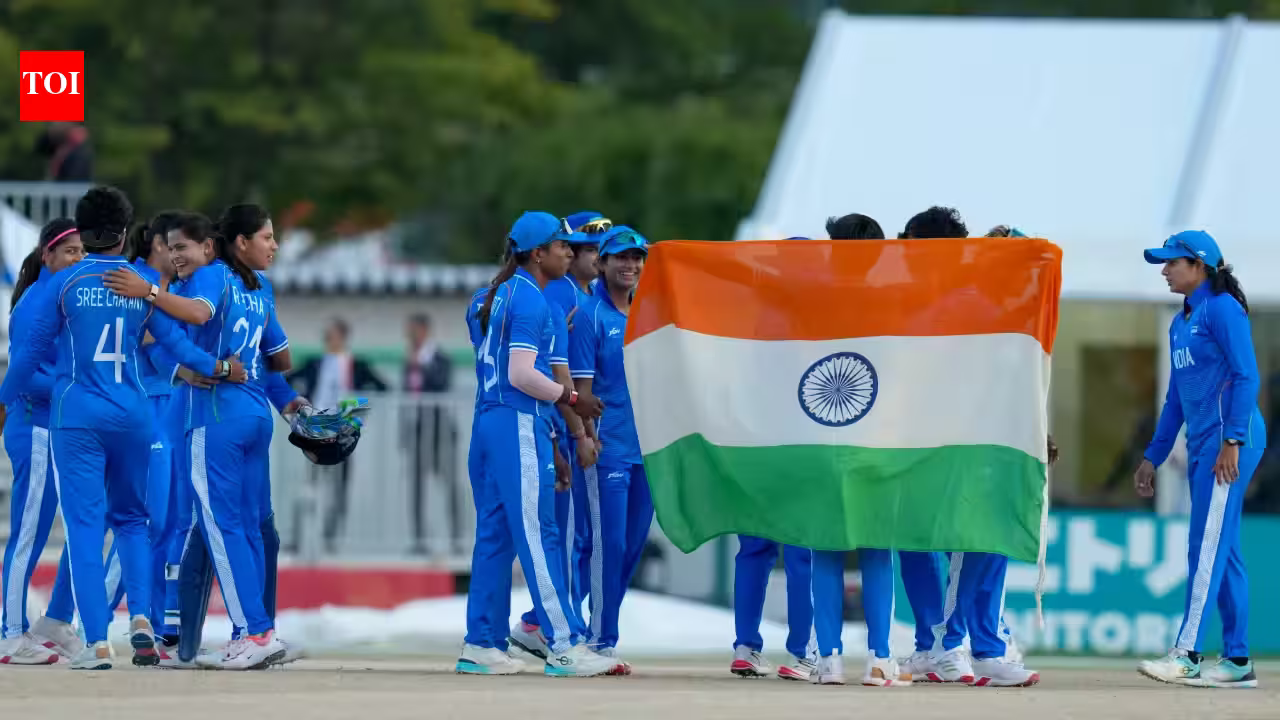
Nagoya: As the final ball of the women’s T20I cricket gold medal match soared through the air, sealing India’s victory over Sri Lanka, the atmosphere at Korogi Athletic Park was electric. Fans roared, flags waved, and the Asian Games cricket dream reached its pinnacle. Yet, on the periphery of the pristine emerald outfield, a small group of men watched with a different kind of intensity. They weren’t cheering for a specific nation; they were witnessing the culmination of an unprecedented feat of engineering and passion—the transformation of a Japanese baseball diamond into a world-class cricket arena.
## A Field of Dreams Built from Scratch
The narrative of this temporary cricketing cathedral began in September last year, when the decision to include cricket in the 2026 Asian Games schedule sent shockwaves through the local sporting infrastructure. With a budget of 300 million yen (approx. $2 million USD) allocated for the project, organizers faced a daunting task: creating a venue capable of hosting top-tier Asian talent on short notice.
Korogi Athletic Park, typically a hub for Japanese baseball, was selected for its sprawling dimensions. The Japan Cricket Association (JCA) recognized that transforming a baseball-centric culture into a cricket-ready environment required expert guidance, leveraging an existing Memorandum of Understanding with Sri Lanka Cricket to bring in elite curatorial talent.
## The Architect of the Transformation
At the helm of this logistical marathon was Jarrad Shearer, an Australian transplant who has spent the last three decades in Japan. A sports manager with a background in cricket back in Perth, Shearer was the perfect bridge between the technical requirements of the sport and the meticulous precision of Japanese construction.
“When it was decided that cricket would be part of the Asian Games, Alex Miyaji, the CEO of the JCA, approached me,” Shearer explained while surveying the ground. “I had played some cricket in Perth and knew the language, so I was able to translate the needs of the curators into the architectural plans of our local contractors.”
The job was gargantuan. The site, composed of three distinct baseball diamonds separated by thick stands of trees, had to be completely gutted. Crews worked in parallel, simultaneously leveling the ground, clearing foliage, and constructing the core of the cricket field. The result was an ambitious hybrid wicket layout alongside four turf wickets, designed to handle the pressures of high-stakes international competition.
## Bridging Cultures with Clay and Gravel
Perhaps the most technical challenge lay in the soil. Cricket wickets are living, breathing entities, and local Japanese contractors had little to no prior experience with the intricacies of turf pitch construction. Shearer and his team, which included former Sher-e-Bangla stadium curator Gamini de Silva and Pallekele’s Asitha Wijesinghe, had to supervise every shovelful of dirt.
The construction utilized a complex layering system: a base of industrial-grade gravel topped with meticulously washed riverbed soil, finished with a 15-centimeter crust of specialized local clay. In a twist of fate, testing revealed the native Japanese clay possessed characteristics remarkably similar to the famous pitches of Pakistan, offering a surface with bounce and carry that surprised many of the touring teams.
“The pitch construction was interesting because our local company didn’t know the first thing about turf,” Shearer noted. “Our instructions had to be spot on. We were building in layers, essentially creating a geological profile designed specifically for a cricket ball to land on.”
## Resilience Under Pressure
No infrastructure project of this size is without its hurdles. The facility underwent its first true test in May during the T20 World Cup East Asia-Pacific Qualifier. While the hybrid wicket held up admirably, the unpredictable Japanese climate threw a wrench into the works ahead of the Asian Games. Heavy rainfall just weeks before the tournament forced the organizers to pivot, ensuring the safety of the players over the convenience of the schedule.
Despite these environmental challenges, the team managed to produce a high-performance surface that held up through the women’s final. With the men’s tournament set to conclude on October 3, the curators are confident that their turf creations will prove their worth under the pressure of the upcoming matches.
## A Legacy Beyond the Final Score
As the Asian Games wind down, the long-term future of Korogi Athletic Park serves as a poignant reminder of the temporary nature of major sporting events. Once the final medal is presented and the cricket kits are packed away, the facility is slated to return to its original form, reverting into a baseball ground for local Japanese children.
Yet, for those who labored in the sun to turn a field of dreams into a reality, the legacy remains. The men on the sidelines—the curators, the translators, and the laborers—don’t just see a baseball diamond returning to its roots. They see the site where they successfully bridged two sporting worlds, proving that with enough dedication, even the most traditional grounds can play host to the global game. For now, they stand back, content in the knowledge that they provided the stage for history.
Disclaimer: This content is auto-generated for informational purposes only.
Source: Read Original News