








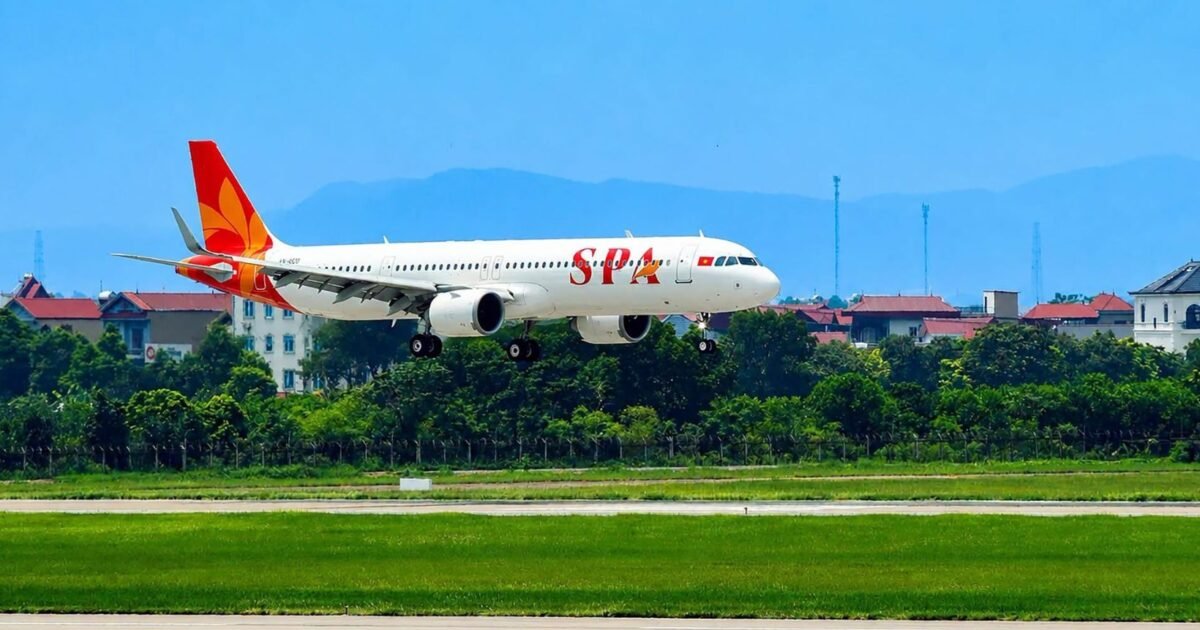
AJW Group has solidified its footprint in the rapidly evolving Southeast Asian aviation market by announcing a significant expansion of its strategic partnership with Sun PhuQuoc Airways (SPA). The new six-year Power-by-the-Hour (PBH) agreement, unveiled at the MRO Asia-Pacific 2026 event in Singapore, marks a pivotal moment for the Vietnamese carrier as it transitions from a regional player to a long-haul operator.
The deal specifically targets the support of SPA’s growing Airbus A330 widebody fleet. With the first two aircraft scheduled to enter service this month and an ambitious roadmap to operate up to 15 widebody jets by 2030, the partnership provides the technical backbone required to ensure seamless international expansion.
## Leveraging Data and Advanced Logistics
In an era where aviation maintenance is increasingly driven by predictive data, the partnership between AJW and SPA highlights the industry’s shift toward highly integrated logistical ecosystems. While traditional MRO (Maintenance, Repair, and Overhaul) services once relied on reactive repair cycles, modern PBH agreements like this one rely on sophisticated inventory management systems—many of which leverage cloud computing and AI-driven predictive analytics to anticipate component failure before it occurs.
By integrating these advanced supply chain solutions, AJW Group ensures that SPA can maintain high dispatch reliability across its international network. For a carrier moving into the complex environment of long-haul travel, the ability to minimize Aircraft on Ground (AOG) time is critical. This is achieved through what the industry calls “smart logistics,” utilizing real-time tracking and automated demand forecasting to ensure that critical rotable components are strategically positioned at hubs.
## The Intersection of Tech and Global Connectivity
The expansion of this contract follows a broader trend where aviation companies are increasingly relying on digital infrastructure to manage the complexities of fleet induction. As SPA scales its fleet, the integration of AJW’s support network acts as a “digital backbone” that keeps operations aligned with global airworthiness standards.
This level of connectivity is essential for airlines attempting to penetrate the highly competitive Asia-Pacific market. By offloading the technical burden of component support to a specialized partner, SPA can allocate its internal resources toward digital passenger experience initiatives and network optimization software—tools that have become standard for modern carriers competing in the tech-savvy APAC region.
## Shaping the Future of Vietnamese Aviation
The introduction of the A330 fleet is being described by SPA executives as a “defining step” for the carrier’s mission to link Phu Quoc with major global hubs. From a broader tech-industry perspective, the success of this expansion will likely hinge on the airline’s ability to weave modern software into its operational framework. As airlines look to move away from legacy management systems, the partnership with AJW signals a readiness to adopt the rigorous, data-heavy standards required for global long-haul flight operations.
“Supporting the introduction of a new widebody fleet requires careful planning, reliable logistics, and strong technical expertise,” said Scott Symington, Chief Commercial Officer at AJW Group. The synergy between SPA’s growth strategy and AJW’s technical prowess suggests a blueprint for future airline scaling. By outsourcing high-stakes inventory management, SPA is effectively choosing to prioritize high-level operational strategy over the capital-intensive process of building an in-house global supply chain.
As the Aviation Week MRO Asia-Pacific 2026 event highlighted, the future of aviation is not just about the aircraft themselves, but the invisible digital and logistical networks that keep them flying. For Sun PhuQuoc Airways, this six-year commitment ensures that as they look toward 2030, their growth will be defined by the reliability of their tech-enabled support system rather than the logistical hurdles that often plague rapid fleet expansion. With the integration of the A330s now underway, the stage is set for a new chapter in Vietnam’s aviation connectivity.
Disclaimer: This content is auto-generated for informational purposes only.
Source: Read Original News