









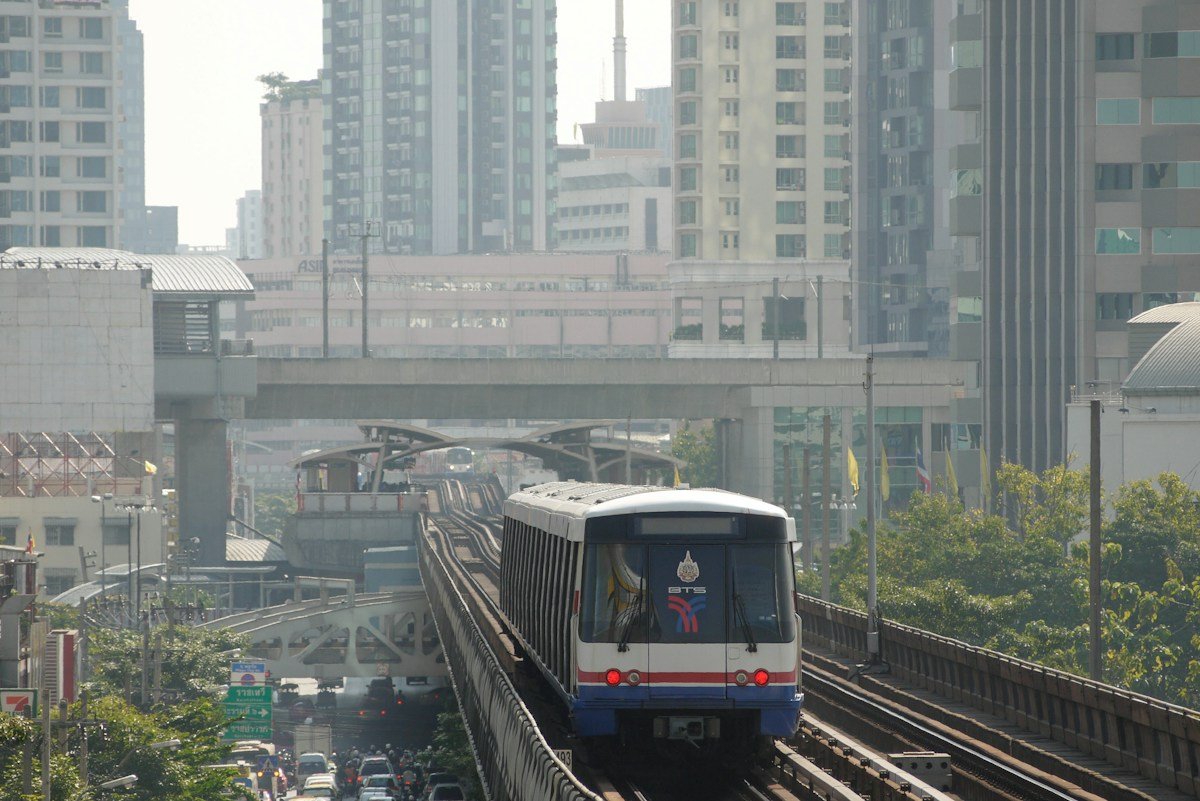
As the Thai-Chinese high-speed rail project stalls, a critical “technology mismatch” is sidelining thousands of trained Thai technicians, raising concerns about the efficacy of Belt and Road Initiative (BRI) infrastructure deals. While the US$15 billion rail link, intended to connect Bangkok to Kunming, promises to revolutionize regional transit, a primary goal of the project—the transfer of high-level rail expertise to the Thai workforce—has so far failed to deliver on its promises.
The Gap Between Training and Opportunity
For young rail technicians like 28-year-old Komcharn Kaewprasert, the reality of the project is a far cry from the career prospects promised a decade ago. After completing specialized courses developed by Thai vocational colleges and China’s Wuhan Railway Vocational College of Technology, Komcharn expected to land a high-paying, specialized role in an emerging industry.
Instead, he found his credentials undervalued. With the project’s completion date pushed back from 2023 to 2030, the current focus remains on foundational civil engineering—an area where Thai companies already possess significant expertise. As a result, the advanced training provided in electrical systems and rolling stock maintenance has remained theoretical, leading to a surplus of “trained” workers with no local infrastructure to support their skills.
AI and Data-Driven Optimization: A Missed Integration
The project’s struggles highlight a broader issue in how large-scale international infrastructure partnerships handle digital integration. While the tech industry—led by companies like Google—has increasingly utilized AI, machine learning, and advanced data analytics to optimize construction logistics and fleet management, the Thai-Chinese rail initiative appears rooted in older models of knowledge sharing.
Experts note that successful technology transfers, such as those China executed with Japan and France in the 2000s, involved co-designing blueprints and granular manufacturing data. In contrast, current Thai initiatives have been limited to basic field trips and simulator demonstrations, which critics argue function more as PR milestones than genuine human capital development. Without a digital-first approach to integrating local engineers into the actual software and signal systems, Thailand risks being a consumer of Chinese technology rather than a co-developer of it.
Strategic Realignment for Future Phases
As construction enters its second phase, Thai opposition MPs and industry analysts are calling for a more strategic approach to negotiations. Pramual Suteecharuwat, a member of the People’s Party, argues that the government has failed to leverage the project’s strategic value to secure high-tech manufacturing capacity.
The goal, according to transport officials, is to eventually reach 100% locally manufactured parts, effectively mimicking the success of Thailand’s electric vehicle (EV) sector. To achieve this, experts suggest:
- Prioritizing Specialized Tech: Shifting focus from civil works to signaling and high-speed rolling stock, where the knowledge gap is widest.
- Leveraging Connectivity: Using the rail line’s importance to Beijing’s regional infrastructure goals as a bargaining chip for deeper access to technical documentation and software source codes.
- Modernizing Training: Moving beyond classroom instruction to active, real-world internships within the Chinese rail supply chain.
“We were inexperienced, and we simply accepted what we were given,” said Ekkarut Viyanit, director of the National Science and Technology Development Agency’s rail research group. Moving forward, the success of the project may depend less on the steel and concrete being laid, and more on whether Thai policymakers can transform this infrastructure endeavor into a genuine engine for local technological innovation.
Disclaimer: This content is auto-generated for informational purposes only.
Source: Read Original News