








As artificial intelligence continues to permeate the global economy, the discourse surrounding the future of labor has shifted from a preoccupation with job displacement to a focus on the evolution of human capability. While the integration of machine learning into industrial and administrative processes offers unprecedented efficiency, environmental scientists and labor economists are increasingly pointing to a vital, often overlooked dimension of this transition: the ecological imperative for human-centric skill building.
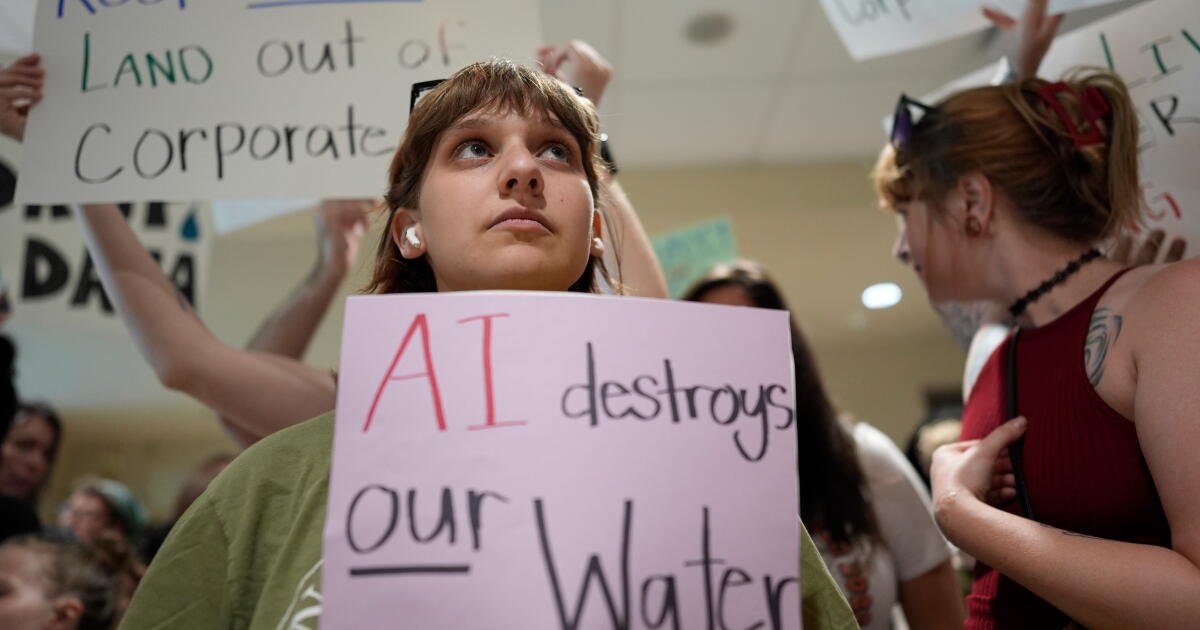
The rapid proliferation of AI-driven tools—ranging from predictive analytics in supply chains to automated resource management systems—is frequently marketed as a solution to sustainability challenges. However, the reliance on high-compute technologies carries its own environmental cost, particularly regarding energy consumption and electronic waste. Consequently, the mandate for human professionals is no longer merely to “work alongside machines,” but to serve as the critical oversight layer that ensures technology is applied in ways that prioritize planetary health over purely short-term industrial output.
Current industry trends suggest that businesses are investing heavily in “reskilling” programs, focusing on technical literacy and data fluency. Yet, experts argue that this approach is dangerously narrow. To build a truly sustainable AI-driven workplace, the focus must expand toward high-level human skills: critical thinking, ethical judgment, and systems thinking. These competencies are essential for governing the environmental externalities of AI. For instance, while an algorithm may optimize a logistics route for speed and cost, it often lacks the capacity to factor in the carbon footprint of the underlying server infrastructure or the lifecycle impact of the hardware deployed. Human intervention—guided by an environmental consciousness—is the only mechanism currently capable of balancing these trade-offs.
Furthermore, the “human skills” narrative often risks being co-opted by corporate entities looking to automate away complexity without addressing systemic ecological impacts. There is a tangible danger that human talent will be re-engineered solely to support the growth of energy-intensive AI architectures. Instead, the transition requires a “green-skills” framework that treats technical competence and environmental stewardship as inseparable. Professionals in the modern workforce must be capable of auditing AI models not just for accuracy, but for their resource efficiency and adherence to circular economy principles.
The integration of these skills is particularly pressing in sectors like manufacturing and energy production, where the “human-machine partnership” is most established. In these environments, workers are no longer just operators; they are curators of complex, data-rich systems. When equipped with the ability to interrogate AI outputs through an environmental lens, these workers can shift the focus from extractive industrial practices to restorative ones. This might involve using AI to detect methane leaks in real-time or to precision-manage water usage in agriculture, provided the human operator is skilled enough to identify when the AI’s suggestions conflict with long-term ecological stability.
However, the educational infrastructure currently lags behind this need. Most professional development programs remain siloed, separating AI training from environmental science or sustainability ethics. Bridging this gap requires a structural shift in how organizations define “value.” If AI is to serve as a tool for progress rather than a catalyst for further environmental degradation, the workplace must move beyond superficial digital fluency.
The future of a stable, AI-integrated economy depends on the cultivation of a workforce that views technology not as an autonomous force, but as an extension of their responsibility toward the environment. By fostering human skills that emphasize discernment, ethics, and ecological awareness, organizations can ensure that the AI-driven workplace does not exacerbate the very crises it is intended to help solve. Ultimately, the survival of the planet in the digital age will not be determined by the intelligence of our machines, but by the wisdom of those who manage them. The focus must be on cultivating a human element that is defined not by its mechanical utility, but by its capacity to serve as a steward of both technology and the natural world.
Disclaimer: This content is auto-generated for informational purposes only.
Source: Read Original News