






The scars of human negligence are no longer just floating in our gyres or washing up on our shores; they are becoming part of the geological record. A startling new study conducted on the coast of Okinawa, Japan, has revealed the emergence of “plasticoral”—a fusion of marine debris and coral skeletons that serves as a grim physical manifestation of the so-called “Plasticene” epoch.
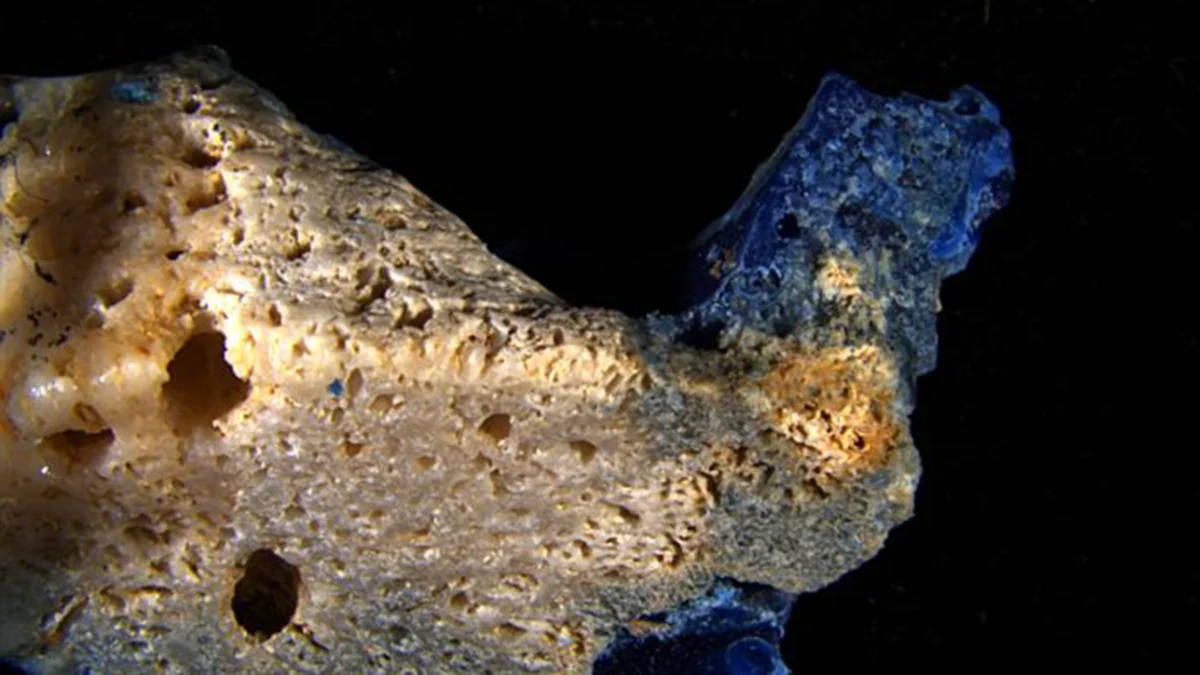
The discovery was largely accidental. Researchers conducting routine marine surveys on Sosu Beach were struck by the unusual appearance of several coral fragments. These samples exhibited bright, unnatural flecks embedded deep within their structure. Upon closer inspection in the laboratory, the team discovered that these were not mere surface contaminants, but tiny shards of plastic that had melted and fused inseparably into the calcium carbonate skeletons of the coral.
The researchers believe these formations were triggered by the burning of plastic waste on beaches. As the plastic melted, it flowed into the crevices of dead coral fragments, cooling and hardening into a composite material. The resulting “plasticoral” is more than just a curiosity; it is a profound environmental concern. Because the plastic is now structurally bonded to the coral, it is likely leaching synthetic chemicals and additives directly into the surrounding marine environment, potentially introducing new toxins into a delicate, biodiversity-rich ecosystem.
This phenomenon is being framed by scientists as a significant development in the study of marine pollution. In their published findings, the research team noted that these plastic-rock formations represent a fresh ecotoxicological risk. They argue that these hybrid materials could serve as diagnostic stratigraphic markers for the “Plasticene”—a proposed geological age defined by the pervasive presence of human-made synthetic polymers in the Earth’s sedimentary layers.
This is not the first time plastic has been observed merging with the natural environment. In 2023, geologists documented the creation of “plastiglomerates”—rocks formed when volcanic activity or high-heat fires melt plastic into porous, sedimentary rock. However, the discovery of plastic-fused coral adds a layer of urgency to the conversation, as it highlights how pollution is not only affecting the water column but is also physically altering the architecture of reef systems.
The implications for marine conservation are significant. Coral reefs are already under immense pressure from climate change, ocean acidification, and overfishing. The introduction of plastic as a permanent structural component of these ecosystems suggests that the legacy of our waste will persist for far longer than previously anticipated. As these fragments break down into microplastics and nanoplastics, they may continue to contaminate the food chain long after the original object has been discarded.
As humanity continues to grapple with the global plastic crisis, the emergence of plasticoral stands as a stark reminder of our footprint. It is a literal hardening of our habits, turning a vibrant, organic ecosystem into a repository for the debris of modern consumption. For environmental scientists, the task is now to understand the full extent of how these materials impact reef health and to advocate for more robust waste management practices to prevent further alteration of our planet’s geology. The Plasticene, it seems, is no longer just a theory—it is being written into the very skeletons of our oceans.
Disclaimer: This content is auto-generated for informational purposes only.
Source: Read Original News