








Microsoft Elevates India’s Digital Future: Hyderabad Named Strategic AI Hub for Global South
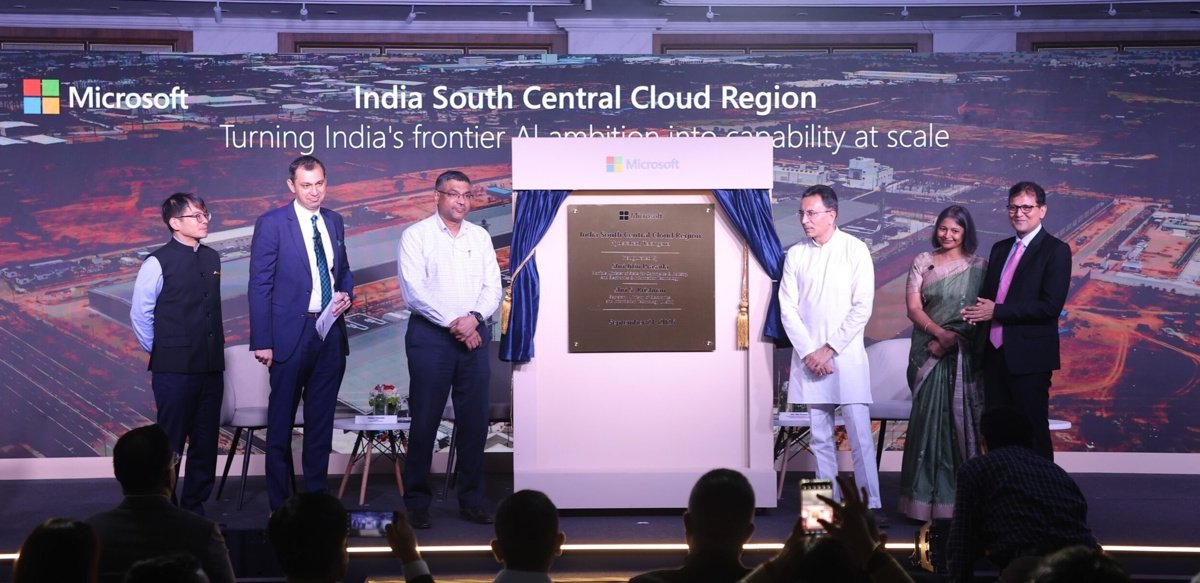
New Delhi: In a major push to consolidate India’s position as a global technology powerhouse, Microsoft announced on September 21 that its newly designated “India South Central” region in Hyderabad will serve as a strategic hub for Asia and the Global South. The announcement, made during the Microsoft AI Infrastructure Summit in New Delhi, marks a significant expansion of the company’s $20.5 billion investment in the country’s digital backbone.
A Strategic Hub for AI Innovation
The Hyderabad facility is designed with a resilient three-zone architecture, capable of supporting Microsoft’s entire suite of Azure and artificial intelligence services. This infrastructure is not merely a data center; it is a critical node in a growing network designed to provide high-performance, low-latency AI capabilities.
The strategic importance of the region has already attracted major industry players. Corporate giants including the Adani Group, Bajaj Finserv, HDFC Bank, and PB Pay have joined as early adopters, signaling a robust demand for localized, high-scale AI infrastructure. This expansion aligns with projections from the Boston Consulting Group (BCG), which estimates that the broader expansion of data centers across India could contribute between $140 billion and $200 billion to the national economy by 2030.
Compliance and Sovereign Cloud Capabilities
Beyond raw computing power, Microsoft is focusing heavily on regulatory alignment. The India South Central region strengthens Microsoft’s “Sovereign Public Cloud” foundation, offering localized data residency, enhanced governance, and critical backup capabilities.
By ensuring its infrastructure adheres to the guidelines set forth by the Ministry of Electronics and Information Technology (MeitY), Microsoft is enabling Indian enterprises to navigate the complexities of the Digital Personal Data Protection framework with ease. Furthermore, the architecture is designed to meet sector-specific mandates from the Reserve Bank of India and CERT-In, providing financial and public sector institutions with the assurance required for high-stakes digital transformation.
Sustainability and Connectivity
Acknowledging the environmental impact of large-scale computing, Microsoft has implemented a zero-water cooling model at its Hyderabad facility. The company is simultaneously investing in local water security initiatives, such as the Elikatta groundwater-recharge program, which successfully added 5 million liters of capacity to local reserves by mid-2026.
Connectivity, the final pillar of this expansion, is being addressed through the upcoming India-Southeast Asia (I-2SEA) submarine cable system. As a key consortium partner, Microsoft is helping build a 3,600-kilometre fiber-optic link connecting India to Malaysia and Singapore. With dual landings at Machilipatnam and South Chennai, the project is scheduled to be fully operational by 2029, significantly boosting data throughput for the region.
Skilling the Future Workforce
While the physical infrastructure grows, Microsoft is simultaneously investing in human capital. The “Microsoft Elevate India” initiative has already reached a milestone, having equipped over 10 million Indians with essential AI skills. With a target of 20 million by 2030, the program has seen a 25% transition rate, where learners move past foundational knowledge into advanced credentialed pathways.
As Microsoft continues to balance infrastructure growth, regulatory compliance, and workforce development, the Hyderabad hub stands as a testament to the deepening synergy between global technology giants and the Indian digital economy.
Disclaimer: This content is auto-generated for informational purposes only.
Source: Read Original News