







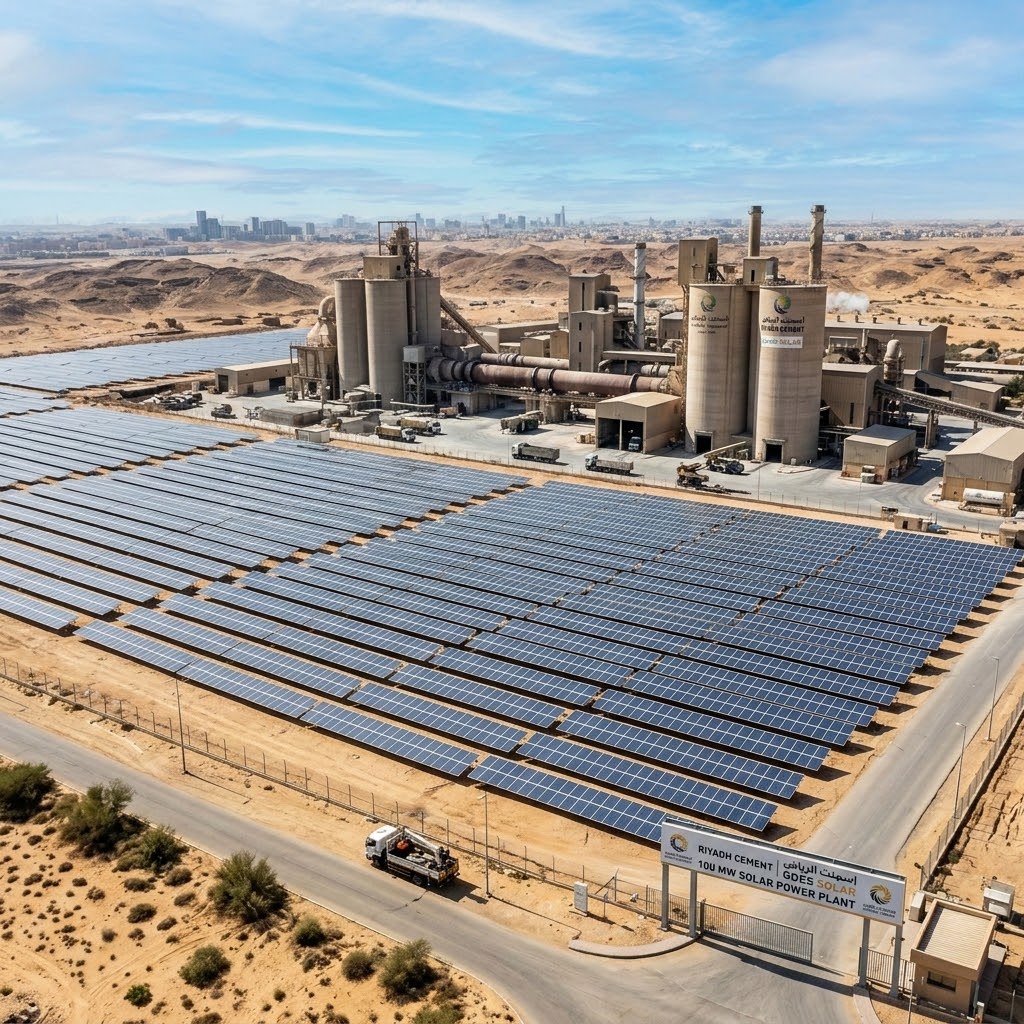
Riyadh Cement Company has officially embarked on a transformative energy strategy, entering into a landmark 25-year power purchase agreement (PPA) with Samana Energy. The deal, which marks a significant shift in how Saudi Arabia’s energy-intensive industrial sector approaches sustainability, allows the cement giant to integrate solar power into its operations with zero upfront capital expenditure. By outsourcing the financing, construction, and operational risks to Samana Energy, the manufacturer expects to secure electricity at rates lower than current grid pricing.
The agreement, disclosed via the Saudi stock exchange Tadawul, stipulates that Riyadh Cement will pay only for the energy it consumes, with projected annual costs hovering around SAR 6 million (approximately $1.6 million). With operations slated to commence in the fourth quarter of 2027, the move serves as a blueprint for industrial players looking to align with the Kingdom’s Vision 2030 sustainability mandates without straining their balance sheets.
Digitization Meets Decarbonization: A Dual-Tech Strategy
The solar contract is part of a broader, aggressive modernization strategy Riyadh Cement is pursuing alongside global technology partners. Beyond decarbonization, the company is betting heavily on the Industrial Internet of Things (IIoT) and advanced data analytics to maintain its 6.3% market share.
Simultaneously with the solar deal, the company signed a $14.9 million contract with the Tianjin Cement Industry Design and Research Institute. This 24-month project focuses on deploying Artificial Intelligence (AI) and machine learning algorithms across production lines to enable predictive maintenance. By leveraging AI-driven insights, the company aims to minimize equipment downtime and optimize energy efficiency in real-time. This is further supported by a logistics automation deal with the Portuguese firm Cachapuz, which integrates smart weighing and monitoring systems into the company’s supply chain. Together, these investments illustrate how traditional manufacturing is being reshaped by digital infrastructure, turning legacy plants into data-informed, automated operations.
The Rise of Independent Power Producers (IPPs)
The solar initiative is facilitated by Samana Energy, a newly formed joint venture between the Al Muhaidib Group and Group AMANA. Launched in late 2024, the company represents a growing trend of specialized independent power producers (IPPs) that cater to the unique energy demands of commercial and industrial facilities.
Unlike utility-scale government solar tenders that dominate public headlines, this deal highlights the maturity of the private sector’s “energy-as-a-service” model. By targeting energy-intensive users—ranging from data centers and cold storage facilities to heavy manufacturing—Samana Energy is effectively commoditizing solar infrastructure. This model lowers the barrier to entry for firms that might otherwise hesitate to pivot to renewables due to the high cost of entry. For Saudi Arabia, this transition is crucial, as the government pushes for 50% of the national electricity grid to be powered by renewable energy sources by the end of the decade.
Setting a Benchmark for Gulf Industry
As Riyadh Cement positions itself to support monumental Saudi developments like Qiddiya, King Salman Park, and Diriyah Gate, its focus on “lean” expansion is evident. Chief Executive Shoeil Al Ayed notes that the company’s production remains strategically linked to the nation’s most critical infrastructure projects.
By avoiding new debt to finance its green and digital transitions, the company is proving that industrial modernization in the Gulf no longer requires massive capital outlays. The Riyadh Cement-Samana partnership is likely to serve as a catalyst for other regional manufacturers. As AI-powered predictive maintenance reduces waste and solar-backed PPAs slash utility bills, the intersection of clean tech and industrial automation is becoming the new standard for manufacturing resilience. For the tech sector, this indicates a massive, untapped market for energy-management software and industrial automation systems as more firms follow this low-risk, high-efficiency model.
Disclaimer: This content is auto-generated for informational purposes only.
Source: Read Original News