








As Australia’s national debt climbs past the $1 trillion mark, the nation’s political landscape is facing a reckoning. Treasurers past and present have sounded an alarm on the shrinking viability of traditional fiscal reform, suggesting that modern political incentives are fundamentally incompatible with the belt-tightening required to manage long-term structural deficits.
## The Populist Trap and the End of Reform
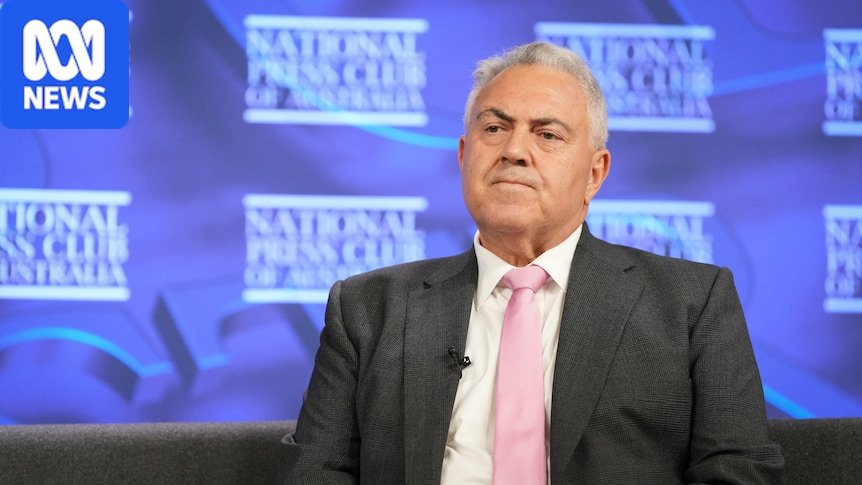
Former Coalition Treasurer Joe Hockey, who famously weathered significant public backlash for his early efforts to rein in government spending, recently argued that the era of meaningful, voter-led fiscal responsibility is effectively dead. In a blunt assessment, Hockey suggested that the Australian political system has become entirely consumed by populism. Because modern voting patterns have fragmented, political parties often cater to narrow interest groups rather than the broader national interest.
“Power is much more effective right now in the distorting and blocking than the building or reforming,” current Treasurer Jim Chalmers echoed during a recent address. The result is a cycle where governments are incentivized to spend whatever is necessary to secure re-election, creating a paralysis that makes long-term budgetary repair nearly impossible. Hockey warned that without a significant financial crisis to force the hand of the electorate, citizens are unlikely to accept the “bitter medicine” of fiscal restraint.
## The Digital Divide in Economic Governance
While fiscal policy remains bogged down by old-world political dynamics, the global economy is increasingly being shaped by the rapid acceleration of AI and the tech industry. For policymakers, the challenge is not just managing debt, but ensuring Australia remains competitive as tech giants and AI-driven efficiencies reshape the global financial order.
Google and other major tech firms are currently at the center of this transition, offering tools that could theoretically modernize government administration and identify efficiencies in public spending. However, the political friction identified by Hockey and Chalmers suggests that even if technology provides the data to optimize government budgets, the political will to enact those changes is absent. Furthermore, the volatility of global markets—now increasingly reactive to developments in Silicon Valley and Wall Street—means that local governments have less control over their fiscal destiny than ever before.
## The Intergenerational Burden
The recently released Intergenerational Report paints a sobering picture for future generations. With an aging population placing unsustainable pressure on healthcare and social services, the structural deficit is projected to become a permanent feature of the Australian economy. As the proportion of working taxpayers shrinks relative to those receiving government support, the fiscal gap is widening.
Treasurer Chalmers remains cautiously optimistic, noting that Australia is better prepared than many of its global peers. Yet, he conceded that the nation remains a “hostage” to broader global trends, specifically the ability of major economies like the United States to finance their own massive debts. As global interest rates climb, the cost of servicing Australia’s trillion-dollar burden is becoming a dominant concern for the Reserve Bank and the Treasury alike.
Ultimately, the consensus among both sides of the aisle is grim: the “politics of the possible” has been replaced by the “politics of the immediate.” Until a catalyst—be it a systemic market failure or a forced policy shift—compels a change in strategy, the path toward a balanced budget remains obstructed by the very systems designed to represent the public. Whether through technological integration or radical structural reform, the pressure to act is mounting, but for now, the cycle of debt appears set to continue unabated.
Disclaimer: This content is auto-generated for informational purposes only.
Source: Read Original News