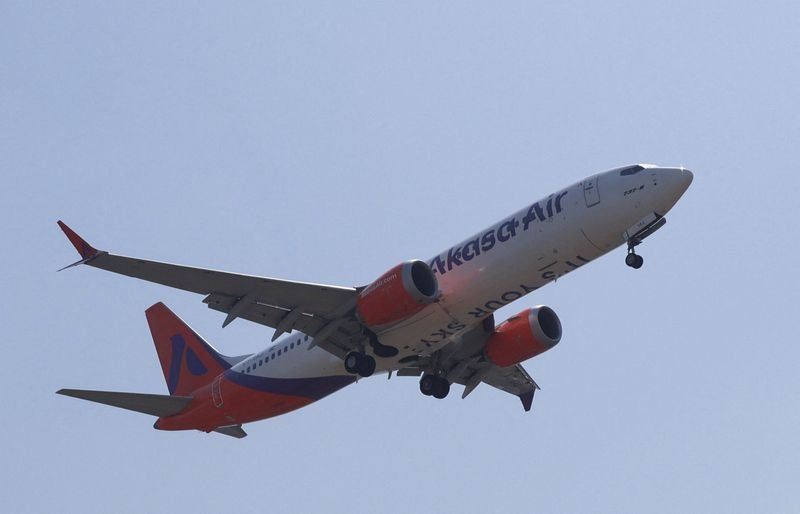









Akasa Air Eyes Massive Expansion with Potential 200-Jet Boeing Order
In a move that signals a seismic shift in India’s hyper-competitive aviation landscape, low-cost carrier Akasa Air is reportedly in advanced discussions to place a massive order for more than 200 Boeing 737 MAX aircraft. This development, first reported by Bloomberg, marks a pivotal moment for the airline, which only commenced operations in August 2022.
If finalized, the deal would represent one of the most significant expansion plans for a domestic carrier in recent history, further cementing the airline’s commitment to an all-Boeing fleet. The potential order follows Akasa Air’s previous procurement strategies, which have focused on the efficiency and performance capabilities of the 737 MAX family.
Strengthening the Domestic Footprint
Akasa Air has been on an aggressive growth trajectory since its inception. Backed by the late investor Rakesh Jhunjhunwala, the airline has positioned itself as a reliable, cost-effective alternative for the growing Indian middle-class passenger base. Currently, the airline operates a fleet that has been rapidly growing, but an order of this magnitude suggests that management is looking far beyond the immediate future.
The aviation sector in India is experiencing a post-pandemic renaissance. With record passenger numbers and government initiatives to modernize regional airports, Akasa Air’s ambition aligns with the broader industry trend of scaling up capacity to meet surging demand. Industry analysts suggest that by securing a large order now, the airline is hedging against future supply chain constraints and ensuring it remains a dominant force in the skies for the next decade.
Boeing’s Strategic Importance in India
For Boeing, securing a follow-up order of this scale from Akasa Air would be a major victory in the Indian market, where its rival, Airbus, has historically held a larger share of the narrow-body market, particularly with the success of the A320neo series. The 737 MAX, despite its well-documented history of regulatory hurdles in past years, has become the backbone of Akasa’s operational model.
The reliance on a single-type fleet offers significant operational advantages, including streamlined pilot training, simplified maintenance procedures, and more efficient spare parts management. By sticking with Boeing, Akasa is likely seeking to minimize operational complexity as it scales its operations to cover more international routes and increase flight frequencies on existing trunk routes.
Market Implications
The news comes as Indian carriers scramble to secure delivery slots for new aircraft to replace aging planes and satisfy the appetite of a population that is increasingly taking to the air. Competitors such as IndiGo—the country’s largest carrier—and the recently restructured Air India have already placed massive, historic orders with both Airbus and Boeing. Akasa’s potential move ensures it remains in the thick of this high-stakes battle for market share.
While neither Boeing nor Akasa Air has officially confirmed the figures, the industry is watching closely. The financial commitment required for an order of 200-plus aircraft is substantial, but market experts note that the Indian domestic market is projected to be the world’s third-largest by 2030. As Akasa Air continues to carve out its niche, this order could serve as the cornerstone of its long-term strategy to become a major player in the global aviation ecosystem.
Disclaimer: This content is auto-generated for informational purposes only.
Source: Read Original News