







US President Trump Backs India-Middle East-Europe Corridor as Strategic Counter to Iran
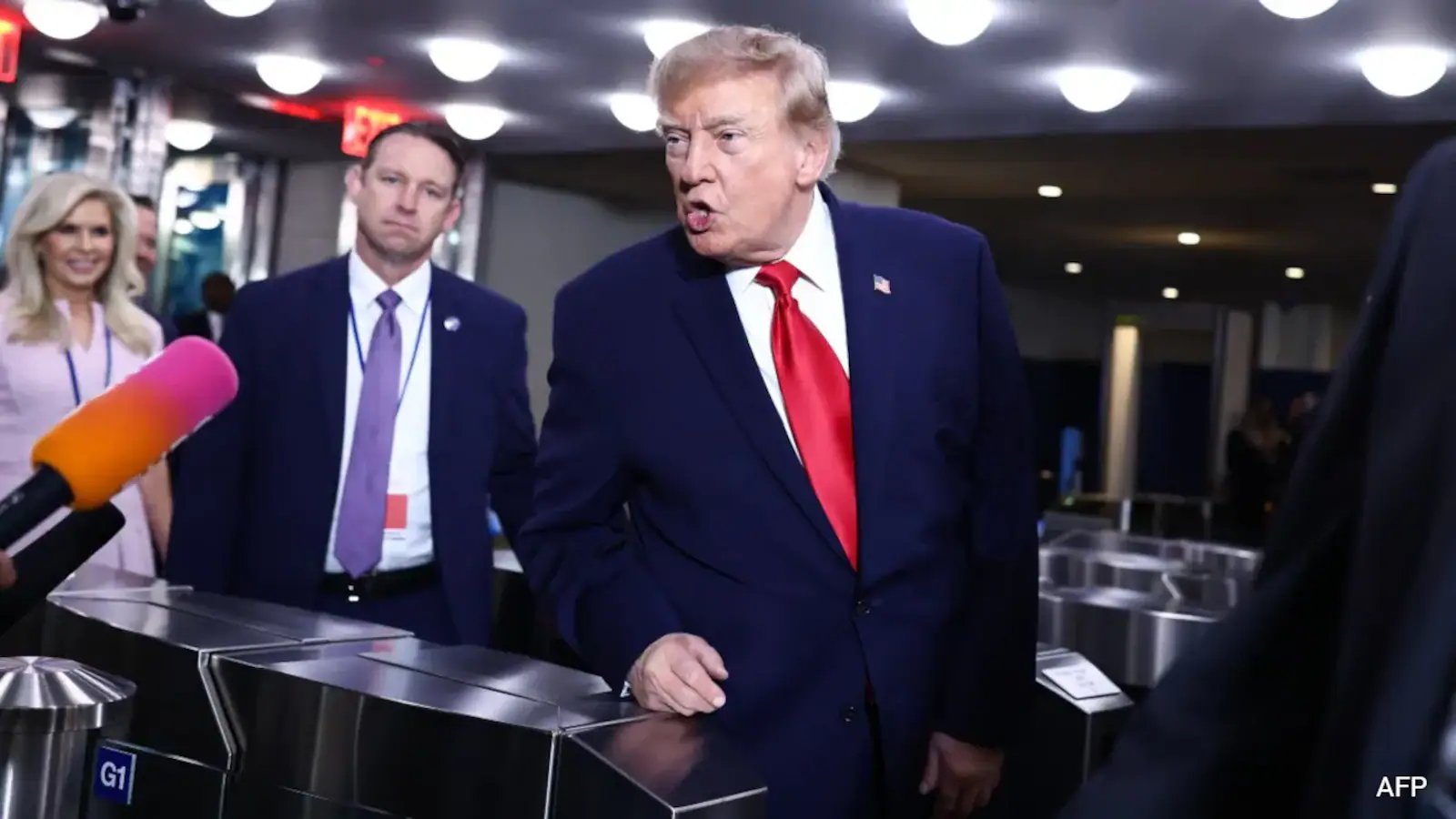
Washington: US President Donald Trump has thrown his weight behind the India-Middle East-Europe Economic Corridor (IMEC), positioning the ambitious infrastructure project as a vital geopolitical tool to bypass Iranian-controlled maritime chokepoints. Speaking at a multilateral session with the Gulf Cooperation Council on the sidelines of the UN General Assembly, the President emphasized that the corridor is essential for securing global energy supply chains.
Highlighting the risks posed to commercial shipping by Tehran, Trump stated, “Iran’s terrorist attacks on commercial shipping in neighboring countries have shown the need to shift Middle East energy infrastructure away from the Iranian checkpoints.” He further asserted that his administration is committed to the corridor, noting that it represents a significant step toward resolving regional volatility that has persisted for over a decade.
A Vision for Transcontinental Connectivity
First unveiled during the 2023 G20 Summit in New Delhi, the IMEC is a multi-modal initiative involving India, the United States, Saudi Arabia, the United Arab Emirates, France, Germany, Italy, and the European Union. The project is designed to bridge Asia, the Middle East, and Europe through a complex network of rail, shipping lanes, and energy pipelines.
Beyond traditional transit, the initiative aims to facilitate the export of clean hydrogen and bolster digital infrastructure via high-capacity cables. For India, the corridor is a cornerstone of its “Global South” connectivity strategy, offering a logistical alternative to China’s Belt and Road Initiative. By integrating rail-to-ship transit, the project promises to slash shipping times between Asia and Europe significantly, fostering tighter economic integration across the three regions.
Security Realities and Regional Tension
While the strategic logic of the project is clear, its implementation faces significant hurdles. Security analysts point to the ongoing instability in the Middle East—specifically the conflicts involving Iran and Gaza—as factors that complicate cross-border coordination. Although the official IMEC portal indicates that work on railways, ports, and highways has commenced, the absence of finalized timelines or publicized milestones leaves the project as a powerful statement of intent rather than a fully realized operational network.
The urgency to diversify transit routes has been amplified by the vulnerability of the Strait of Hormuz. With the global energy market hyper-sensitive to disruptions in this vital maritime chokepoint, Western powers and Gulf nations are increasingly viewing the IMEC as an insurance policy against regional aggression.
Sharp Warnings to Tehran
The US President paired his endorsement of the economic corridor with a stark ultimatum for Iran. During the same UN assembly engagement, Trump once again warned of the consequences of continued regional instability.
“We’ve isolated Iran financially, and hopefully they’ll do the right thing fast,” Trump remarked. He added a stern warning regarding the limits of US patience, stating, “There will be a time when it’s too late, and we won’t have the chance of letting them survive as a nation.”
The President also referenced the success of “Operation Midnight Hammer,” a US military initiative from the previous year, which he claimed had effectively dismantled Iran’s nuclear program, leaving its facilities under “mountains of rubble.” As the geopolitical landscape shifts, the IMEC remains a central element of the US strategy to contain Iranian influence while simultaneously cementing the economic bridge between India and the West.
Disclaimer: This content is auto-generated for informational purposes only.
Source: Read Original News