







Local Business Owners Clash with Trash Hauler Over Onerous Cancellation Policies
In an age where digital subscription management allows consumers to cancel services with a single click, small business owners in Costa Mesa are finding that exiting a commercial trash contract is a surprisingly archaic and frustrating ordeal. Business owners, including auto mechanics and body shop managers, report being trapped in a cycle of persistent billing and ignored correspondence by Santa Ana-based Ware Disposal, even after their services have been officially terminated.
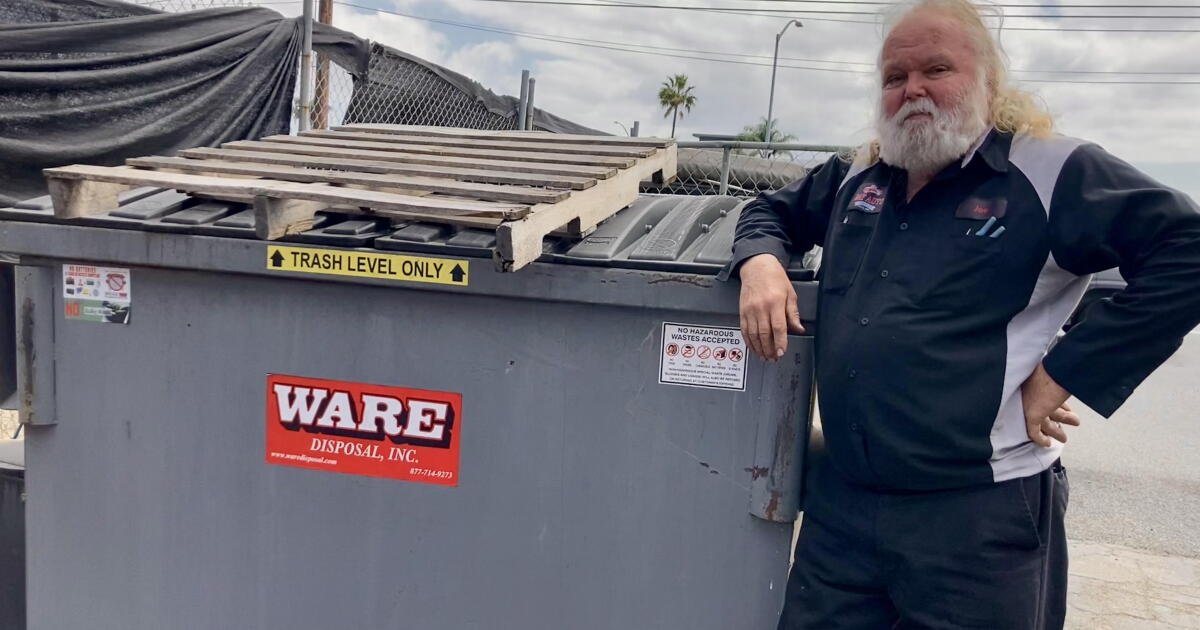
The dispute highlights a growing friction between legacy commercial service contracts and the evolving expectations of the modern business landscape. For Joe Miracle, the owner of Bay Auto Service, the struggle began when he attempted to negotiate his rising monthly rates. After being unable to secure a smaller bin or a lower price, Miracle decided to switch providers. Despite following what he believed to be the proper protocols, he has found himself in a months-long standoff that has seen his supposed “balance” balloon into the thousands of dollars.
The “Paper Trail” Battle and Questionable Billing Cycles
The conflict has drawn comparisons to the aggressive “dark patterns” sometimes found in software subscriptions, where companies deliberately design interfaces to make cancellation difficult. However, in this case, the barrier is physical and bureaucratic. Miracle and other local proprietors report that despite sending certified mail to formally request the termination of services—a standard requirement for many legacy business contracts—the disposal company continues to send monthly invoices.
Even more striking is the company’s refusal to reclaim their equipment. The empty, unused trash bins remain on these business properties, essentially occupying valuable square footage. While one neighboring business, Maaco Auto Body, managed to force a resolution by threatening to bill the waste company for “storage fees” for the unwanted bins, many others remain caught in the stalemate.
Regulatory Shifts and the Push for Modernization
The frustrations shared by Costa Mesa business owners are beginning to mirror broader concerns regarding service transparency. Recognizing the rigid nature of these legacy agreements, the Costa Mesa City Council recently intervened by amending the franchise agreements that regulate waste haulers. These new rules, which reflect a growing intolerance for restrictive, multi-year, “auto-renewing” contracts, aim to introduce the kind of flexibility already standard in many tech-forward industries.
The updated city policy now limits the “liquidated damages” that haulers can charge customers who wish to leave mid-contract. By capping post-cancellation billing to between three and six months, the city is attempting to curb what some perceive as predatory business practices.
Why Contract Transparency Matters for Modern Business
This ongoing dispute serves as a reminder of the importance of digital tools in business management. As modern enterprise software increasingly pivots toward transparent API-driven service level agreements (SLAs) and clear, automated exit pathways, companies clinging to rigid, paper-based cancellation hurdles are finding themselves at odds with their own client base.
For now, Miracle continues to advocate for a clean break, hoping that his documented efforts and the city’s regulatory updates will finally force a resolution. For the rest of the business community, the situation serves as a cautionary tale: in an era of rapid technological change, it is more important than ever to carefully audit every line of a contract before signing—especially those that rely on physical, analog processes to end a business relationship.
Disclaimer: This content is auto-generated for informational purposes only.
Source: Read Original News