




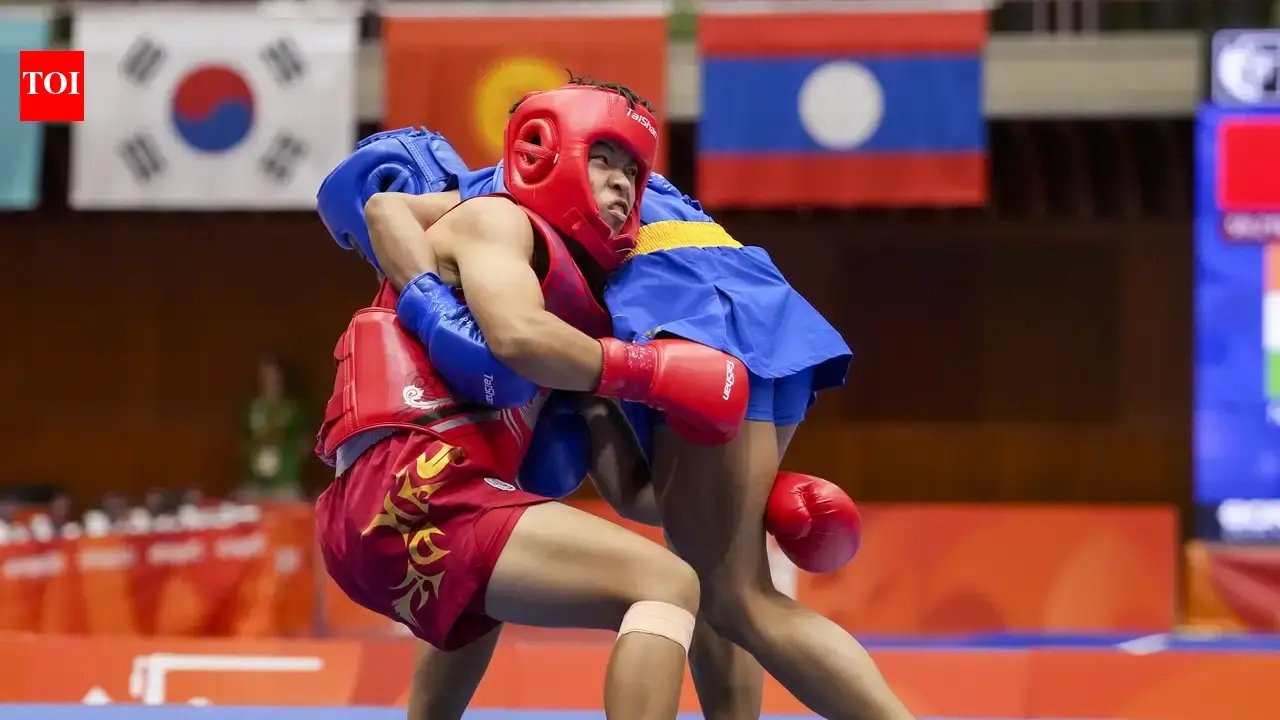
Naorem Roshibina Devi cemented her status as one of India’s most consistent combat athletes on the international stage, securing a hard-fought silver medal in the women’s sanda 60kg final at the Asian Games in Aichi-Nagoya this Thursday. While the gold medal remained elusive, the Indian wushu star’s performance reaffirmed her standing among the elite practitioners of the sport, as she navigated a grueling bracket to stand on the podium for the second consecutive Asian Games.
In a high-stakes final that pitted tactical discipline against raw aggression, Roshibina faced off against China’s Zhang Xiaoyu. The final, a contest that commanded the attention of the arena, saw the Chinese representative assert early dominance. Zhang’s tactical approach proved impenetrable, as she swept both rounds with identical 5-0 scorelines. Despite Roshibina’s best efforts to find an opening and execute her signature striking combinations, Zhang’s defensive structure and counter-punching prowess carried her to the gold medal.
## A Legacy of Excellence
For Roshibina, the result represents a poignant echo of her journey at the 2022 Hangzhou Asian Games, where she also claimed the silver medal after a final showdown against Chinese opposition—then falling to Xiaowei Wu. While the color of the medal remains unchanged, Roshibina’s trajectory through the Aichi-Nagoya tournament underscored a significant elevation in her technical repertoire.
Her path to the final was nothing short of impressive. Demonstrating resilience and elite-level tactical awareness, she dispatched some of the sport’s most formidable challengers. Most notably, her dominant run included a standout victory over Vietnam’s 2023 world champion, Nguyen Thi Thu Thuy. That win, followed by a clinical 2-0 demolition of Indonesia’s Thania Kusumaningtyas in Wednesday’s semi-final, proved that Roshibina is a world-class force, even if the final hurdle against the Chinese contingent proved a bridge too far this time around.
## Rowing Resilience: Bronze and Heartbreak
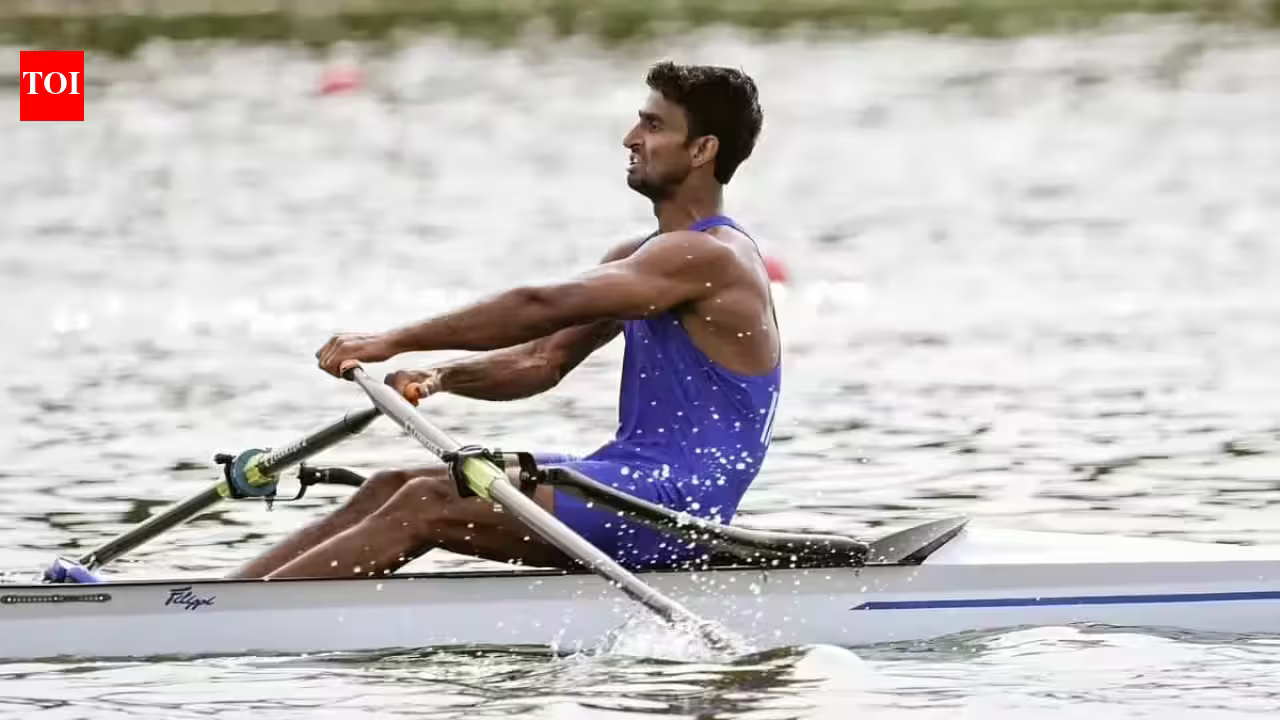
While Roshibina provided the headline act on the mat, the waters of Aichi-Nagoya served as the backdrop for a tense day of rowing for the Indian contingent. India’s rowing duo, Satnam Singh and Salman Khan, added to the national medal tally by securing a bronze in the men’s double sculls final.
The Indian pair delivered a gritty performance, clocking 6:13.25 to clinch third place. The race was a masterclass in endurance, with Satnam and Salman holding a medal-worthy position throughout the majority of the 2000m course. They maintained a tenacious second-place standing at the 500m, 1000m, and 1500m markers, at one point breathing down the necks of the Chinese leaders, trailing by a mere half-second. However, as the field sprinted into the final 500 meters, the immense physical toll became apparent. The eventual gold medallists, China’s Yi Xudi and Nie Yide, widened the gap, and the Indian pair ultimately crossed the finish line 3.48 seconds behind the winners and 2.76 seconds behind the silver-medal-winning crew from Uzbekistan.
It was a bittersweet day for the Indian rowing camp, which also saw Balraj Panwar endure a heartbreaking near-miss in the men’s singles sculls. Panwar, who had been the picture of consistency through the first three-quarters of his race, found himself in a podium spot at the 500m, 1000m, and 1500m intervals. With a five-second cushion over Japan’s Tatsuya Sakurama heading into the final stretch, the medal seemed within his grasp. Yet, in a devastating closing surge, Panwar was overhauled by both Uzbekistan’s Shakhboz Kholmurzaev and Japan’s Sakurama. He finished in fourth place with a time of 6:54.80, finishing 15 seconds off the pace of gold medalist Zhiwei Deng of China.
## Building the Tally
With Roshibina’s silver and the rowers’ bronze contribution, India’s total medal count at the Asian Games has climbed to 14. The tally now stands at one gold, six silver, and seven bronze medals.
As the games progress, the narrative remains clear: India’s athletes are increasingly competitive in disciplines that have historically seen them on the periphery. Roshibina’s second consecutive silver medal is a testament to the longevity and development of the Indian wushu program. While the loss to Zhang Xiaoyu will undoubtedly serve as motivation for her future training camps, the silver medal serves as a vital milestone in India’s sporting journey in Aichi-Nagoya.
The focus now shifts to the remaining events, where the momentum gathered by these athletes will be crucial for the rest of the Indian squad as they look to climb further up the medal table in the coming days. For now, India celebrates the grit and tenacity of its athletes who, despite falling just short of the top step of the podium, have once again proven that they belong in the conversation for the greatest prizes in Asian sport.
Disclaimer: This content is auto-generated for informational purposes only.
Source: Read Original News