







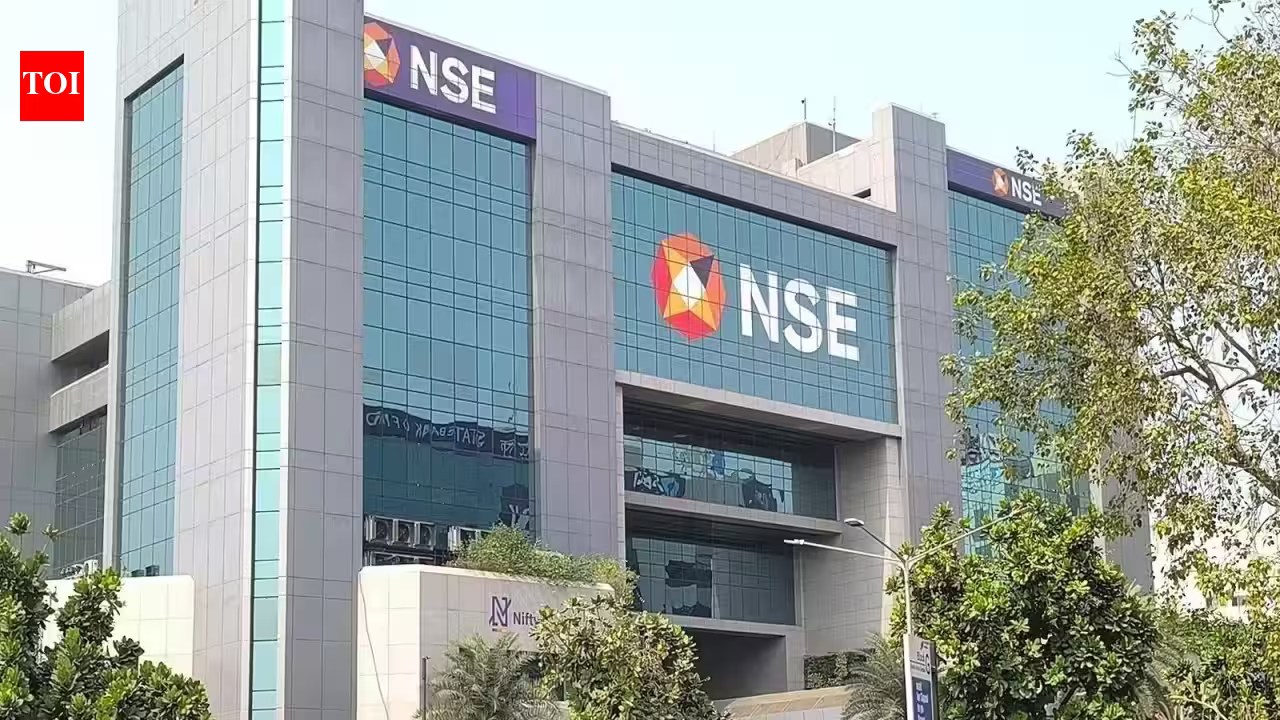
The Strategic Significance of the NSE Public Listing
The debut of the National Stock Exchange (NSE) on the Bombay Stock Exchange (BSE) and the Metropolitan Stock Exchange of India (MSEI) marks a watershed moment for the Indian financial ecosystem. As the world’s largest derivatives exchange by trading volume, the NSE’s transition from a private entity to a publicly traded corporation signifies a shift toward greater institutional transparency and market maturity. This listing is not merely a corporate milestone but a fundamental revaluation of India’s financial infrastructure.
For years, the NSE operated behind a veil of private ownership, dominated by legacy institutional shareholders. By opening its capital structure to the public, the exchange aligns itself with global standards where top-tier market infrastructure institutions are public entities. This move provides a clear valuation benchmark for the exchange, allowing retail and institutional investors to participate in the growth of India’s primary market facilitator. The timing of the IPO, amidst a period of record-high activity in the Indian capital markets, suggests a deliberate attempt to capture peak valuation while reinforcing investor confidence in the exchange’s robust governance frameworks.
Understanding the IPO Dynamics and Valuation Metrics
The NSE’s IPO, structured entirely as an Offer for Sale (OFS), highlights a significant redistribution of ownership. By offloading 12.64 crore shares, existing stakeholders—ranging from state-backed entities like the State Bank of India to private financial institutions—have sought liquidity. The pricing, fixed at the upper band of Rs 1,785 per share, pegs the exchange’s valuation at approximately Rs 4.42 lakh crore. This valuation is notably higher than that of its domestic peer, the BSE, reflecting the NSE’s dominant market share in both cash and derivatives trading.
However, the path to discovery has been marked by fluctuating sentiment. The Grey Market Premium (GMP), which serves as a barometer for pre-listing investor demand, saw a contraction as the date of the debut approached. While initial expectations were high, the cooling of the GMP to around Rs 83 per share indicates a recalibration of price expectations. Investors are now more focused on the long-term fundamentals of the exchange, such as its persistent revenue growth from transaction charges and its role as a technological leader in high-frequency trading infrastructure. The moderation in GMP is likely a reflection of the large issue size and the substantial supply of shares entering the secondary market, which necessitates a absorption period for liquidity to stabilize.
The Role of Institutional Anchors and Market Confidence
The strength of the NSE’s public offering was solidified long before it hit the open market. The successful mobilization of Rs 6,746 crore from more than 150 anchor investors underscores the deep-rooted trust that both domestic and foreign institutions place in the exchange’s business model. The participation of global heavyweights, including the Government of Singapore’s GIC, the Abu Dhabi Investment Authority, and Norges Bank, provides a strong vote of confidence in the structural stability of the Indian equity market.
The concentration of anchor investments—with nearly 43% coming from Foreign Portfolio Investors (FPIs) and over 53% from domestic institutional investors such as mutual funds and insurance companies—demonstrates a balanced ecosystem of support. The active participation of entities like the Life Insurance Corporation of India (LIC) and the State Bank of India (SBI) group serves a dual purpose: it acts as a stabilizing force for the IPO’s initial phase and showcases the interdependency of India’s largest financial institutions. This institutional backing is vital, as it ensures that the stock remains anchored by long-term holders rather than being subject to excessive speculative volatility post-listing.
Regulatory Constraints and Operational Autonomy
A unique aspect of this listing is the regulatory restriction prohibiting the NSE from listing its own shares on its own platform. This mandate, enforced by the Securities and Exchange Board of India (SEBI), ensures a clear separation between the exchange as a market regulator and the exchange as a corporate entity. Consequently, the NSE’s decision to list on the BSE and the MSEI preserves the sanctity of its trading platform, preventing any potential conflict of interest regarding self-regulatory oversight.
This operational reality forces the NSE to compete for investor attention alongside other listed companies on rival exchanges, a test of its brand strength and service delivery. Furthermore, the constraint on existing major shareholders regarding the timing and volume of subsequent stake sales acts as a safeguard against immediate supply gluts. By limiting the number of shares that can enter the market, regulators have effectively created a supply-constrained environment that may, over time, place upward pressure on prices, provided the earnings growth matches market expectations.
Market Outlook and Long-term Prospects
The long-term performance of the NSE stock will be tethered to two primary drivers: the continued digitization of the Indian economy and the increasing retail participation in equity markets. As more Indian households move their savings from physical assets like gold and real estate into financial markets, the NSE stands to benefit directly through increased transaction volumes. Its business model, which relies on consistent revenue streams from trading fees, clearing services, and data dissemination, is highly scalable with relatively low marginal costs.
Analysts remain observant of the risks associated with market cycles. Because the NSE’s revenues are highly correlated with market volatility and trading volume, a downturn in equity market activity could impact profitability. However, the exchange’s diversification into currency and debt segments, along with its massive technological moat, provides a hedge against stagnation in the cash equity segment. For investors, the focus remains on whether the NSE can sustain its leadership position in an era where competition from new fintech-driven trading platforms is increasing.
In conclusion, the entry of the NSE into the listed space is a defining moment for the Indian financial sector. By embracing public accountability, the exchange not only provides value to its early investors but also offers the public a chance to own a piece of the engine that drives the Indian economy. While short-term fluctuations in price are inevitable, the institutional quality of the shareholders and the strategic importance of the exchange to India’s financial future suggest that the NSE will remain a core component of portfolios seeking exposure to the growth of India’s capital markets.
Disclaimer: This content is auto-generated for informational purposes only.
Source: Read Original News